

Fashion Giants Set Strategies: Winning, Streamlining, and Accelerating Growth
Efforts to enhance profit margins, trim down operational expenses, and revitalize revenue are at the forefront of strategies for major players in the fashion industry, with a keen focus on the sports domain.
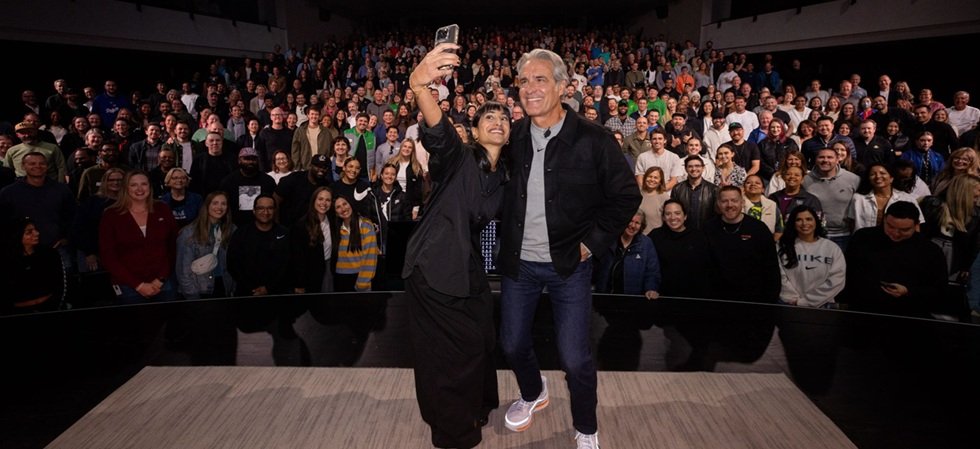


Some are looking to restructure a company in a downturn, others to boost the growth of a company, to prepare for a corporate operation or a management changeover, or to reposition themselves in the market. In all cases, they are seeking to clarify priorities and align teams. Many of the major international groups in the fashion business are starting 2026 with strategic plans in place, many of them launched by their new captains. Levi’s, Foot Locker, Nike, Adidas, Puma, Mango, Hugo Boss, Geox, Kering, Tous and Victoria’s secret are some of the most prominent.
Nike: to win its particular game
Win now is the name Nike has chosen for its strategic plan, launched at the beginning of 2025 and whose completion date is unclear. Among the sportswear giant’s priorities are the reorganization of its teams, the strengthening of relationships with partners and a rebalancing of its portfolio. The next phase of the plan will focus on further innovation for athletes, with an elevated and integrated perspective.
The plan came to Nike from Elliott Hill, CEO since the end of 2024, who has put in place a new management organization. Both actions are aimed at turning around a company that, while still not winning, has already put losses behind it. Financial figures for the first half of its last fiscal year point to stabilization, with a slight growth of 1%, compared to the same period in 2024. However, the company’s profit is still suffering, with a decline of 31%.

A reset for Puma
Puma aims to become one of the top 3 global sports brands in the world. To this end, it has launched a plan that, although it does not have a specific name, does specify clear strategic lines such as raising the brand and the product, optimizing costs and improving distribution with less dependence on wholesalers.
The plan to follow is clear: 2025 would have been a year of readjustment. Since then, the main objective has been to “clean up Puma’s distribution”, improve management and adjust costs. Building a “more efficient and resilient” business, in the words of CEO Arthur Hoeld, is the priority strategy. For its part, 2026 is presented as “a year of transition” that further extends the actions to minimize costs, with the reduction of around 900 administrative jobs worldwide over the course of the year. Product liquidation is also expected to normalize the company’s inventory. Growth is expected by 2027.
As rumors of a possible takeover of Puma by Chinese giant Anta swirl around the company, the German company closed the first nine months of FY2025 with a further drop in sales of 8.5%, along with losses of more than €300 million.
Hugo Boss will introduce changes in its business strategy, betting on a selective price increase and a greater weight of full price sales
Hugo Boss: a plan to stop the coup
Hugo Boss has presented its new strategy under the name Claim 5 Touchdown with which it plans to accelerate free cash flow from 2026, placing it at 300 million euros. In line with some of its competitors, the German men’s fashion company expects a drop in sales precisely as a result of the restructuring that will begin this year. The company defines 2026 as a “year of realignment” with a focus on simplifying processes, refining assortments and optimizing the distribution network.
Until 2028, Hugo Boss will introduce changes in its business strategy, focusing on selective price increases and a greater weight of full-price sales, reducing discounts. It will also carry out an optimization of its network of stores in the wholesale market. The company’s latest data point to a two-speed evolution: while turnover is falling, Huego Boss was able to increase its earnings in the third quarter of fiscal 2025.
Geox looks to 2029 for growth
Geox revamped its business strategy in 2025, with 2029 as the horizon. Its new strategic plan was named the New Industrial Plan and includes the objective of registering an annual growth rate of 5% to achieve its turnover targets. During the period, the Italian company plans to make investments of €120 million, partly aimed at rejuvenating its customer base, to focus on users between 35 and 50 years of age. The goal is to reach a turnover of €850 million in 2029.
Another of the plan’s key points concerns global staff cuts, with the aim of reducing losses that amounted to €4.89 million during the first half of 2025. Geox accelerated the decline in sales by 6.2% in the first nine months of 2025, to €492.8 million, compared with €525.5 million in the same period of the previous year.

Kering implements the Meo approach
Since Luca de Meo joined Kering as CEO last year, the executive has wasted no time. Just three short weeks into his tenure, De Meo convened several hundred executives to detail his roadmap for putting the company in order, even though the full strategic plan will be presented to the teams this spring. Among the company’s already palpable actions is the divestment of Kering’s makeup and cosmetics division, Kering Beauté, which was bought by the L’Oréal group.
In the absence of the full roadmap, De Meo has ensured that some of the medium-term priorities, such as reducing the store network, raising prices and reducing dependence on Gucci, are brought to light. The overriding objective is to return to growth, with sales declining at a rate of 10% by the third quarter of 2025.
Exceeding turnover, doubling net profit and expanding in retail are the objectives of Mango’s strategic plan
Mango and the 4Es
Elevate, Expand, Earn, Empower”. These are the 4Es, or the strategic plan that Mango launched in 2024 for the next three years. The verbs are quantifiable objectives: to exceed turnover, double net profit and expand in retail. The company intends to carry out up to five hundred openings during this period, for which a large part of the six hundred million euros included in the plan will be earmarked.
In the case of Mango, the company does not plan to cut staff. On the contrary: the Spanish company intends to fatten its human capital by up to 30%. Mango closed the first six months of the 2025 financial year with sales of €1,728 million, 12% more than in the same half of 2024, when its turnover already rose by 6.3%. The plan does not foresee the creation of new brands or acquisitions, advocating completely organic growth.
Fuel for Levi’s with Michelle Gass
With her appointment as CEO of Levi’s, Michelle Gass brought a two-year plan to turn around the U.S. denim giant’s economic situation at the beginning of 2024: Project Fuel. Gass arrived at the company with a weakened Levi’s that had seen its net income fall by 53% in 2023, and the first thing she did was to take out the scissors to “unify similar functions and reduce the organizational complexity that was slowing down work.“
With revenues more or less stable, Levi’s implemented the restructuring plan, which cost $171.3 million. The first of its actions was to cut between 10% and 15% of the global workforce. Another priority objective of the plan was to move towards a direct-to-consumer model, reducing the weight of wholesale sales.
The plan was to be able to reduce the company’s costs by $100 million by 2024, its first year of execution. Levi’s closed its 2024 fiscal year with 3% growth and a 16% reduction in net income compared to 2023, and the plan did not begin to bear fruit until the fourth quarter of the year, when it posted a 44% higher profit. According to the latest published data, the U.S. giant closed the first nine months of fiscal 2025 with a fifteen-fold increase in profit, to $420.1 million.
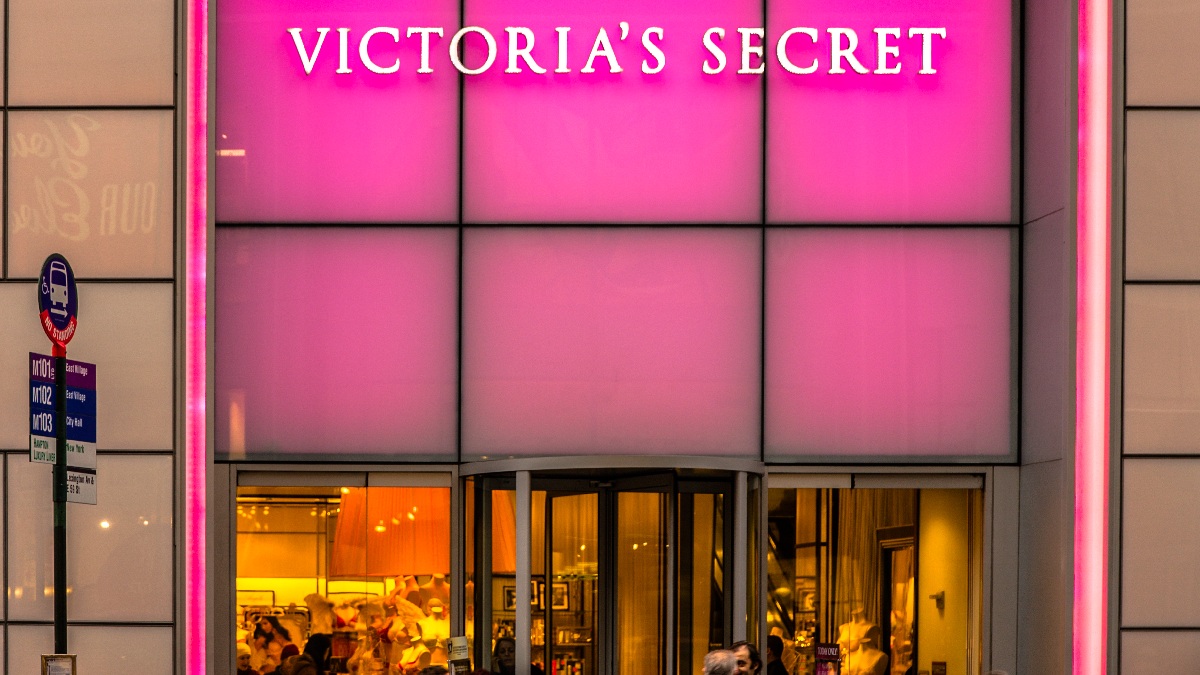
Victoria’s Secret seeks to revitalize its offerings
The U.S. intimate apparel group also has a plan: it is called Path to Potential: Strength, Innovation and Growth. It began to be implemented last year and has no clear end date. Some of its main thrusts are to revitalize brands such as Victoria’s Secret and Pink, expand categories with the greatest potential and create sustainable value for the business. The company aims to drive growth in its beauty business and operate with greater efficiency.
As of 2024, Victoria’s Secret is led by Hillary Super, who joined the company from Fenty to rebrand it. The company ended the third quarter of 2025, the latest for which financials are available, with sales of $1.471 billion, down from $1.347 billion in the same period of 2024. The company has cut its red numbers, which stood at $19.07 million, 59.15% less than twelve months earlier.
Tous: reaching new audiences
In 2024, Tous looked far ahead. It launched a ten-year plan it called GEM, the acronym for growth, elevation, mindset, with the aim of winning over new audiences, growing in international markets and improving the brand’s positioning. Without clear turnover targets, Tous proposed a review of the plan’s objectives after three years, and another at the five-year mark, to give some flexibility to its roadmap. The company envisaged further growth in the second part of the plan, from this year and 2028.
A year after implementing its plan, Tous renewed its top management with the departure of Carlos Soler-Duffo, who left the company after seven years as CEO, giving way to the entry of former Parfois CEO Susana Sanchez. Between 2019 and 2023, Tous posted 21% growth, with net income soaring 72%. Tous ended 2024 with a turnover of €523 million, up 9.4%. The company raised its gross operating profit (ebitda) by 6.4% on a like-for-like basis, which reached €114 million.

Foot Locker’s laces tied tightly with Lace Up
Foot Locker introduced its Lace Up plan in March 2023, based primarily on restructuring its store network by introducing new formats, for which it planned to spend up to $1 billion over three years, and moving its stores out of shopping malls. Among its priorities are also the diversification of its offer and consumer loyalty.
With the plan in full swing, the purchase of Foot Locker by Dick’s, the sports equipment distributor, for $2.4 billion, came to light in mid-2025. The restructuring triggered the group’s losses, but served to optimize the company for sale.
According to the latest published figures, Foot Locker closed the first six months of fiscal 2025 with sales of $3.639 million, 3.5% less than the previous year, with a drop in sales that has also occurred in the company’s direct competitors such as JD Sports and that point, beyond the viability or not of the strategic plan, to a setback in the sports sector.
Adidas, Own the game
Adidas, for its part, has already finalized its Own the game. The sports giant’s strategic plan began in 2021 and ended at the end of last year, the first under the leadership of Kasper Rorsted, who served as the company’s CEO for six years, until 2023. With the plan, Adidas aimed to raise its sales by 8% to 10% each year, as well as focus its efforts on innovation, digitalization, sustainability, consumer experience and credibility. Among the key axes of the plan was the identification of twelve key cities, none of which were Spanish.
In 2022, the company managed to grow by 6%, despite plummeting its profit weighed down by the breakup with Kanye West. The year 2023 truncated its plans, with turnover shrinking by 5%, affected by the exchange rate. The figures improved considerably in 2024, when it posted turnover 10.5% higher than in 2023. In 2025, the company posted a 52.17% higher profit and 5.73% higher sales in the first nine months of the year.
Related content

Nike’s Downfall: Insights for Fashion from the Sports Titan’s Defeat
10 jul 2025 - 05:30
Hugo Boss Eyes Long-term Growth: Sales Down, Investment Up Until 2028
3 dic 2025 - 07:01

Adidas vs Puma: Europe Aim for a Sporting Comeback
4 nov 2025 - 05:00
Foot Locker Eyes Spain as Key Market Amid Dick’s Integration
31 oct 2025 - 05:00
Latest news
Dior Appoints New President to Bolster Its American Presence
8 ene 2026 - 16:54

Tommy Hilfiger Inks Two-Decade Sponsorship Deal with Liverpool FC
8 ene 2026 - 16:42

Morellato Seizes Control of Fossil Group’s Italian Operations
8 ene 2026 - 16:20

Zalando Shuts Down Major German Logistics Hub, Impacting 2,700 Workers
8 ene 2026 - 15:49


