Foot Locker Eyes Spain as Key Market Amid Dick’s Integration
With Iberia positioned within the ‘big six’ markets of the US giant, Laura López, Vice President for the region, highlights substantial growth opportunities, buoyed by the strength of Dick’s.
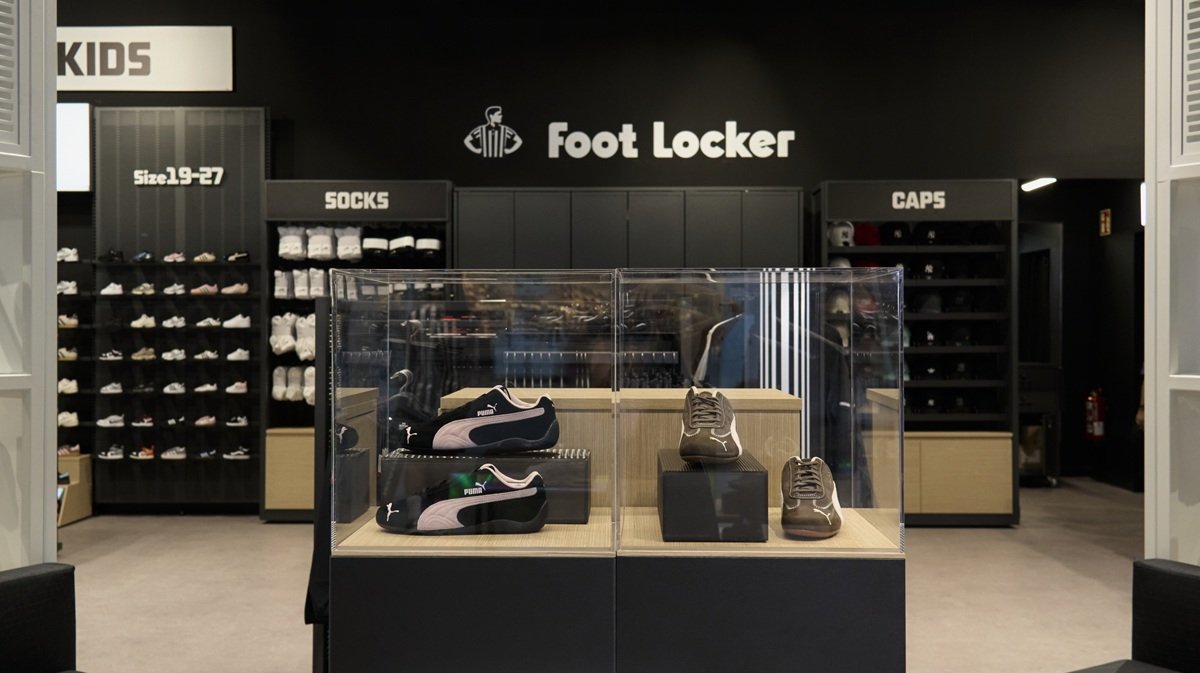

Foot Locker is starting a new phase in the heat of Dick’s, and Spain is part of the plan. The acquisition by the U.S. sports giant, which took over the sports equipment distributor in the middle of the year for 2.4 billion euros, has boosted Foot Locker’s expansion in Spain, where it plans to open new stores in the short term.2.4 billion, has boosted Foot Locker’s expansion in Spain, where it plans to open new stores in the short term, but also to stabilize its growth rates at global level, which suffered after the boom that the sector experienced with the end of the pandemic.
Spain is one of the group’s key growth drivers, explains Laura López, vice-president of Foot Locker in Iberia, to Modaes. The region, made up of Spain and Portugal but where the Spanish market is more predominant, is part of the company’s European big six, and although behind Italy and France, it is where the company still has a high margin for growth.
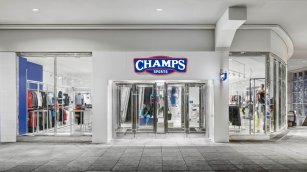
The U.S. group operates in Iberia a network of 60 points of sale, mainly concentrated in shopping centers, although with stores at street level such as those in Barcelona, in iconic places such as Plaza Catalunya and Portal del Angel, for example, Madrid, in streets of Preciados and Fuencarral, or Oporto, in Santa Caterina street. If we add France, a market that was also under Lopez’s management in 2024, Foot Locker’s network of stores in the three countries soars to 217 stores.
The U.S. group was acquired by Dick’s in September for €2.4 billion
“Finding a store at street level that adapts to the needs of this type of store is difficult, both in terms of square meters and the open-plan space that we are implementing,“ explains the manager. Foot Locker’s plans for the peninsular market, however, are to expand its market share with new openings, although López does not reveal more details about the number or timing of the stores. “It will depend on the overall budget allocated, but we have prepared a list of cities and strategic markets,“ he says.
In Iberia, Foot Locker’s strong points are Madrid and Barcelona, although Valencia and Lisbon also stand out. At the end of September, in fact, the international group’s commitment to the peninsular market was evidenced by the opening of a store in the Diagonal Mar shopping center in Barcelona, the first after completing its integration with Dick’s and with the new concept that the company is implementing: re-imagined.
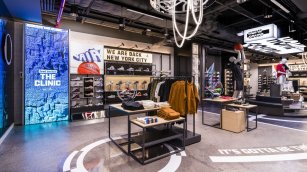
In addition to the openings, the company also plans to gradually renovate its entire network of stores in Iberia to adapt them to this concept, which it describes as a space with “a more interactive and personalized shopping experience”, hoping to maximize the conversion of each potential customer who enters the store.
Foot Locker operates around 60 points of sale in Iberia, mainly in shopping centers
Although López does not disclose specific figures for Foot Locker’s business in Spain, 80% of sales come from footwear, the company’s main focus. In addition to its traditional customers, such as Nike, Adidas and New Balance, the executive confirms that names such as On Running, Hoka and Salomon are gaining weight on the shelves of the stores. The rest of the turnover, approximately 16% of the Lopez figure, is concentrated in fashion and accessories.
In total, the company employs around 800 workers in Iberia, including Iberia staff. Foot Locker’s regional headquarters are in Barcelona, although a significant part of the team works remotely.
Stabilization and growth, and Dick’s stays in the U.S.
“Covid was a bombshell for sports, it was noticeable that the population had been saving and that translated into a spike in sales, but this trend could not go on forever,“ explains Lopez. The generalized drop in commercial traffic throughout the sector that has been recorded this year, mainly due to a lower propensity to consume, has also weighed down companies, which are struggling to make the most of each of these visits and boost conversions.
In addition to the already complicated mix, the sports industry is going through a time of change, with giants such as Adidas and Nike betting more and more on their own stores and moving away from the warmth of wholesale, to which they had resorted in recent years. In the midst of this new panorama, Foot Locker, which closed its last full year with a return to profit, but with declining sales, is counting on Dick’s as a new ally, with the goal of returning to growth in the short term.
López says that, after the business boom in 2023, the natural path has been to stabilize during 2024 and 2025. Globally, the U.S. group closed the first six months of the current fiscal year with sales of $3.63 billion, down 3.5% on the previous year, with the worst drop in sales in Europe, the Middle East and Africa, down by as much as 14.3%.
The same drop has been suffered by Foot Locker’s direct competitors such as JD Sports, which closed its own first half in September with sales up 18%, but operating profit down as much as 8.2% to 369 million pounds.
Now, the U.S. group expects to return to growth as soon as 2026. “After the purchase of Dick’s, we will continue to focus on the physical store in the most relevant markets, and we will do so independently,“ explains Lopez. Dick’s plans for the U.S. group are, at least for the time being, says the executive, to strengthen Foot Locker in Europe, rather than initiate an expansion of the Dick’s brand in the territory.
The acquisition by Dick’s is part of a series of corporate mergers that are becoming increasingly common in the sportswear industry. Almost at the same time as the Foot Locker acquisition was announced, the 3G Capital investment group also announced the acquisition of Skechers for €9.4 billion, and, although it remains the perennial industry rumor, the possibility of Adidas taking over Puma has recently resurfaced again.
Related content
Foot Locker Rolls Out New Concept as It Integrates with Dick’s
23 sep 2025 - 16:24
Foot Locker Sees Significant Losses in First Half as Dick’s Deal Looms
27 ago 2025 - 07:41
Dick’s Sporting Goods Sees 36% Boost in Q3 Following Foot Locker Integration
26 nov 2025 - 07:28
Latest news
Birkenstock projects double-digit growth through 2028 with renewed strategy
29 ene 2026 - 11:16
Levi Strauss Boosts Profitability: Dodges Tariff Impact and Triples Earnings
29 ene 2026 - 11:15
H&M keeps its finger on the pulse and earns 4.6% more at fiscal year-end
29 ene 2026 - 11:10

Gordon Brothers Takes Over LK Bennett, Sets Stage for Global Expansion
28 ene 2026 - 12:33