Adidas and Puma Face Off: The European Powerhouses Aim for a Sporting Comeback
While the first is on the offensive, the second is trimming and tweaking. Both have spent recent years indulging in the unpredictable world of fashion, and now they are poised to leverage sports and technical wear to either gain or reclaim market share.
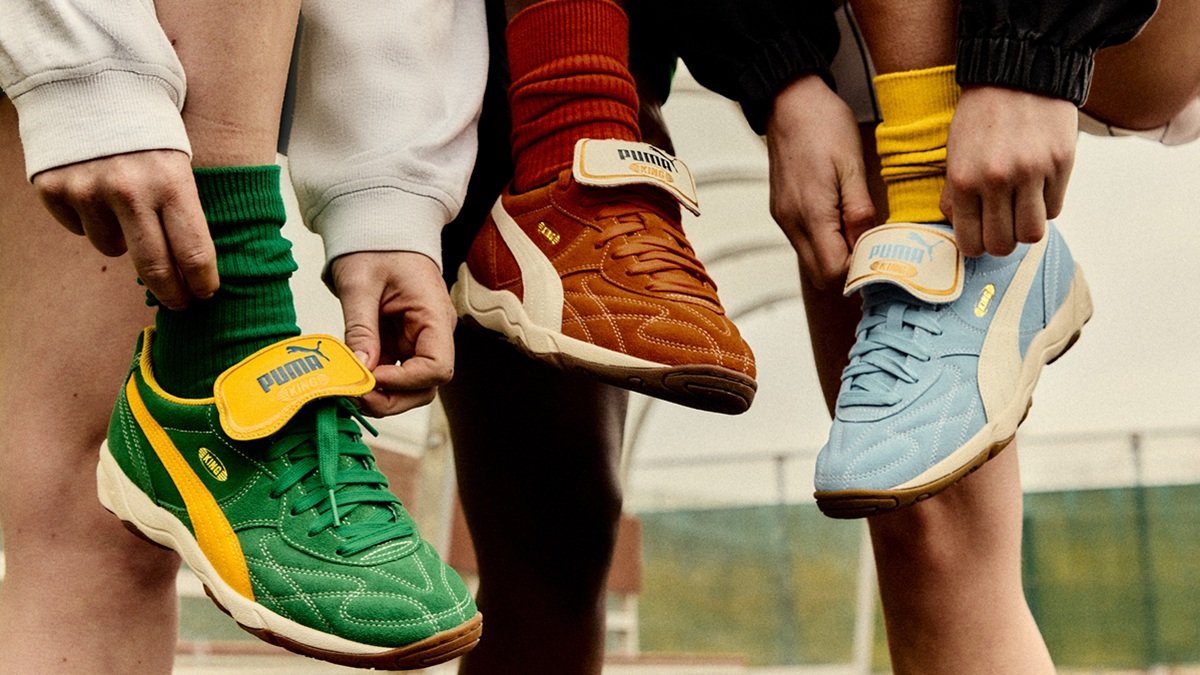


Samba, Gazelle, Superstar, Suede, Club Era or Speedcat. These are some of the most popular sneakers on the market. But not for running, jumping or feinting, but for walking around cities. All of them are shared between the two European giants of the sports industry, Adidas and Puma, whose leap into casual has helped the former to catch its breath and get back on the attack, and the latter to lose market share in the case of the latter. What are Adidas and Puma doing? At diametrically opposed moments, with Adidas opening and Puma firing, the two groups (over which rumors of integration are swirling) are clear about one thing: they have learned from the Nike crisis and want to get back into sports.
In recent years, the international sports industry has seen the emergence of new players who are not only playing at branding, but also betting on more technical sports. All this at a time when the traditional giants, including Adidas, Nike and Puma, have focused on the profitability of repeating historical icons, leaving aside, for a time, product innovation.
Last week, coinciding with the presentation of results for the first nine months of the year, Puma announced the dismissal of 900 head office employees. The personnel adjustment is the consequence of years of languishing with a brand dependent on the whims of fashion and not on sports results, even though Usain Bolt is still the fastest name in the world and wears Puma shoes. He is still active? Because of the verb tense of calzar, I mean
Adidas and Puma have learned from the Nike crisis and are betting on innovation and sport, beyond fashion
The German company ended the first nine months of the year with a drop in sales of 8.5% to €5.97 billion. Puma ended the first nine months of the year with a loss of €308.9 million, compared to the €257.1 million it earned in 2024.
“We are a brand that currently lags behind our competitors. We’re certainly a brand that doesn’t have the interest, the affection or the enthusiasm that is required to succeed in the marketplace,“ Arthur Hoeld, Puma’s CEO since last April, told analysts last week in a blunt manner.
This lack of “brand enthusiasm” is only the first of Puma’s problems. “Secondly, we are also realizing that our market share, our channel mix between DTC and wholesale, is not keeping up with the competition,“ Hoeld detailed, noting that while rivals get 40% of their sales from their direct-to-customer channels, in his case this percentage stands at 30%. “This limits our opportunity to showcase our products, to excite consumers directly with our narrative and also to determine how we are going to present ourselves in the marketplace,“ he explained.
The problem is not just presence in wholesale, but in which wholesalers: “Of the top ten customers we serve globally, three of them are in the segment we call large distributors, which tend to be places where products are sold at a discount, out of season, with very wide distribution and in a way that doesn’t enhance the brand image very much.“
“We’re a brand that doesn’t command the same interest, the same affection or the same enthusiasm that’s required to succeed in the marketplace,“ said Arthur Hoeld, Puma’s CEO
Puma’s second big problem is product: “our product is not succeeding.“ Why? Puma has too many products and supplies too many items each season to the market. “That means our range is complex and therefore our efforts are not really paying off,“ the executive explained; “that also leads to the fact that our icons, the key products that Puma should be known for, are not really established. “When consumers are asked about Puma, they don’t really know what the key product is that represents the brand,“ he exemplified.
Puma’s third problem: pacing. “We have to recognize that sometimes we are expanding our efforts too fast and too soon,“ he said; “we don’t take the time to develop what could become a commercial success, what could become a great franchise with the right approach, with the right business and marketing strategy.
Lack of time, or patience, in the commercial management of campaigns impacts the brand. “Storytelling is not as integrated as it should be. Between product teams, marketing teams and sales teams, we act too fragmented. We are too organized in silos. As a result, we don’t create marketing concepts that are holistic and interesting enough to have lasting commercial success in the marketplace,“ he reflected.
The result of all this that Puma has become too commercial over the years. “Too commercial from a distribution point of view, too commercial from a pricing point of view and also from a promotional point of view,“ Hoeld admitted, “and that is something that, unfortunately, applies to our brand globally.

Since the arrival of the new CEO, the company has implemented an adjustment plan with not only layoffs, but also a “clean-up” of sales outlets (eliminating what they have called “undesirable wholesale businesses”), a reduction in discounts and a reduction in the number of sales.), a reduction in discounts and a selective increase in prices (partly to offset the impact of tariffs), a simplification of supply and a reduction in production, among other measures.
All with an eye on “returning to the top three sports brands in the future.“ “We have to clearly recognize that our brand is no longer among the top three,“ the CEO lamented; “falling sales and increased competition in the market have pushed us back. When will it take time? Puma will need time. “We see 2026 as a transition year. Our absolute goal and our commitment is to return to growth as a brand in 2027,“ the executive noted.
Focused on its restructuring, the group has not yet unpacked what the keys to its relaunch strategy will be, although it has given some previews. The first is the brand: “We have to make sure that we represent something that consumers around the world will recognize; it has to be absolutely clear what Puma will be as a brand.
And the second: sport. “We will adjust our approach to products. Yes, as a sports brand, we will innovate and invest in our innovations, mainly in three different categories: soccer, training and running,“ said the CEO, betting on relaunching relevant products over the past decades and creating “important and meaningful franchises that consumers will recognize.“
“Even though we have turned the company around in terms of lifestyle and brand warmth, we have to celebrate sport,“ said Bjorn Gulden, Adidas CEO
And in the meantime, Adidas?
Fashion, street or casual is the crutch on which Adidas has relied in recent years to reverse its complex situation, caused in part by the reputational crisis and the economic impact of its business relationship with Kanye West. After having managed to turn around the red numbers at the end of the last fiscal year, the company is clear that it must look again to sports.
“Even though we have turned the company around in terms of lifestyle and brand warmth, we have to celebrate sport,“ said Bjorn Gulden at the last results presentation. “And I think when you look at the activities, from ultramarathon to marathon to running 100 000 meters, basketball, soccer, cricket, I don’t think we’ve ever had so much visibility in sport, and we’re also producing a lot of content that is seen around the world because that’s what we want to do,“ he detailed.
Basketball, running, training and soccer are the four categories Adidas wants to focus on. While in soccer Adidas has a comfortable position (thanks, in part, to the fact that it is an eminently European sport), in running the company has spent two years building a portfolio of products by renewing its collections and betting on specialization to “gain credibility and market share.“ “Training is a very broad category that can vary from one region to another, but what we do is draw on our best athletes from different sports and show them training with our products,“ the CEO explained.

“We want to be present in all sports, including local sports that are relevant: that’s why we are creating products for more sports and also producing more content for those sports, in order to regain the credibility and authenticity we used to have,“ he added.
The new commitment to sports means, for Adidas, being more American. “We have to be a sports brand in the United States as well, and that can only be achieved by investing in the so-called American sports, starting with the universities: it’s baseball, it’s soccer.... it’s also basketball,“ explained Gulden, who explained that the company is building a portfolio of college athletes, a segment that attracts thousands of spectators.
Looking ahead, the Adidas CEO considers it crucial “to be a global brand with a local mindset.“ Unfortunately, there is no such thing as a global average consumer, as many consultants and agencies try to sell you, consumers in different parts of the world have their own tastes and preferences, and are also influenced by different factors,“ he reflected.That is why it is increasingly important to be more local, especially between Asia, with China leading the way, and America and Europe, because there are big differences, not only in consumers’ tastes and their approach to sports and activities, but also now in the supply chain, given all the political tension we have.
The local commitment is not only limited to marketing actions, but also to the design and manufacture of certain products. Citing the Los Angeles basketball authority as an example, Gulden pointed out that the company is offshoring its product area with “the clear objective of supplying local consumers with the products they need.“
Related content

Puma Deepens Decline Over First Nine Months, Announces 900 Job Cuts
30 oct 2025 - 08:01

Adidas Profit Climbs 52% as Brand’s Popularity Fuels Growth Through September
29 oct 2025 - 07:12

Puma Restructures DTC Operations, Appoints Ronald Reijmers as Global VP
24 oct 2025 - 07:28

Adidas-Puma Merger: A Game-Changer for the Athletic World?
18 sep 2025 - 05:00
Latest news

Gordon Brothers Takes Over LK Bennett, Sets Stage for Global Expansion
28 ene 2026 - 12:33

Galeries Lafayette Finalizes Sale of BHV Building Amid Shein Controversy
28 ene 2026 - 12:30

VF Corp’s Q3 Results Shine with 28% Boost as Business Reorganization Unfolds
28 ene 2026 - 08:23

Claire’s Faces Another Setback in the UK with Second Bankruptcy in Six Months
28 ene 2026 - 08:21