

Fewer but Fantastic: Inditex Elevates Shopping Experience with New Store Concepts
Following a year marked by 132 net closures, the group is pivoting towards strategic artery openings and high-profile partnerships. Through a blend of macroformats, cafés, and fresh concepts, the brand aims to craft a more discerning and impactful commercial footprint.


Entering Zara’s new flagship store on Barcelona’s Diagonal Avenue has little to do with the experience that for years has been associated with fast fashion. The domestic and sophisticated space, designed by the prestigious Belgian architect Vincent Van Duysen, is articulated from the light and a refined interior design that invites you to walk through it without haste.
Zara no longer wants to present stores that prioritize chain sales, but to bet on strategic spaces, with presentations that support the narrative of its new phase. More premium, more design, more innovation and more cool are the keys to the new tone, which leaves a network of fewer stores, but designed to leave a mark.
The company closed the first nine months of the year with 5,527 stores worldwide, 132 fewer than a year earlier. The adjustment affects most of its chains, from Zara to Massimo Dutti, including Oysho and Stradivarius. Only Bershka and Lefties have added net openings, with four more to 859 stores and ten openings to 213 stores, respectively. The dynamics respond to a movement that the group has been executing since the beginning of its retail park renewal plan, which consists of absorbing small units in favor of macro stores where the assortment is wider and the shopping experience is optimized.
That vision has accelerated since Marta Ortega took over the presidency in 2022. The group has strengthened its presence in prime locations and has put design, photography and architecture at the center of its visual identity. Openings on shopping arteries such as the Champs Elysées in Paris, Serrano in Madrid, Corso Vittorio Emanuele in Milan or the Zara refurbishment planned for next year on New York’s Fifth Avenue are key steps in the conglomerate’s roadmap that deepen the ambition of this stage.
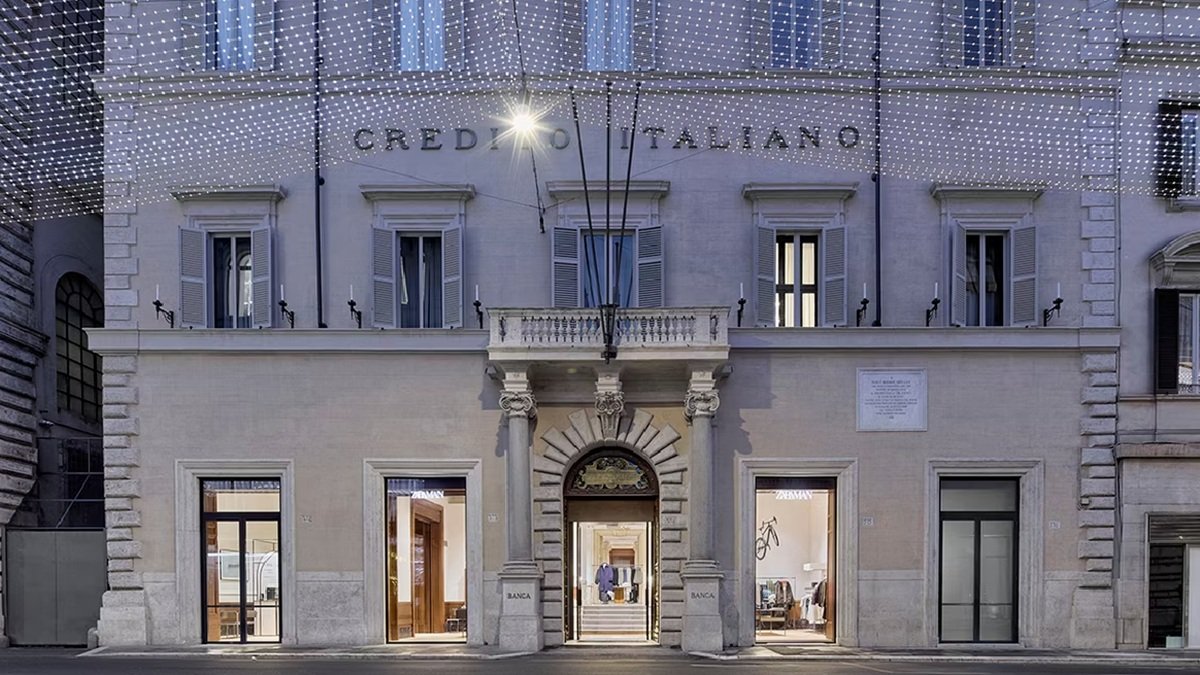
Zara Man expands its network of high-end flagship stores with its new store in Rome’s Palazzo Verospi
In Rome, Zara Man has just raised the shutter on a new store located at 374 Via del Corso, a space that follows the style and concept of the men’s stores already opened in Madrid, Zurich and California.“The launch reaffirms Zara’s ongoing commitment to innovating formats that respond to the preferences and lifestyles of its customers,“ said the Galician company.
Over an area of 7,500 square feet and two floors, the chain dedicates space to the Zara Athleticz sports collections, the premium collections under the Origins line, fragrances and even a temporary coffee shop. The brand has thus settled in Rome’s historic Palazzo Verospi, a space that once housed the former headquarters of the Banco di Credito Italiano.
Diagonal is the most recent example, but not the only one. In Serrano, Zara launched its third Apartamento, a high-end space that fuses fashion and home collections with exclusive launches, careful design and a café space. Along the same axis, the opening of Zacaffé, the group’s own concept, marked the importance of hospitality’s entry into the retail experience. It is a discreet and punctual piece in the whole, but it changes the way in which the store visit is understood and adapts to new markets related to the proposal, such as South Korea or Japan.
The concept is not limited to Spain. Osaka is the first city outside Japan to incorporate the combination of fashion and coffee shop, accompanying another major Zara opening in the country. In Manchester, the chain’s latest store uses an unprecedented shop-in-shop structure that refines product presentation. The approach remains the same: more meters, more intention, more experience and more visual storytelling.
Inditex is finalizing the reopening of Zara on New York’s Fifth Avenue for 2026
In the United States, the company is working on the aforementioned renovation of its Fifth Avenue store and on a new opening in San Francisco. At the same time, Bershka will land in Miami in 2026 with two stores after consolidating its digital presence in the country. It will be the chain’s first physical move since the 2017 temporary pop up on Broadway and confirms that Inditex is acting with a logic of “selective expansion” described by its CEO, Óscar García Maceiras. Zara, for its part, has recently added openings such as Las Vegas and Charlotte (North Carolina) and the company considers maintaining ample growth potential, given its limited share and the fragmentation of the market.
Initiatives in the retail channel do not work alone. The group headed by Marta Ortega has been fully immersed for several years in a strategy focused on raising and sophisticating its product offering, gaining legitimacy in the field of design through selective collaborations with prestigious creatives in the sector, or even awarded by LVMH, or by promoting initiatives such as events and pop-up spaces in locations that until now have only been used by LVMH, as was the case of its ephemeral landing on the Parisian Avenue Georges V, where it presented its collaboration with prestigious celebrities such as Almodóvar and Steven Meisel.
In the first nine months of the year, sales reached €28.171 billion, an increase of 2.7%, while net profit rose by 3.9% to €4.62 billion. At constant exchange rates, sales growth would have been 6.2%. Gross margin widened to 59.7% of sales, a year-on-year improvement of 27 basis points.
Related content

Zara Elevates Premium Strategy Under Marta Ortega with LVMH Prize Talent
2 dic 2025 - 12:10
Zara Steps into Luxury with New Barcelona Flagship
28 nov 2025 - 05:00

Zara and Sézane Transform Retail: From Shopping Spaces to Home Experiences
26 sep 2025 - 04:54
Latest news
LVMH Tightens Grip on Loro Piana with $1 Billion Stake Boost to 94%
27 ene 2026 - 15:28

LVMH Navigates Luxury Tightening: Sales Slip a Mere 1% to €80.8 Billion in 2025
27 ene 2026 - 15:26
Ferragamo Misses €1 Billion Milestone in 2025 Amid 5.7% Sales Decline
27 ene 2026 - 15:22
Amer Sports Taps Tommy Hilfiger Expertise to Strengthen Arc’teryx Leadership
27 ene 2026 - 11:53


