

M&A 2025: A Sea of Opportunity Amidst Market Chaos
With investment funds stepping back from fashion’s playing field, industrial maneuvers are on the rise. Key players like Prada, Dicks, and L’Oréal are making strategic acquisitions to fortify their market standing.
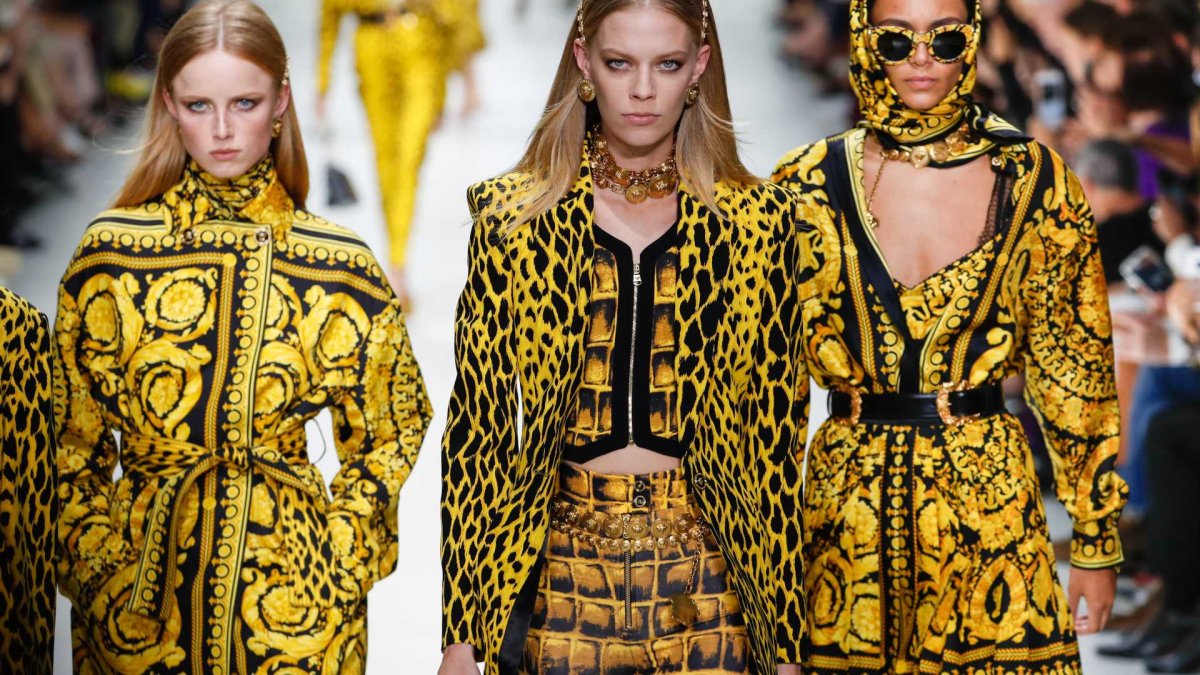


The accelerated last quarter of 2024 was already a foretaste of what 2025 was going to be like. Global M&A activity has skyrocketed in the fashion industry. Gone are the years when large private equity funds saw fashion as an attractive industry in which to invest, but a new model of operations is emerging: with macroeconomic headwinds, the scenario of companies in crisis on all continents leaves others with an opportunity to consolidate, grow and defend their positions.
Over the last twelve months, transactions have taken place that are relevant both for their amount and their symbolism for different segments. In luxury, the most significant move of the year was the acquisition of Versace by Prada, not to mention Kering’s divestment of its beauty business, which was taken over by L’Oréal. Meanwhile, in sports, other highlights included Kontoor’s acquisition of Helly Hansen, 3G’s acquisition of Skechers and, above all, Dicks’ acquisition of Foot Locker.
In large-scale distribution, the acquisition of the Spanish company Tendam by the Emirati group Multiply Group stood out, not so much because of the volume of the assets, but because it represents the exit of funds that had been in the capital for ten years.
A new type of company is emerging strongly in the sector at a time full of opportunities. Companies such as Authentic Brands, WHP or Marquee Brands are making a killing by buying historic brands (most of the time in distress), relaunching them with powerful marketing investments and monetizing them through licensing around the world. In their hands are brands such as Forever21, Billabong, Ben Sherman or Vera Wang.
Versace and Prada, Skechers and 3G, Foot Locker and Dicks and Kering Beauté and L’Oréal, protagonists of corporate operations in the last fiscal year
First quarter: from Kontoor to Tendam
The year got off to a strong start. In February, the U.S. group Kontoor Brands announced the acquisition of Norwegian Helly Hansen for $900 million. The purchase of 100% of the firm founded in 1877 was aimed at accelerating Kontoor’s revenue, profit growth and cash flow. The deal is symbolic, too, because it represents Kontoor’s entry into the sports sector: a spin-off from Lee and Wrangler, Kontoor was born out of VF’s spin-off of its denim assets in a defensive move for its sports brands.
The big deal of the quarter involved a Spanish company: the sale of Tendam by CVC and Pai. The Emirati group Multiply Group sealed in February the purchase of 67.91% of Tendam in its first transaction in fashion. The final valuation of the Spanish company in the purchase was €1,300 million. Thus, to acquire 67.91% of the capital of Castellano Investments, the company that owns Tendam Brands, Multiply paid a total of €882.83 million.
The brand management group WHP Global completed in January the acquisition of the bridal fashion company Vera Wang, while Marquee Brands, one of its competitors, became the owner of Laura Ashley, until then in the hands of Gordon Brothers. Denim company True Religion, meanwhile, became controlled by Acon Investments and PE, the latter linked to the CEO of American Eagle.
Another notable move was the sale of Stuart Weitzman’s firm to the Calères footwear group by Tapestry, in a deal valued at just over 100 million dollars.
Sparc Group, owned by Simon Property, Brookfield, Authentic Brands and Shein, began a merger process with JC Penney in the first quarter, resulting in a group with $9 billion in revenue, six brands and 1,800 stores, mainly in the United States. The Reebok business in the United States was left out of the deal, which was sold to Galaxy Universal by Authentic Brands.

In Europe, British designer Stella McCartney recovered one hundred percent of its capital with the purchase of 30% from LVMH, while Jacquemus found in L’Oréal its long-awaited investor, with whom it will boost its geographic growth and enter the cosmetics sector.
Italy’s Giuseppe Zanotti has also returned to 100% control of its shareholding after the divestment by L Catterton, while The Kooples has ceased to form part of the portfolio of MF Brands (a group linked to Lacoste) and has passed into the hands of the investment company Verdoso.
France’s Bonpoint, specializing in children’s fashion, was acquired by China’s Youngor Group with the sale by France’s Epi, while the Abudabi group Royal Group took a majority stake in sustainable fashion company Pangaia, founded by Miroslava Duma in 2019 and which in the fourth quarter has appointed a new CEO.
Second quarter: Versace returns home
Three of the year’s major corporate transactions took place in the second quarter. In April, the Italian group Prada took over Versace, owned by the American Capri, for €1.25 billion, in a landmark transaction in the luxury sector. This move, which resulted in a group with a €6.3 billion turnover, represents the return to Italy of an asset that has been in American hands since 2018, when Capri bought it for €2.1 billion.
To lead the new creative phase of Versace, Dario Vitale (ex Miu Miu) was appointed successor to Donatella Versace, although in December, with the closing of the transaction, he was removed. Lorenzo Bertelli, heir to the Prada family holding and responsible for the recent growth of Miu Miu, has been named executive chairman of Versace following the closing of the deal.
Also in May, Skechers, the world’s third largest footwear company, sealed its exit from the stock market after announcing the acceptance of the offer of the investment group 3G Capital to acquire all of its shares, in a transaction valued at 9.4 billion dollars.
Still in sports, the U.S. sports equipment distribution group Dicks Sporting Goods made a totally defensive move in the second quarter, taking advantage of the market situation. The company sealed the acquisition of its great rival, Foot Locker, for 2.4 billion dollars.
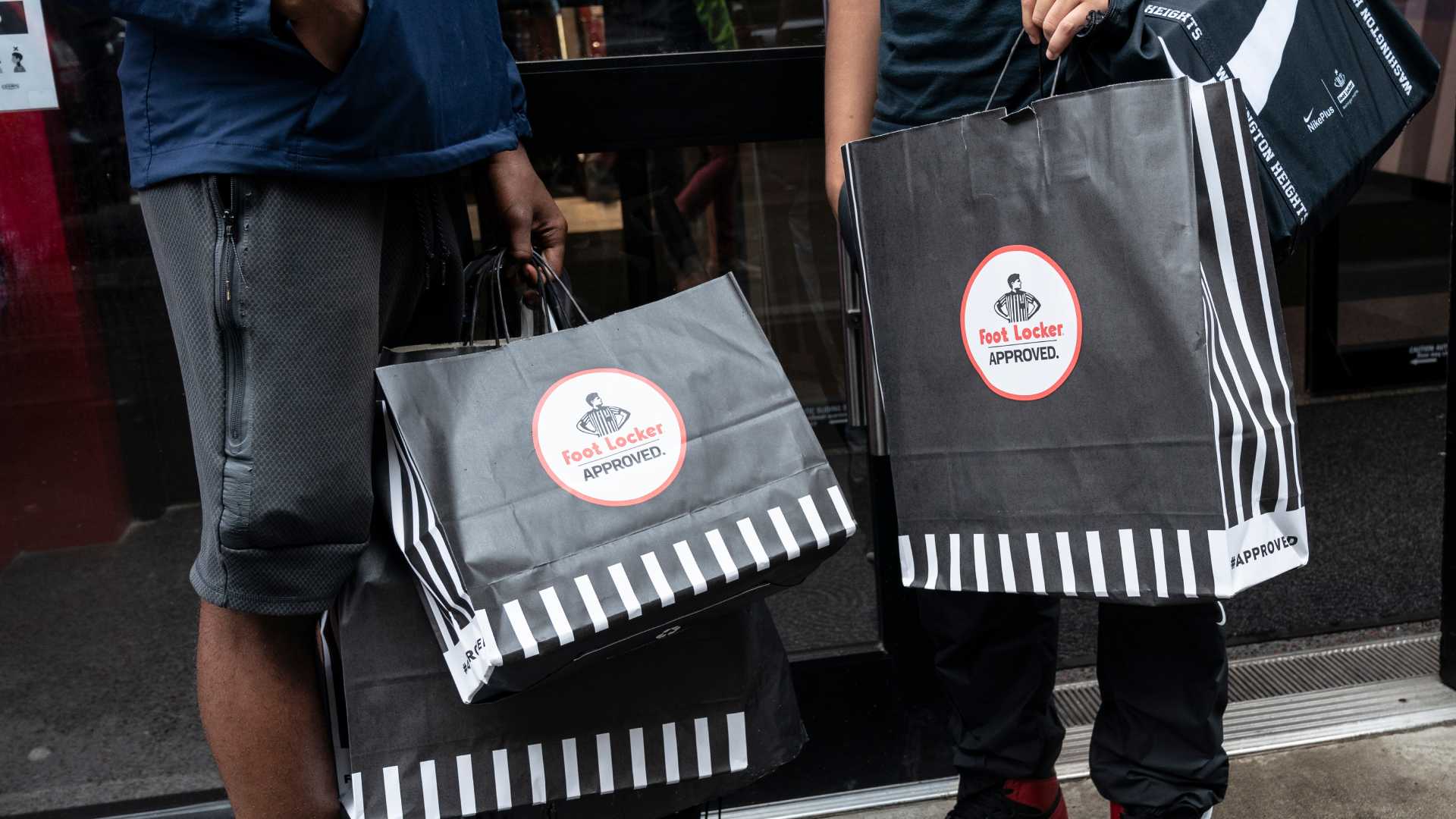
Dick’s purchase of Foot Locker comes at a time of change in the sports industry. Industry giants, including Nike and Adidas, have accelerated their transition to company-owned stores over the past few years, impacting the business of retailers such as Foot Locker and Dicks. In addition, sports equipment consumption is stabilizing after the post-pandemic take-off.
The fashion and sports equipment giant Anta closed the purchase of the German outdoor specialist Jack Wolfskin for a total of 290 million euros. The company is immersed in a strategy to expand its range of outdoor sports products, where it also operates through brands such as Arc’teryx (through Amer Sports).
In Italy, a move saved from closure La Perla, an Italian company specializing in luxury intimate apparel, declared insolvent at the beginning of 2024. It is the purchase by Peter Kern, former CEO of the Expedia travel agency and wine entrepreneur in Tuscany.
Also notable in the second quarter was the sale of Dockers by Levi Strauss. The U.S. denim giant definitively sealed an agreement with Authentic Brands Group to sell it the Dockers business for more than 300 million dollars. Although it would end up closing in August, the acquisition of Guess by Authentic Brands was made public in April, in a deal valued at 1.4 billion dollars.
Authentic Brands, WHP or Marquee Brands, dedicated to the exploitation of brands, have found in 2025 their ideal playground, with hundreds of historical brands in crisis.
Third quarter: from Hanesbrands to Naf Naf
With the summer break splitting the quarter in two, July, August and September were quieter, albeit with some notable movements. One of the big deals of the period was in the industrial sector: OrthoLite, which specializes in the production of footwear components, was acquired by the British spinning group Coats for 770 million dollars. Other moves during the quarter in the UK included Belstaff (acquired by Castore), Seraphine (acquired by Next), Orrsum (acquired by Li&Fung) and Space NK (acquired by Ulta Beauty).
In the United States, VF transferred Dickies, which it had acquired in 2017, to Bluestar Alliance, in a deal valued at $600 million, while Canadian group Gildan Activewear sealed another of the year’s deals with the $4.4 billion (including debt) purchase of intimates giant Hanesbrands. Owner of brands such as American Apparel, the Canadian group is adding to its portfolio, which includes brands such as Hanes, Maidenform and Bali.
In France, the difficulties of Naf Naf and Petit Bateau gave rise to new movements: Beaumanoir took over part of the business of the former, immersed in a deep crisis, and the latter was taken over by the U.S. fund Regent after years of restructuring by Groupe Rocher.
Fourth quarter: in the heat of the cosmetics business
With the last throes of 2025 still to come, cosmetics took center stage in the fourth quarter of the financial year. In October, Kering announced the sale of its cosmetics division to L’Oréal for €4 billion. This deal covers the acquisition of the Creed house by the cosmetics giant, as well as the fragrance and beauty licenses of Gucci, Bottega Veneta, Balenciaga and McQueen. Meanwhile, LVMH is reportedly considering selling its 50% stake in Fenty Beauty, the cosmetics brand it co-owns with singer Rihana.
These moves, which represent a reconfiguration of the beauty market, come on top of others such as E.l.f.‘s purchase of Rhode, the cosmetics brand founded by model Hailey Bieber. Beauty for $1 billion, a deal sealed in May.
In November, Skims, the intimate apparel company founded by Kim Kardashian, reached a valuation of $5 billion after closing a new $225 million funding round. The financing deal was led by Goldman Sachs Alternatives and also involved affiliated funds BDT and MSD Partners.
While Italy’s BasicNet closed the purchase of Woolrich in November for $90 million and in December acquired Sundek for $33.5 million, OVS strengthened its position with the acquisition of Kasanova. Other operations have begun to take shape in the transalpine market: Permira is in advanced talks with the HongShan group, owner of PopMart, for the sale of Golden Goose for 2.5 billion euros.
The Spanish group Inditex, which is not much given to corporate operations, is taking positions in a strategic market. In November, the company closed the purchase of up to 80% of the capital of Inditex Trent Retail India, the joint venture with the Indian group Trent (a subsidiary of Tata) that operates the Zara business in the country. Until now, Inditex Trent Retail India was 65% controlled by Inditex.
Related content

2025: A Revival Year for Fashion Shows and Trade Fairs
22 dic 2025 - 05:00

2025: France’s Prêt-à-Porter Industry at a Crossroads
19 dic 2025 - 05:00

2025: A Year of Unpredictable Shifts in Fashion
18 dic 2025 - 05:00

Inditex: A Year of Ascending the Fashion Hierarchy
18 dic 2025 - 05:00
Latest news


Galeries Lafayette Lists BHV Marais Building Amidst Shein Controversy
22 dic 2025 - 11:17
Leadership Shift at Bimba y Lola: Cristina Trujillo Steps Down from Board
22 dic 2025 - 11:02
Parfois Continues Expansion Pace with New Flagship Opening in Athens
22 dic 2025 - 10:49


