2025: A Year of Unpredictable Shifts in Fashion
Tariffs in flux, bombings in Qatar and Iran, a fragile truce in Gaza, or a red carpet event in Alaska: 2025 has been a year marked by relentless geopolitical upheavals affecting global fashion consumer confidence.
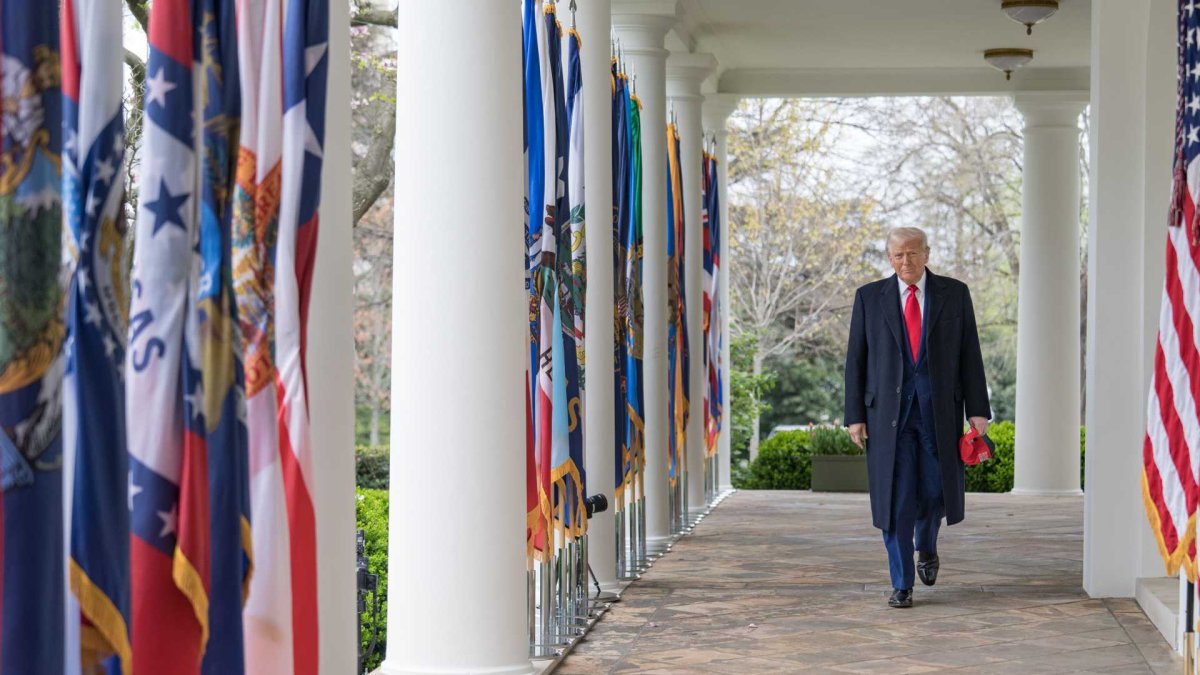


In China, the Communist Party leader with the most power since Mao; in Russia, a former KGB agent who has perpetrated himself in power more than Stalin; and in the United States, a real estate entrepreneur who does not coexist well with certain democratic norms. With this panorama of protagonists (and many others of equal or worse influence for the ideal of human progress), the world has realized in 2025 the fragility of a geopolitical order that, like many other achievements, had been taken for granted. Analysts speak of the configuration of a new world order and of a moment that recalls the expiration of the idea of the End of History and the Last Man, Francis Fukuyama’s influential essay that in 1992 declared the consecration as the hegemonic ideology of liberal democracy, which today faces an unprecedented crisis. International instability is becoming the new normal in the world and also in the fashion industry, which in 2025 has seen its consumer and supply markets shaken.
It is true that the sun continues to rise and the world continues to turn, that welfare levels in the West are holding up and continue to make progress in developing countries, and that global trade continues to grow. But it also seems clear that the first year of Donald Trump’s second term in the White House has finished drawing a future as volatile as this leader himself.
Trump’s steadfastness in imposing tariffs on all countries does not stand up to more than a few months of inflation, but simply using this negotiating weapon (which dynamites decades of progress in international trade) has as disconcerting an effect as the decision by the United States and Russia to restart nuclear weapons testing.
In short, the world has made it difficult in 2025 for a sector like fashion, for which consumer confidence is a critical vector. And the consequences of all these threats on the collective mood have begun to become apparent.
Key moments in a year of shifting sands
On April 2, an appearance by Trump with some large boards printed on featherboard definitively reignited economic protectionism and further ignited a growing trend towards the polarization of the planet. He announced the imposition of tariffs on virtually every country in the world and to levels that, in some cases, could sink the economies of many of them.
Earlier, on February 26, Trump and the technology tycoon Elon Musk, then head of an office called the Department of Government Efficiency (Doge), eliminated 90% of the international cooperation programs of the Usaid agency, key to the so-called US soft power, in another materialization of the America First program.
In April, the WTO expressed its concern about the uncertainty surrounding international trade policy
The two milestones confirmed what a World Economic Forum report had warned in January: the world is facing a scenario of growing political polarization, economic tensions and armed conflicts that could spread and worsen, in addition to the effects of climate change and disinformation. For this entity, the reelection of Donald Trump would influence three of the main risks for 2025: the resurgence of armed conflicts between states, the climate crisis and social polarization caused by disinformation.
In April, World Trade Organization (WTO) Director-General Ngozi Okonjo-Iweala noted that “I am very concerned about the uncertainty surrounding trade policy, in particular the impasse between the United States and China.“ “Persistent uncertainty threatens to dampen global growth, with serious negative consequences for the world, especially for the most vulnerable economies,“ she warned.
“President Trump’s announcement to impose universal tariffs on everyone,“ said for her part Ursula von der Leyen, President of the European Commission, “including the European Union, is a severe blow to the global economy. “I deeply regret this decision: let’s be clear about the immense consequences, the world economy will suffer massively, uncertainty will soar and it will lead to the rise of further protectionism,“ she added.
Following a clear negotiating strategy, Trump’s challenge to the world with tariffs has been succeeded by a long list of bilateral agreements that have been calming the waters. In July, the US and the European Union agreed on a tariff cut to 15% in exchange for fuzzy commitments on investment and energy purchases. The agreement was described as humiliating for the European Union, which put the search for stability before an open confrontation with the US giant.
In October, it was time for the great trade agreement between the US and China, the two powers that are locked in a tug-of-war for world economic and geopolitical leadership. Trump agreed to reduce tariffs on China by ten points, in some cases from 20% to 10% and in others from 57% to 47%.

In November came another major reversal by Trump triggered by the effects of tariffs on the U.S. economy itself. He announced the immediate reduction of import tariffs on beef, coffee and other commodities to contain inflation and address growing concerns about the rising cost of the market basket, particularly for food products that the U.S. does not produce enough of to meet its demand.
However, the fact that the stubborn economic premise that protectionism leads to inflation (and that inflation takes away votes) is becoming palpable does not prevent that, to some extent, the damage has already been done. In November, the WTO forecast that 2025 will end with 2.4% growth in trade in goods. The positive result (only three tenths lower than the WTO forecast at the beginning of the year) came about, according to Okonjo-Iweala, because of “the measured response of countries to tariff changes in general, the growth potential of AI, as well as the increase in trade among emerging economies”. The WTO director noted, however, that the effects of the tariff war are actually postponed to 2026, when trade will grow by only 0.5%.
On another level, 2025 has ended without new open wars, but with geopolitical instability that is largely aggravated by the persistence of the armed conflicts with which the year began. On August 15, Trump received Vladimir Putin with honors in Alaska in a meeting that ended the isolation to which the West had subjected the Russian president after the beginning of the invasion of Ukraine in 2022. On the table was the search for an agreement to put an end to a particularly sensitive conflict for the European Union and the North Atlantic Treaty Organization (NATO), the world’s most important military coalition.
The summit was defined as a gift to Putin, with no effect on the search for peace in Ukraine. In November, the United States presented a peace plan with major concessions to the invading country: cession of Ukrainian territory, renunciation of Nato membership and limitation of the size of the army.
The US has largely reversed its protectionist policy, but the WTO warns that its effects will be felt in 2026
The Middle East has been another pole of instability, with many more players than Israel and Palestine, in a scenario where Trump did achieve a substantial win. On October 10, Hamas and the Israeli government signed a cease-fire that has proven to be weak and largely fraudulent: despite the release of Hamas hostages, the deaths of Gazans at the hands of the Israeli army have continued unabated in recent months.
Beyond Gaza, in 2025, the West Bank, Lebanon, Iran and even Qatar have been the scene of military interventions by Israel and the United States, in a region that remains a powder keg for international geopolitics. In September, Israel carried out a disconcerting airstrike on Qatari soil against Hamas leaders, igniting a diplomatic conflict with a key Western ally in the region. Weeks later, under Trump’s watch, Israel’s President Benjamin Netanyahu had to apologize by telephone to his Qatari counterpart, Mohammed bin Abdulrahman Al Thani.
But the shifting sands of the Middle East went further, with two bitter enemies (the United States and Iran) in action. In an unprecedented intervention, the United States attacked Iranian nuclear facilities in June, allegedly thwarting the Arab country’s presumed effort to develop the atomic bomb.
The attack has not provoked an escalation of the war by the weakened Iranian government, which is indirectly involved in the conflict with Israel through its support for Hamas, among other organizations such as the Houthis in Yemen.
Nor has the other latent geopolitical conflict in the world, Taiwan, which continues to worry international analysts,gone beyond diplomatic escalation. The Kashmir conflict, which confronts India and Pakistan and which escalated in May with an unprecedented air attack by India on Pakistani territory, has not.

How has this scenario affected consumer confidence? In the United States, consumer confidence fell in November to one of the lowest levels in its history: the index compiled by the University of Michigan stood at 51 points, retreating by 2.6 points from the previous month because of persistently high prices and weakening incomes. “Wealthier consumers appear to be in a position to continue spending, while the financial situation of others is deteriorating,“ said Joanne Hsu, head of the survey. “These trends indicate that aggregate economic statistics may be masking vulnerabilities within certain segments of the population,“ she added.
Worse economic sentiment has so far not affected fashion sales in the U.S. giant: through August, retail sales of apparel, accessories and footwear posted a cumulative rise of 4.8% compared with the first eight months of 2024. In the Eurozone, consumer confidence has remained fairly stable throughout the year: after closing 2024 at negative 14.4 points, it reached its worst level in April, at negative 16.6 points. In November, it improved for the third consecutive month, reaching 14.2 points, the third best result of the year.
This relative improvement in confidence has not translated into an increase in consumption: on the contrary, retail sales in the eurozone countries as a whole recorded a further reduction in their growth rates in September, from 3.6% year-on-year in June to 1% in September, according to Eurostat data. The non-food product group, which includes fashion, posted the best performance within the sector, with sales up 1.5% on September of the previous year. The figure, however, is well below the 2.6% increase in sales in August.
In addition to Gaza and Ukraine, the bombings have reached countries such as Iran, Lebanon and even Qatar, a historical ally of the West in the Middle East, throughout 2025
In the case of China, consumer confidence has gone from strength to strength. From 86.9 points at the end of 2024, consumer confidence in the country has climbed to 89.6 points in September, according to the latest data from the Organization for Economic Cooperation and Development (OECD).
Fashion has also shown resilience in the Asian country, with sales up 3.5% from January to October, compared to the same period in 2024, according to the country’s statistical office. The figure was even more promising in October, with a year-on-year rise of 6.3%.
The year ahead
The 2026 U.S. congressional elections may lead to further restraint on Trump’s economic measures next year, but the world remains gripped by multiple uncertainty factors.
The International Monetary Fund (IMF) pointed in its latest forecast review last October to a more optimistic outlook for the 2025 close: the body headed by the Bulgarian Kristalina Georgieva foresees global economic growth for the year at 3.2%, a percentage that is two tenths more than what it estimated in July. For 2026, the forecast remains at 3.1% growth.
“The outlook,“ notes the IMF, “remains exposed to adverse factors. Prolonged uncertainty, rising protectionism and labor supply shocks could reduce growth; fiscal vulnerabilities, potential financial market corrections and eroding institutions could threaten stability.“
The World Bank outlined its forecast in June, noting then that “global growth is slowing following a marked increase in trade barriers and heightened policy uncertainty.“ “Growth is projected to weaken to 2.3% in 2025 (a significant downgrade from previous forecasts), with only a mild recovery expected in 2026 and 2027,“ the agency noted.“
Related content

Inditex: A Year of Ascending the Fashion Hierarchy
18 dic 2025 - 05:00

Colombian Fashion Boosts Global Presence with 2.3% Export Surge in 2025
4 feb 2026 - 07:17

French Label Balibaris Enters Administration to Restructure Debt
4 feb 2026 - 07:14

Liverpool Forecasts Lower Profit Margins in 2025 Despite Rising Revenue
4 feb 2026 - 07:08
Latest news
Colombian Fashion Boosts Global Presence with 2.3% Export Surge in 2025
4 feb 2026 - 07:17
French Label Balibaris Enters Administration to Restructure Debt
4 feb 2026 - 07:14
Liverpool Forecasts Lower Profit Margins in 2025 Despite Rising Revenue
4 feb 2026 - 07:08

Columbia’s Sales Remain Steady, Profit Takes Another Hit in 2025
4 feb 2026 - 06:59