

2025: A Revival Year for Fashion Shows and Trade Fairs
In 2025, while the world’s premier fashion weeks thrived with vibrant seasons spurred by a fresh wave of creative talent, trade shows are grappling to survive in a fiercely competitive and polarized landscape.
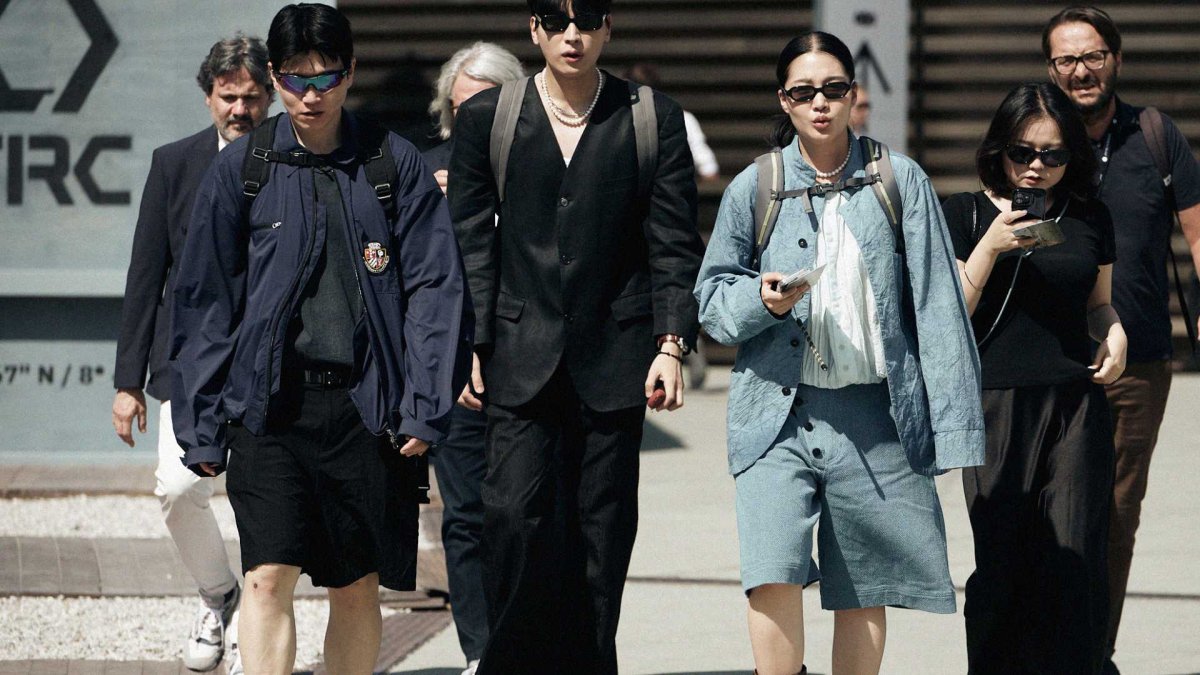


In 2025, the fashion calendar has moved on. London gave up its men’s week in June, Ispo is packing its bags to leave Munich after more than half a century, Gran Canaria is looking to August and Madrid celebrated forty years of catwalk with more international ambition than nostalgia. What was once an assumed routine of flights, fairs and fashion shows has become a much more selective moving map.
The year has coincided with a historic season of creative changes in Paris and Milan, which have concentrated the bulk of the big bets of luxury, with the debuts of Demna, Jonathan Anderson or Dario Vitale on the covers. Around them, the fashion weeks and professional shows have had to ask themselves what they offer besides dates on the calendar, reformulating content, community, services, or simply affirming themselves in the most classic way, being a place where to continue closing orders.
At the top of the pyramid, Paris and Milan have established themselves at the head of the system. Beyond the creative debuts, these are the places where the stagings that set the tone of the sector are concentrated. They are also the places where the fashion show and sales calendars intersect with the greatest intensity, with showrooms full and agendas closed months in advance.
London and New York are still looking for a model. The British Fashion Council decided to cancel the independent edition of London Fashion Week Men’s in June and opted for lighter formulas and for the presence of British designers in showrooms and fashion shows in Paris, a move that reduces London’s weight as a men’s B2B event and reinforces its role as a creative platform. New York maintains its symbolic and media strength, but competes with a context in which many European brands reserve their greatest commercial efforts for Europe and Asia.
The sector’s professional events and catwalks, forced to adapt in the midst of reinvention, innovate with changes in agenda, alliances and venues
Seeking new capitals
While the major capitals are reordering their priorities, the poles that for years were considered peripheral have gained relevance. Copenhagen has established itself as a reference in terms of sustainability criteria and hybrid formats. Lisbon and Porto, through ModaLisboa and Portugal Fashion, have woven a story that links design and local industry and attracts a growing number of buyers. Berlin, with no big fairs to act as a tractor, is trying to sustain a more compact fashion week, supported by the local scene.
Spain has taken advantage of 2025 to try to take a step forward. Mercedes-Benz Fashion Week Madrid celebrated its 40th anniversary with an edition that combined fashion shows in Ifema and activities in the city center, around the great Carolina Herrera show. In Barcelona, 080 has maintained its commitment to signature design, sustainability and international projection, with a growing emphasis on projects linked to circularity and innovation.
Fairs in transformation
The shift in the fashion weeks has been accompanied by a readjustment in the trade fair business. 2025 has confirmed that there is no longer room for a dozen large generalist shows spread across Europe. The map is concentrated in a few strong poles, while other formats are shrinking, merging or disappearing. At the same time, the fairs that remain have begun to look less like a mere succession of stands and more like small temporary concepts that mix product, services and content.
In Paris, Première Vision has reinforced its position as a major international platform for fabrics and components, but with a different agenda than just five years ago. The latest editions have focused on innovation and sustainability, and have incorporated areas for start-ups, technological solutions and, increasingly, content related to beauty and wellness. The aim is to attract visitors who are no longer just looking for suppliers.
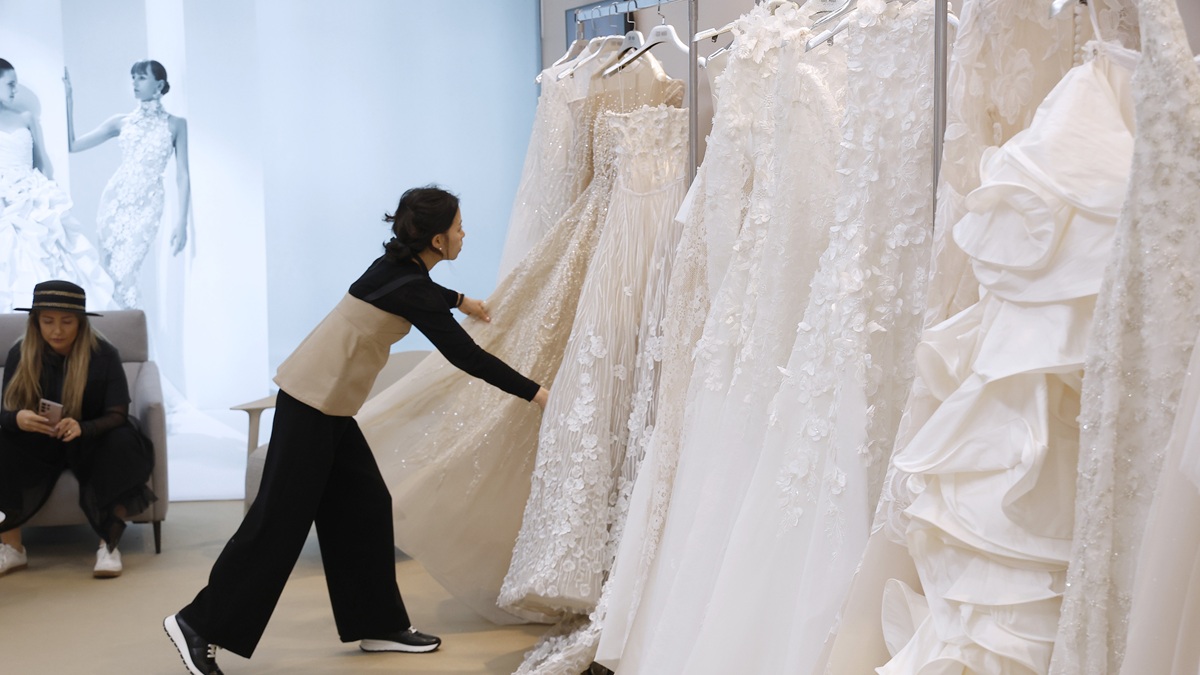
Who’s Next has followed a similar path from the finished product side. The show defends itself as the great European event and today combines women’s fashion, accessories, jewelry and lifestyle proposals with an increasing presence of beauty brands. In addition to the purely commercial part, there are areas such as Impact, focused on sustainability, or Traffic, dedicated to services and solutions for retail. The launch of specific design and decoration sections, as well as routes connecting fashion and home products, reflects a clear attempt to expand the business perimeter and justify the journey with more than just an order book.
Copenhagen provides the Nordic version of this search for new formats and brings together the brands orphaned by shows in Germany. Ciff thus presents itself as Northern Europe’s major purchasing trade fair, with a careful presentation and selection of participants. For the coming season, the fair has announced collaborations with design and lifestyle players that include shared fashion, beauty, books and objects spaces, in line with what the most influential concept stores in the region have been doing for years.
Outside the Franco-Italian axis, Turkey has seized the window of opportunity. Ifco, in Istanbul, has consolidated its role in 2025 as a major regional apparel and fashion trade fair, with more than five hundred exhibitors and tens of thousands of trade visitors from Europe, the Middle East, North Africa and Central Asia. For a large part of the industry, Istanbul has become an alternative of extended proximity, in a context in which European chains are diversifying their sourcing and rethinking their exposure to Asia.

The most visible adjustment has taken place in Germany. The announcement of Ispo’s departure from Munich to Amsterdam as of 2026, after more than fifty years in the city, has culminated the turnaround. The sports and outdoor fair is looking for a new start in the Netherlands, with another operator, other dates and an approach more linked to community and content than to the mere exhibition of collections.
Spain, in parallel, is struggling to strengthen its position as a trade fair venue. Momad has set its next summer edition for July 2026, given the coincidence of dates with the first celebration in Madrid of the Formula 1 Grand Prix. After years of synergies with Bisutex, Integift and MadridJoya, the fair directed by Julia González will reinvent itself in the coming year and will seek to attract international attendees to whom the early celebration fits. Florence, meanwhile, continues to be the reference capital of men’s fashion, despite the contraction of the Pitti Uomo event.
For companies, this new landscape is first and foremost an operational decision. Maintaining four or five trips a year to trade shows and fashion weeks that no longer bring the same return is difficult to justify in an environment of lower growth and more pressure on profitability. 2025 has accelerated a process that came before the pandemic: concentrating investment in fewer places, betting on own showrooms in key cities and combining physical presence with digital sales tools. .
Related content

2025: France’s Prêt-à-Porter Industry at a Crossroads
19 dic 2025 - 05:00

2025: A Year of Unpredictable Shifts in Fashion
18 dic 2025 - 05:00

Inditex: A Year of Ascending the Fashion Hierarchy
18 dic 2025 - 05:00

Latest news

Galeries Lafayette Lists BHV Marais Building Amidst Shein Controversy
22 dic 2025 - 11:17
Leadership Shift at Bimba y Lola: Cristina Trujillo Steps Down from Board
22 dic 2025 - 11:02
Parfois Continues Expansion Pace with New Flagship Opening in Athens
22 dic 2025 - 10:49


