Brazil Steps into the Spotlight, Supplanting India in Bangladesh’s Cotton Supply Chain
Bangladesh’s cotton imports reached 1.81 million tons for fiscal 2024-25, with Brazil emerging as the top supplier at 415,000 tons, surpassing India’s 305,000 tons. Benin completes the top three with 231,000 tons delivered to the South Asian nation.
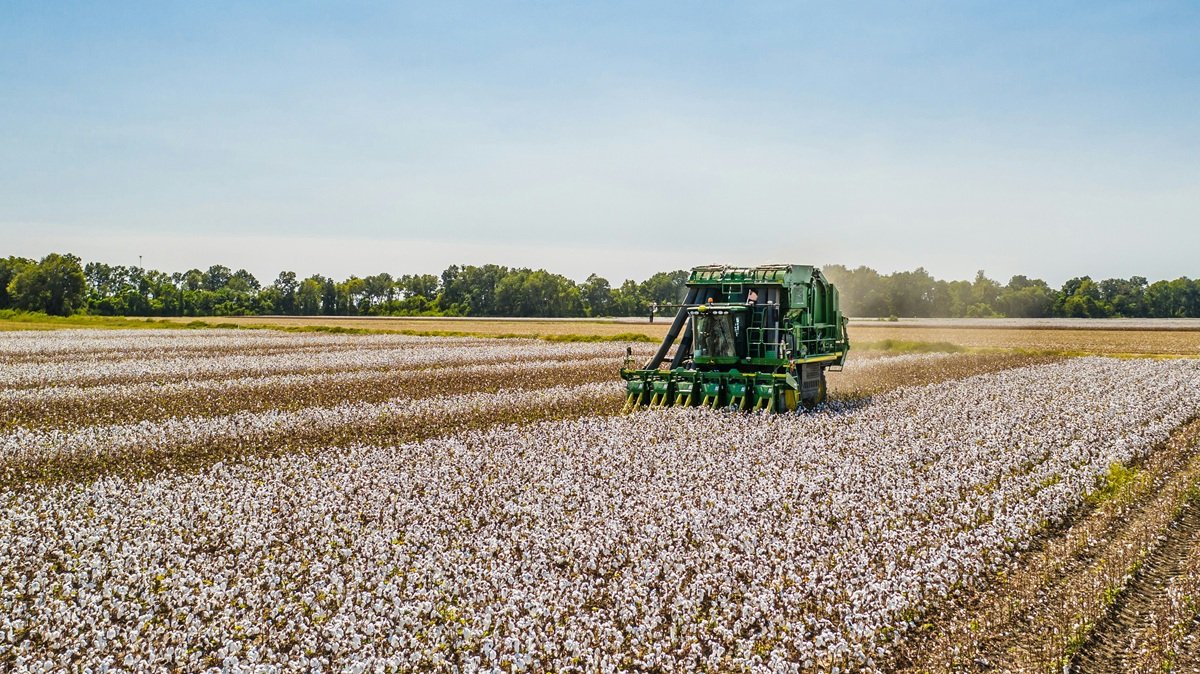

Brazil has become the main supplier of cotton to Bangladesh, surpassing neighboring India, according to a report by the United States Department of Agriculture (Usda). The Asian country is one of the world’s largest importers of cotton and the second largest exporter of garments globally.
During fiscal year 2024-25, which began in August 2024, Bangladesh imported about 1.81 million tons of cotton. Of this total, Brazil contributed about 415,000 tons, equivalent to 23% of imports, while India ranked as the second largest supplier with 305,000 tons, followed by Benin with 231,000 tons, Cameroon with 135,000 tons, and the United States with 130,000 tons of cotton, according to Usda data.
The U.S. Foreign Agricultural Service report states that “Brazilian cotton has become popular with Bangladeshi spinners because of its competitive price, availability during harvest and stable supply.“ In contrast, in the previous fiscal year, 2023-2024, India led exports to Bangladesh with about 390,000 tons, favored by shorter shipping times through the ports of Calcutta and Benapole, despite higher prices and occasional quality problems.
For the next fiscal year 2025-26, Usda forecasts in its report that Bangladesh’s imports will rise to 1.83 million tons, an increase of 1.4% versus 2024-2025 and 5.2% higher than the 1.7 million tons imported in fiscal 2023-2024. The growth is attributed to “increased use of cotton by local spinners.“
Bangladesh needs to import cotton because its domestic production, stagnating at 33,000 tons, is a fraction of what its textile industry needs
Domestic production remains stagnant at 33,000 tons due to land scarcity and long cultivation period, with cotton sown on an area of 45,000 hectares to 46,000 hectares. According to the US government report, Bangladesh’s textile industry has the capacity to consume up to 3.27 million tons per year, depending on raw material availability, energy supply and yarn demand.
Currently, only half of this capacity is being utilized, with an estimated consumption of 1.81 million tons in FY2024-2025. In FY2025-206, consumption is projected to “rise to 1.85 million tons, an increase of 2.4% driven by higher imports.“ The spinning industry uses cotton to produce cotton yarns and blends, and production of these is forecast to grow from 1.7 to 1.9 million tons.
Despite the increase in cotton imports and consumption, the apparel industry still needs to import yarn and fabrics. India continues to be the largest supplier of yarns, thanks to its large spinning capacity, shorter shipping times and reduced logistics costs, while China leads in fabric exports, followed by Pakistan and India.
The US Department of Agriculture forecasts cotton imports from Bangladesh to grow by 2.4% in 2025-2026, touching two million tons
Bangladesh’s fashion industry
Fashion is one of Bangladesh’s main economic drivers, responsible for up to 80% of exports to the rest of the world. Most of the major players in the sector have suppliers in the territory. Garments made in Bangladesh account for 6.9% of the global share, according to the latest data published by the World Trade Organization (WTO).
Moreover, Bangladesh is the second largest exporter of garments worldwide, behind only China, which has a 29.6% share of the world market. Bangladesh is followed by Vietnam with exports valued at 33.94 billion dollars.
Related content
From Polyester Power to Cotton’s Fall: A Fiber Tale
23 sep 2025 - 05:00
Leading the Charge: Bangladesh’s Dominance in Cotton Imports
19 sep 2025 - 07:19

Swatch Sees 89% Profit Decline in 2025 Amid Tariff Woes and Sluggish Demand
30 ene 2026 - 04:26
Latest news
Swatch Sees 89% Profit Decline in 2025 Amid Tariff Woes and Sluggish Demand
30 ene 2026 - 04:26


Inditex’s Eduard Casabella on Oysho’s Sport Pivot and Growth Through Identity
29 ene 2026 - 18:40

McKinsey’s Gemma D’Auria on Luxury’s Pullback and Fashion’s Resilience in 2026
29 ene 2026 - 18:35