Morgan Stanley’s Game Plan for the Elite $7 Billion Firms
Less than a third of fashion conglomerates surpass this revenue mark, sharing a minimal market share. Global presence, direct sales, and multiple brand portfolios are key to the success of fashion’s titans.



The formula behind the international fashion giants. In an industry saturated with brands seeking to respond to the needs and styles of all types of consumers, fashion giants are a rara avis. Nearly 70% of fashion companies worldwide, in fact, have a turnover of less than $1 billion, while less than a third of the sector has revenues of more than $7 billion, the threshold for being considered a big business, according to the latest Morgan Stanley study.
And all of them share a series of characteristics that have allowed them to scale their business and lead the international fashion map: focus on Western markets, large international presence, diversified catalog beyond garments, commitment to direct sales to the consumer, a target market in luxury or large distribution, more than one brand in its portfolio and heritage. The target customer, moreover, is women and young consumers.
“The global apparel and footwear market is highly fragmented, with even the largest companies controlling only a low single-digit market share,“ explains investment bank analyst Alex Straton, author of the report published by WWD. “In fact, almost 70% of the companies have a turnover of less than one billion dollars, mainly because of the low barriers to entry in the sector, which generates a lot of competition,“ adds the expert.
Internationalization or direct sales to the consumer are two of the foundations of any fashion giant
Among the giants, in fact, the study highlights that even the U.S. group Nike, which has the largest market share, only accounts for 3.5% of the global market. The group closed the last fiscal year with sales of $46.309 billion, a period marked by the loss of its own barrier, that of $50 billion in turnover.
The American icon is followed by Inditex, with 2% of the global fashion pie and sales of 38.5 billion euros at the close of its last full financial year, and Adidas, the sports king’s main competitor, with another 1.8% of the market and a turnover of €23,638 million in 2024. Fast Retailing, Uniqlo’s parent company, which closed its last full year with sales of more than 19.19 billion, has already managed to position itself in fourth position, with a market share of 1.2%, a position it shares with H&M, which in its own financial year recorded sales of more than €20 billion, and Shein, whose estimated turnover is around $37 billion.
Further down, Gap closed its own fiscal year with a turnover of $15.086 billion, concentrates 0.9% of the international fashion market, followed by Anta, with 0.8% and sales of up to €8.978 billion. LVMH and VF Corporation, with another 0.7% and 0.6%, respectively, close the list of the big fashion companies, after recording a turnover of 84,683 million euros in the case of the French luxury giant, and another $9,504 million in the case of the American conglomerate.
Abercrombie&Fitch and Under Armour are two companies with the potential to join the club
Beyond the names that make up the select 7 billion club, the Morgan Stanley study also analyzes those companies that either have the potential and capacity to form part of the classification or, in the opposite direction, are overvalued by the market.
Abercrombie&Fitch, on the one hand, closed the 2024 fiscal year with sales of $4,984 million, well below the established barrier, but the company has most of the characteristics that unite the big companies in the sector. The report highlights that the U.S. icon lacks the ability to attract more international customers and a stronger offering that goes beyond fashion apparel.
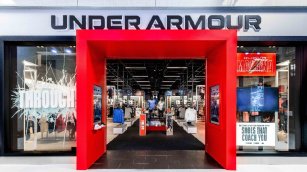
On the opposite side of the potential candidates for the club, Under Armour. The Morgan Stanley analyst’s report highlights that the U.S. fashion and sports equipment giant, with a turnover at the close of the last full year of €5,164 million, is overvalued in the market, as it depends too much on the supply of clothing and the wholesale channel, and has little penetration among women’s fashion and the consumer under 35, another of the keys to the big fashion businesses.
Related content

Adidas vs Puma: Europe Aim for a Sporting Comeback
4 nov 2025 - 05:00

Fashion Titans Shift 20% of Production from China
2 oct 2025 - 05:00

LVMH Mirrors Kering’s Strategy, Contemplates Divestment from Fenty Beauty
22 oct 2025 - 07:02

Latest news

Jewelry shields Richemont
19 ene 2026 - 04:09

Asics Strengthens Production: Onitsuka Tiger Launches First Factory in Japan
16 ene 2026 - 08:03