

Spain’s Mango Takes Strategic Stake in The Post Fiber to Boost Circular Textile Innovation
The company will join the recycler’s board of directors with one seat, occupied by Berta Moral, director of Mango Kids and Teen. The Post Fiber was founded by Hallotex, Margasa, Textil Santanderina and ModaRe.


Mango accelerates in the sustainable race. The Spanish retailer has taken a stake in the Spanish recycling company The Post Fiber, initially founded by four industrial giants. The company is thus increasing its commitment to recycled materials, with the aim of achieving the sustainability objectives set for 2030, which include the use of 100% fibers with a lower environmental impact by that date.
The company chaired by Toni Ruiz thus joins Hallotex, Margasa, Textil Santanderina and ModaRe, the four companies that started the project together a year ago. Mango’s entry into the capital of The Post Fiber, the percentage of which has not been disclosed, has been carried out through Mango StartUp Studio, the accelerator of the Spanish company.
The operation also involves the entry of Mango on the board of directors of the recycler, a position that will be occupied by Berta Moral, director of Mango Kids and Teen. It will be precisely the company’s teen chain that will be the first to introduce the textile fibers recycled by The Post Fiber.
Mango will use The Post Fiber fiber in a first Teen collection
Specifically, Mango will launch a capsule collection consisting of ten references, products such as T-shirts and sweatshirts, the company has explained to Modaes. The fabric will be made from 80% recycled materials, of which 15% will come from textile recycling to post-consumer textile processed by The Post Fiber. The remaining 65%, meanwhile, will be extracted from post-industrial waste recycling.
“We are clear that advancing in sustainability is not a question of size, but of approach, and that the path is more collaborative than competitive,“ said Andrés Fernández, Mango’s director of sustainability and sourcing. This first collection manufactured jointly with The Post Fiber will be available through the Mango’s website and in some points of sale.
For the recycling company, the entry of Mango in its capital will allow it to move forward with plans to launch, before the end of 2025, a first plant of its own, located in Sabadell (Barcelona). The Post Fiber’s plans, in fact, are to produce 1.6 million kilos of recycled fiber in 2026, and to reach the break-even point that same year, barely a year after starting up the facility.
Mango’s sustainable strategy
For Mango, meanwhile, the entry into the company’s capital will boost its sustainability strategy, launched in 2022 and which envisages achieving a series of objectives by 2030. With regard to the use of raw materials, the Spanish company aims to use 100% fibers with less environmental impact in five years, and up to 40% recycled fibers.
For the time being, and since the launch of this roadmap, Mango has increased the use of recycled fibers in its collections to 24.7%, according to the sustainability report. The figure rises to 72% in the case of fibers with a lower impact, a classification that also includes, for example, the sourcing of 100% traceable cotton.
To further advance these goals, Mango has already launched other collaborations within the sector, the latest of which is a long-term purchasing commitment with Circulose. The company operated until last year as Renewcell, and specializes in the production of recycled cotton, viscose and other cellulosic fibers. In 2023, Mango reached a first agreement with the company, acquiring 28,000 units of viscose from Circulose.
Other collaborations that the company has carried out have been with Materra, the company dedicated to the production of sustainable and traceable cotton along the entire value chain, and thanks to which it incorporated regenerative cotton for the first time in its collections last year. In addition, the Spanish fasion retailer also works with Coleo to manage and recycle its unsold stock.
This strategy of Mango joins a practice already widespread in the rest of the sector, and by which fashion companies are entering the capitals of companies oriented to different sustainable processes to ensure their viability. Inditex, for example, is present in the capital of Galy, Infinited Fiber or Circ, while H&M, the main competitor, has a stake in Syre or Infinited Fiber.
Related content

Mango Hits 50-Store Milestone in the U.S. With A New Store in Oregon
25 jun 2025 - 15:07
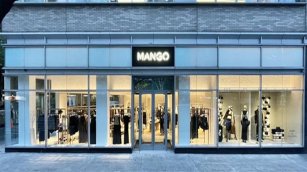
Mango Strengthens NYC Presence with New Upper West Side Location
2 dic 2025 - 12:08

Mango Targeted in Recent Cyber Attack: Unauthorised Access to Client Information
14 oct 2025 - 16:51
Mango Continues Executive Shakeup, Names Nuria García as Image Director
1 oct 2025 - 05:00
Latest news

New Era to Launch 30 Stores Across Spain in One Year
10 dic 2025 - 05:00

Fewer but Fantastic: Inditex Elevates Shopping Experience with New Concepts
10 dic 2025 - 05:00

China’s Historic Leap: Trade Surplus Exceeds $1 Trillion for the First Time
9 dic 2025 - 14:43

G-III Exceeds Forecasts Amid End of Calvin Klein and Tommy Hilfiger Licenses
9 dic 2025 - 14:40


