United Front: Italian Fashion Industry Moves to Safeguard ‘Made in Italy’
The Camera Nazionale della Moda convened top industry players during Milan Fashion Week to advocate for safeguarding the value chain and pushing for stricter regulations to secure the future of Italian luxury.
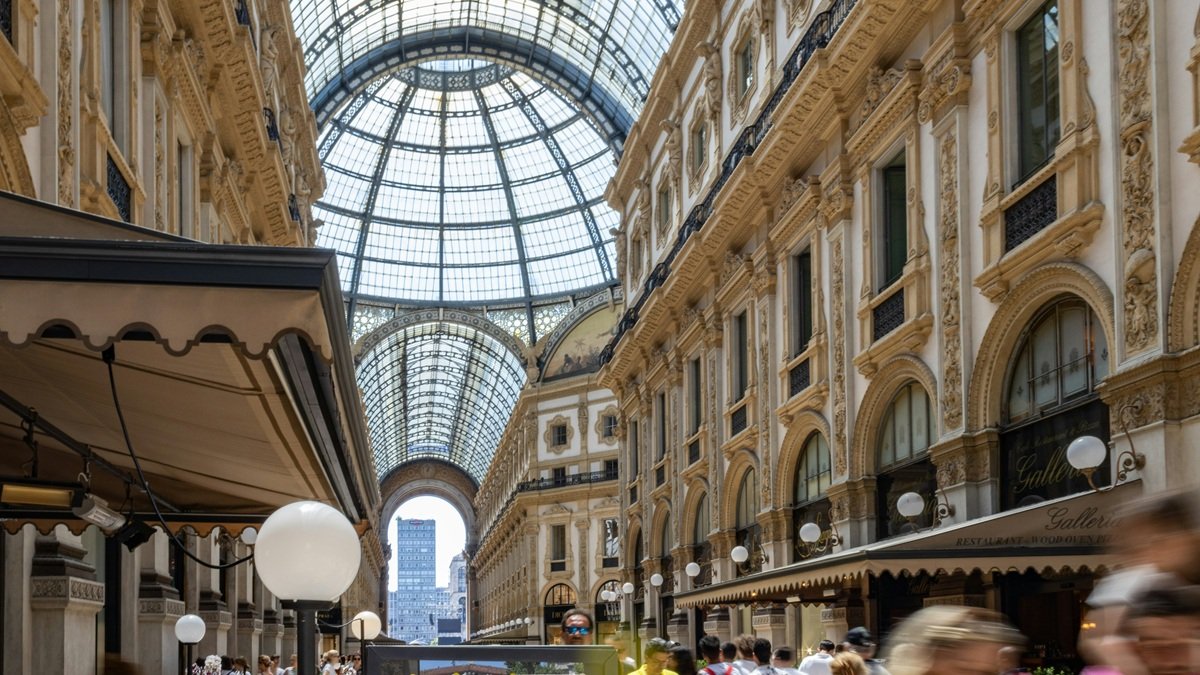

The Italian fashion world has shown unity in the midst of Milan fashion week, in a context marked by mourning after the death of Armani and a climate of creative revolution. The top representatives of the Camera Nazionale della Moda, gathered at Casa Cipriani, claimed the need to protect the national value chain through creativity, sustainability and ethical practices. Among the attendees were Luigi Maramotti of Max Mara, Renzo Rosso of OTB, Remo Ruffini of Moncler, Alfonso Dolce of Dolce&Gabbana, Gildo Zegna of Zegna and Lorenzo Bertelli of Prada, flanking Carlo Capasa, president of the institution.
Capasa stressed that, in a polarized world, fashion can convey a “positive message.“ “We don’t want fashion to go out of fashion,“ he assured, recalling that creativity, although costly, is the competitive advantage that distinguishes Italy from other industries, WWD reports.
For his part, Gildo Zegna defended the historical weight of a sector that in many cases is still in family hands after more than a century of trajectory. “We have an immense know-how that goes back a long way and we want to defend what our predecessors built and create a better future,“ said the executive, who recalled the group’s efforts to consolidate an integrated value chain through acquisitions of suppliers.
For Zegna, production control is crucial in a context of exchange rate volatility and trade tensions. “If tariffs stay where they are, we can manage it, but what worries me is the instability of currencies,“ he said, warning of the need to keep an eye on prices so as not to erode the appeal of Italian luxury.
The Italian fashion industry defended know-how as a strategic asset
Renzo Rosso, founder of OTB, emphasized the three pillars of his group: creativity, sustainability and technology. “Without creativity, a product is nothing more than an object; with creativity you create desire, you create a dream,“ he stressed. The entrepreneur pointed out that 55% of the group’s production is already sustainable and that investment in artificial intelligence will be key to improving business efficiency.
Rosso also emphasized the social dimension and appealed to the optimism needed in the sector. “Negativity impacts even on store traffic, that’s why we need positive news,“ he urged the media present.
Lorenzo Bertelli, head of sustainability at Prada, warned that “inequality is the biggest threat to the luxury industry,“ an idea echoed by Luigi Maramotti, president of Max Mara Fashion Group, who pointed out that “the consumer is confused” and that, while Europe is making progress in sustainability, other markets are following divergent directions. “It’s easy to make news of scandals, but you have to value what you see and support the thousands of workers in this industry,“ he defended.
This point connected with one of the most sensitive debates: the judicial investigations into cases of labor exploitation in the supply chain of luxury firms. Loro Piana, Dior, Armani, Valentino and Alviero Martini have been under scrutiny in recent years, although some proceedings have already been closed.
Regulatory pressure on supply chain worries industry
Capasa came out swinging, arguing that illegality affects a limited fraction of the sector. According to Istat data, around 30,000 people work without a contract in the industry, compared to a total of 600,000 employees. “This is about 2% or 3% of luxury production, far below other sectors,“ he said.
The president of the Camera confirmed that the institution is working with the Ministry of Enterprise and Made in Italy on new legislation to regulate and protect the supply chain, which he called “the basis for saving the industry.“
Related content

Armani, Versace and Gucci Redefine Milan’s Scene
23 sep 2025 - 05:00

Zegna earns 47.9 million in the first half despite Thom Browne’s decline
5 sep 2025 - 13:38

Bottega Veneta’s Top Executive Joins Moncler as CEO
20 ene 2026 - 18:40
Giorgio Armani Appoints Former Gucci Exec as CEO of Americas
14 ene 2026 - 06:47
Latest news
Swatch Sees 89% Profit Decline in 2025 Amid Tariff Woes and Sluggish Demand
30 ene 2026 - 04:26


Inditex’s Eduard Casabella on Oysho’s Sport Pivot and Growth Through Identity
29 ene 2026 - 18:40
McKinsey’s Gemma D’Auria on Luxury’s Pullback and Fashion’s Resilience in 2026
29 ene 2026 - 18:35