Legacy and Shadows: Armani, Versace, and Gucci Redefine Milan’s Fashion Scene
Milan is on the brink of a historic shift. Following the recent loss of Giorgio Armani and Versace’s latest transformation, Gucci steps into its debut challenge with Demna, against a backdrop that questions the robustness of Italian luxury.
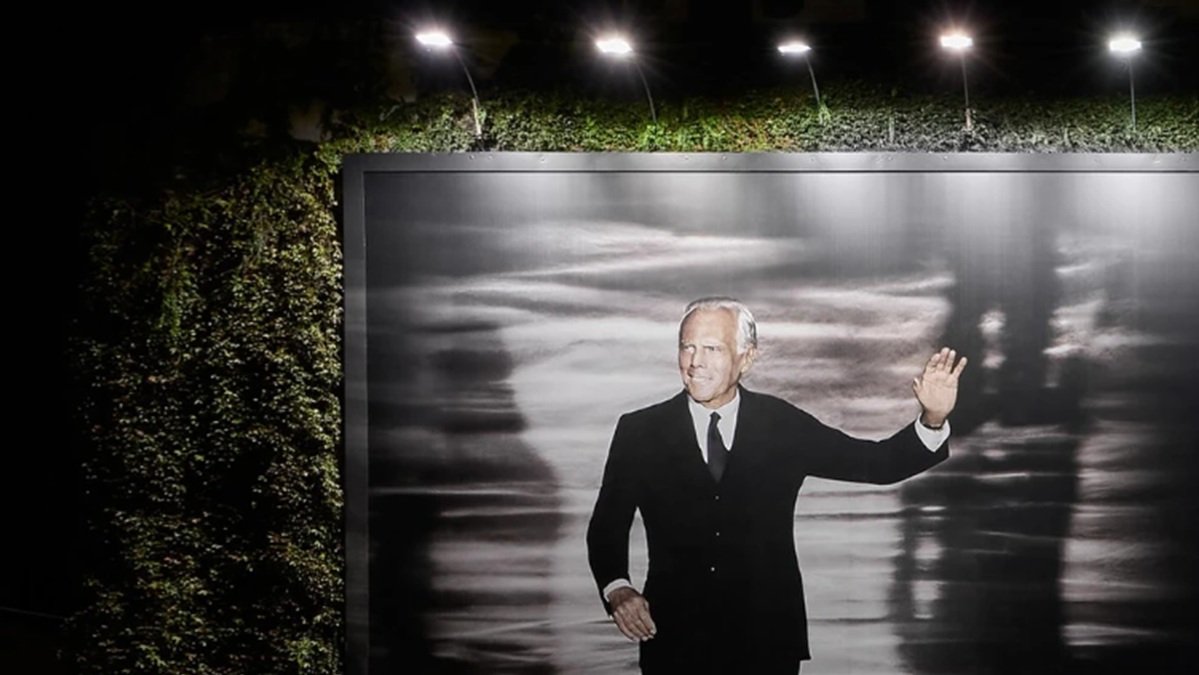

This is not the first time that Milan has faced a historic changeover. And it probably won’t be the last either. In July 1997, the unexpected death of Gianni Versace made the front pages of newspapers around the world and forced the Italian industry to look into the abyss. The Maison de la Medusa, emblem of an opulent, festive and nocturnal Italy, was dismantled in a matter of hours. The images of Donatella and Santo Versace at the funeral in the Milan cathedral were almost an act of state, with the entire city assuming that Italian-style glamour had dressed in mourning.
What happened next was an unmanual turnaround, a change of course before which her sister took the helm of the iconic fashion house. Donatella then took over the creative baton at a time when continuity seemed impossible and turned excess into storytelling. Under her command, Versace continued to shine on red carpets and magazine covers, transited the crisis of the 2000s, cleaned up its finances with the entry of private capital and, in 2018, went a step further with the sale to Capri Holdings. That operation turned Versace into a multinational, keeping the designer as aesthetic guardian and visible face of the myth. Today, the story begins anew, with Donatella away from the front row and under the umbrella of a new owner, the Italian house Prada.
The brand’s new creative director is Dario Vitale, a designer trained at Prada and Miu Miu, who will make his debut this season in Milan with an intimate presentation to be held next Friday. For Versace, the challenge is monumental: to preserve the baroque and audacious DNA that defines it and, at the same time, to integrate into the industrial discipline of Prada with the ambition of matching the star results of the group’s little sister, Miu Miu.
“We are ready to work hard and we are aware that the consolidation of the project will take time - assured Prada group CEO Andrea Guerra, coinciding with the purchase of Versace for €1.25 billion -; we aim for sustainable revenue growth in the long term, not in the coming quarters.“ With the strategic acquisition closed last April, the Italian conglomerate not only aims to become the top luxury brand in the country, but also raised the company’s global turnover to €6.3 billion.
Giorgio Armani to hold its first fashion week after the death of its founder
With the recent death of Giorgio Armani, Italian fashion is once again bereft of icons to look to as a guiding light. At 91, Armani was the last great independent designer, the man who turned understated tailoring into global luxury and who personally controlled every piece of his empire. His handwritten testament has laid out the roadmap for the company’s future.
The Giorgio Armani Foundation has inherited 99.9% of the group’s shares, with the recommendation to sell 15% of the capital to a strategic partner such as LVMH, L’Oréal or EssilorLuxottica within 12 to 18 months. The designer’s instructions also provide that, within three to five years thereafter, the buyer can take an additional stake of between 39% and 54.9% of the capital. If this sale is not completed, Armani has left open the possibility of an IPO, in an Italian market or equivalent, with a horizon of up to eight years.
What is at stake are sales of more than €2.3 billion per year, a portfolio that includes fashion, hotels and gastronomy, and the narrative of independence that has been the hallmark of the house. If Versace already went through its first transition in 1997, now it is Armani who must learn to survive itself.
The challenge is now both emotional and economic. In addition to having been one of the great designers in the history of fashion, Armani was also a man ahead of his time, able to read situations in contexts of uncertainty. Without going any further, in February 2020, the Italian was one of the first personalities in the industry to take action in the face of the first Covid-19 demonstrations. Championing the prudence that only experience grants, Armani emptied his showroom for the first time, holding a closed-door show that was streamed when Covid-19 was just beginning.
The third reinvention of Versace will arrive under the umbrella of Prada and the design of Dario Vitale
In the summer of the same year, the designer canceled his haute couture show in Paris and ready-to-wear show in Milan, scheduled for the fall, and announced that he would not be showing in the fall.n, scheduled for autumn, and announced that they would be regrouped into a single presentation in January 2021 under the Armani Privé umbrella. Carlo Capasa, president of the Camera Nazionale della Moda Italiana, described the decisions as “consistent with his vision.“ Without him, the city loses not only a creator, but an ethical reference who knew how to impose common sense over spectacle.
As a tribute, the firm Giorgio Armani will be in charge of putting the finishing touch to the Milan fashion week, which will begin this Tuesday and will conclude next Sunday, September 28. In a fashion show dedicated to the ready-to-wear collection for spring-summer 2026, the emblematic Brera Palace will be the exceptional setting to present the latest creations of the king of Italian fashion. The show will coincide with the fiftieth anniversary of the house and will be in addition to the Emporio line fashion show, scheduled for Thursday, September 25, and a dedicated exhibition at the Pinacoteca di Brera, which will feature more than a hundred looks from the Armani archive.

“We will celebrate fashion week by paying tribute to one of its founders, Giorgio Armani; as well as to his creative, entrepreneurial and human legacy, of great value in this period of transformation that fashion is going through,“ underlined president Carlo Capasa. The event, which will precede Paris Fashion Week, will feature a packed agenda of 171 events, including 54 fashion shows, the same number as last year’s edition.
In this dense fashion calendar, which will also feature the first proposals of Louis Trotter for Bottega Veneta (Saturday 27th) and Simone Belloti at Jil Sander (Wednesday 24th), highlights the relaunch of another historic fashion house. Gucci will face its first test under the creative direction of ex-Balenciaga Demna and its new CEO, Francesca Bellettini, appointed after Luca De Meo’s arrival at the helm of the Kering group.
Gucci will seek its own resurrection with the Demna-Bellettini tandem
The firm, once the goose that laid the group’s golden eggs, is going through its worst run in a decade, with sales falling by around 25% in the first half of 2025. Luca de Meo, Kering’s new CEO, has promised swift measures to recover the pulse of the conglomerate’s jewel and is relying on Saint Laurent’s former top executive to turn the business around, restoring its profitability and creative brilliance. The turnaround is essential, in a context in which the brand represents half of the group’s sales. Although the brand has unveiled some of the Georgian designer’s first creations through a lookbook under the theme of La Famiglia, the presentation of the collection will take place at an intimate event on Tuesday.
Throughout its history, Gucci has already died several times and has learned to get back on its feet by reinventing itself. In the 1990s, the creative and entrepreneurial duo of Tom Ford and Domenico De Sole rescued the company from the family chaos, creating a language of sensuality that put it back at the center of fashion and opened the door to its subsequent sale to PPR, now known as Kering. Then came Frida Giannini and Alessandro Michele, each with their own reading of the archives. From commercial sophistication to the eccentric maximalism that turned Gucci into a cultural phenomenon before beginning its particular descent into hell, for which the commercial proposal of ex-Prada Sabato de Sarno could do little.
In the coming days, Milan will be the stage where it will be seen if the Italian industry is able to turn nostalgia into an engine for the future. The fashion shows will be the visible part, but something bigger is at stake backstage: the redefinition of the business model, the institutionalization of brands that were born from a solitary genius and the search for a balance between identity and profitability are today an obligation for three of the most important names in Italian fashion.
As in 1997, the covers will once again reflect a city that is reinventing itself. Milan is facing a chapter of generational transition, forced to overcome major absences, as it did in the past with the death of Gianni Versace or of Franca Sozzani herself, the editorial icon who turned Vogue Italia into a laboratory of visual culture. The great institutions are called to remain so without getting lost in the attempt. Milan will be Versace without Versace, Armani without Armani and Gucci in reconstruction.
Related content
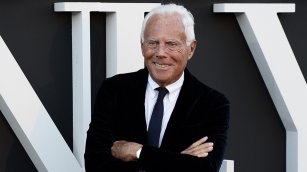
Legendary Designer Giorgio Armani Dies at 91
4 sep 2025 - 15:35
Giorgio Armani Appoints Former Gucci Exec as CEO of Americas
14 ene 2026 - 06:47

Armani Undergoes Leadership Overhaul with Founder’s Heirs at the Forefront
28 nov 2025 - 07:13

Giorgio Armani Appoints Giuseppe Marsocci as CEO Following Designer’s Passing
16 oct 2025 - 14:53
Latest news

Gordon Brothers Takes Over LK Bennett, Sets Stage for Global Expansion
28 ene 2026 - 12:33
Galeries Lafayette Finalizes Sale of BHV Building Amid Shein Controversy
28 ene 2026 - 12:30

VF Corp’s Q3 Results Shine with 28% Boost as Business Reorganization Unfolds
28 ene 2026 - 08:23

Claire’s Faces Another Setback in the UK with Second Bankruptcy in Six Months
28 ene 2026 - 08:21