Asos’ José Antonio Ramos on Decision-Making in Real Time and Leading Through Noise
As the business environment transforms, organizations are driven to adopt rapid decision-making. Companies are in pursuit of executives who embody their principles and are prepared to steer the business forward without hesitation.
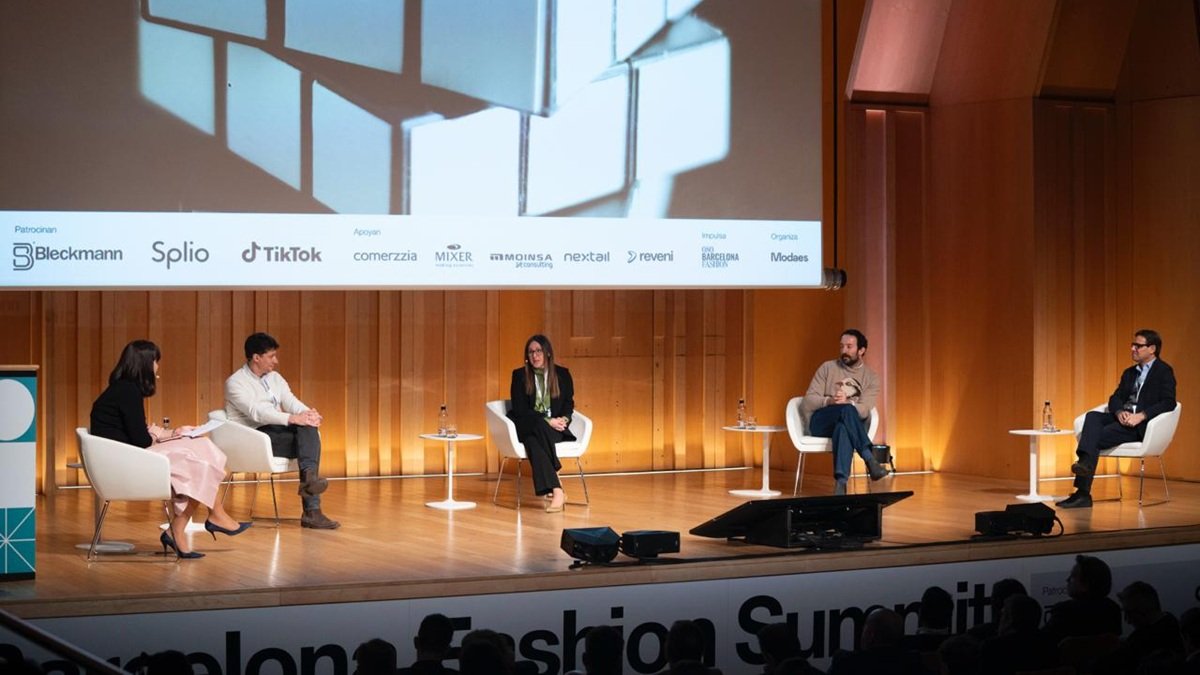


Speed. This was the main concept of the first of the round tables held as part of the fourteenth edition of the Barcelona Fashion Summit. The speakers, José Antonio Ramos, CEO of Asos; Beatriz Fernández, CEO of Mascaró; Jaime Garrastazu, founder and CEO of Pompeii, and Carlos Soler-Duffo, former CEO of Tous and director of companies such as Bimba y Lola, agreed: in a world that changes in a matter of seconds, agility in decision making is the key to success.
The second of the concepts around which the debate revolved, entitled Management: decision-making and teams. Does the same thing work at all times, was ownership. This was defended by Ramos (Asos), who believes that “making decisions quickly is essential”, but also that managers should feel responsible for what they do. And not from a hierarchical point of view, but from the “connection with the company”, to maximize the conviction of the actions.
In addition, Ramos stated that “being a good manager is increasingly demanding: they have to be fast, flexible, curious and able to take risks”. However, there is one skill that overrides all others: to feel ownership of what they do. “Ownership is what a parent feels when their child fails math. You start looking for solutions because you feel responsible,“ something that is “very different from hierarchy,“ he reflected.
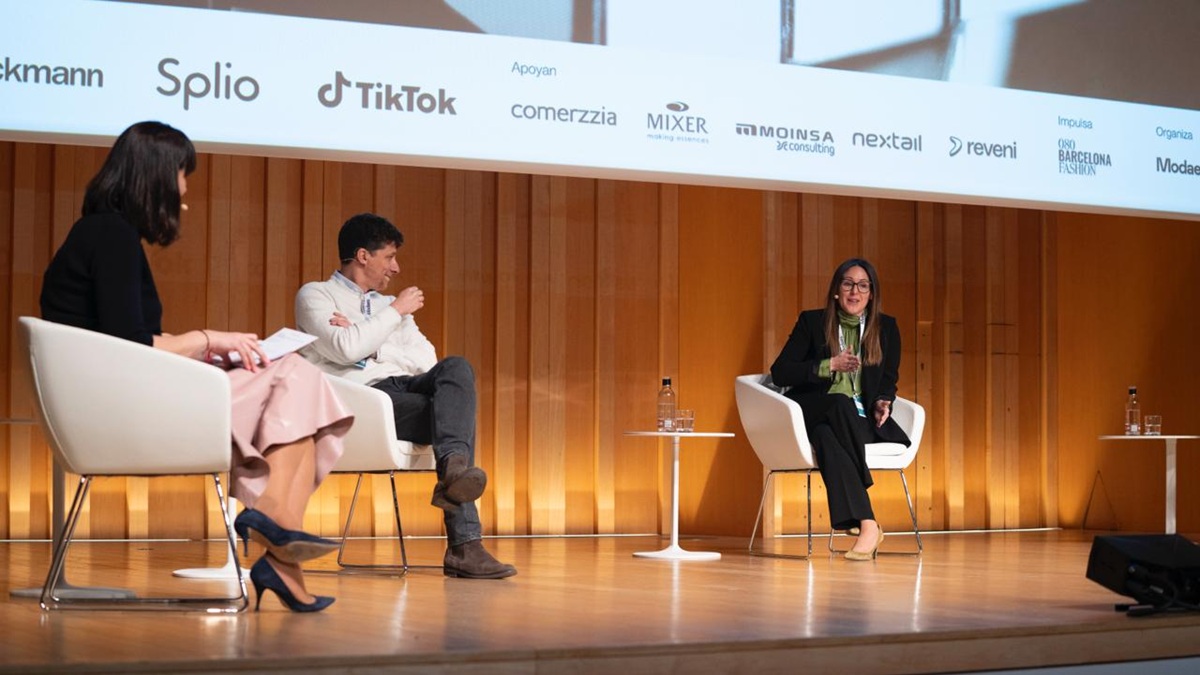
Fernández (Mascaró) said: “the world is shaking, and companies have to learn that it will continue to shake”. In this sense, he defended that “it is necessary to be informed, but not obsessed”, and he valued “the figure of a person who feels responsible for what he does, so it is necessary to know how to transmit serenity to the teams”.
Garrastazu (Pompeii) explained that geopolitical changes affect smaller companies to a lesser extent. “Macro movements affect me more from a social rather than a business point of view,“ he said. “I try to inform myself well in terms of tariffs, not to stay only in the headline,“ he has argued. On this point, he stated that, “in execution decisions, it is more important to have someone who takes responsibility. Having responsibility gives you conviction in what you do,“ he said.
Soler-Duffo understands that “uncertainty, before, was more uncomfortable. Now there are many upheavals, but if you get used to everything moving, the important thing as a company is to see how you handle it. Along these lines, he pointed out that “the situation, in general, is not debated, it is managed”.
“When you are going through a change, the organization has to understand that it is in a special moment. All the noise from outside can’t stop you,“ said Soler-Duffo.
The importance of having a plan
“Managers always have to ask themselves if they are still the right people,“ reflected Garrastazu (Pompeii). And he stressed the importance of ensuring that professionals agree with the company’s values and that the strategic plan reflects them and knows how to explain them correctly. Internal transformations “help to isolate the noise from outside,“ he added.
Soler-Duffo emphasized strategy. “You have to have a plan. You have to know what you have to do and the most important thing is to meet the dates. Having a plan is necessary.“ Seeing a number of things close together is healthy, “possibly today it’s more comfortable to go three years at a time. Five may be too many. And he explained that “when you are going through a change, the organization has to understand that it is in a special moment. All the noise from outside can’t stop you”.
Fernández also reflected on the term of the plans. “I was taught at university that plans had to be for ten years, then you go out into the real world and realize that they were for five,“ he recalled. In any case, his experience has made him appreciate that “there is an important part: the horizon, but there is also another crucial part, which is tactics”. In this sense, “if you have to make a turn, you have to assume it and do it,“ he said.
Finally, Ramos (Asos) focused on the importance of talent when it comes to creating and executing ambitious plans. “We are asking more and more of leaders, we expect more and more of them and it is difficult to find them”. In this sense, he concluded that “the best solution is to have an internal pool where you can train people, rather than constantly importing talent”.
Fashion is useful for...
Lastly, Pilar Riaño, founder of Modaes, asked the participants at the table to complete the sentence: ‘Fashion is useful for...‘. In this sense, Garrastazu (Pompeii) has defended that fashion serves to “get excited”; Ramos (Asos) considers that it serves to “generate happiness”; Fernández (Mascaró), understands that it contributes to expand “art and passion” and Soler-Duffo, for his part, argues that fashion is essential to “reaffirm an identity”.
Barcelona Fashion Summit, the largest professional meeting of the fashion industry in Spain, celebrates today in Barcelona its fourteenth edition, with the sponsorship of Bleckmann, Splio and TikTok, the support of Comerzzia, Mixer&Pack, Moinsa, Nextail and Reveni, as well as the impulse of 080 Barcelona Fashion. Throughout the day, more than five hundred executives from Spanish and international companies will gather at the Palau de la Música Catalana, in an edition of the Barcelona Fashion Summit entitled Crossroad. Making fashion in a world that trembles.
Related content
Inditex’s Eduard Casabella on Oysho’s Sport Pivot and Growth Through Identity
29 ene 2026 - 18:40

Swatch Sees 89% Profit Decline in 2025 Amid Tariff Woes and Sluggish Demand
30 ene 2026 - 04:26

McKinsey’s Gemma D’Auria on Luxury’s Pullback and Fashion’s Resilience in 2026
29 ene 2026 - 18:35
Latest news
Swatch Sees 89% Profit Decline in 2025 Amid Tariff Woes and Sluggish Demand
30 ene 2026 - 04:26
Inditex’s Eduard Casabella on Oysho’s Sport Pivot and Growth Through Identity
29 ene 2026 - 18:40
McKinsey’s Gemma D’Auria on Luxury’s Pullback and Fashion’s Resilience in 2026
29 ene 2026 - 18:35