French Fashion Faces First Challenge Over Environmental Labeling
Fashion companies in France are still not bound by the controversial environmental impact methodology labeled as arbitrary by Glimpact, a leading assessment firm.



French environmental labeling in question. The company Glimpact, which specializes in measuring the environmental impact of companies, has appealed to the French Council of State against the measure that articulates the environmental labeling of fashion. The rule came into force on October 1st, and for the moment its application is optional for companies.
The company, which also offers solutions to reduce this environmental footprint, has denounced that the methodology included in the decree is “arbitrary” and does not align with European standards, Glimpact president Christophe Girardier told AFP. France has become one of the pioneers in starting to implement environmental labeling within the European Union, even before Brussels has finished determining the parameters for measuring the environmental footprint of fashion.
Among Glimpact’s demands, the company has denounced the fact that the score does not take into account the risk of toxicity of the garments for people, while the importance of the indicators related to the impact of the garments on biodiversity is too high, according to various media in the country.
The company has complained that the French standard is not in line with European standards
To carry out the calculation of the impact, the tool analyzes the impact on the climate or biodiversity, the release of microfibers or their cost when exported to other countries. Glimpact has also argued that these information parameters leave out characteristics such as the durability of garments and “undermine the objective of informing consumers”.
“Glimpcat’s intentions are not, at any time, to contradict the principles of environmental labeling (...), but to ensure that this follows a strictly scientific methodology and harmonized at European level,“ the company has defended in a statement. Girardier has defended, for his part, that the country’s companies “do not need confusion, but clarity”, and urged the French government to create a stable and scientifically proven framework that allows them to reduce their environmental footprint de facto.
The measure is part of the French labeling scheme for textiles, which was introduced under the French waste prevention law for the first time and formalized in 2021 through the climate and resilience law. The measurement of the environmental impact of fashion has been put in place in coordination with both the French government and Ademe, or the French Agency for Ecological Transition.
Related content
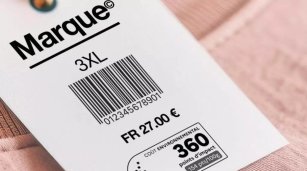
France Implements Mandatory Environmental Labeling for Fashion Industry
1 oct 2025 - 07:21
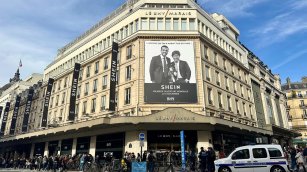
France Intensifies Crackdown: Shein Faces Potential Three-Month Suspension
26 nov 2025 - 14:36

Swatch Sees 89% Profit Decline in 2025 Amid Tariff Woes and Sluggish Demand
30 ene 2026 - 04:26
Latest news
Swatch Sees 89% Profit Decline in 2025 Amid Tariff Woes and Sluggish Demand
30 ene 2026 - 04:26


Inditex’s Eduard Casabella on Oysho’s Sport Pivot and Growth Through Identity
29 ene 2026 - 18:40