France Implements Mandatory Environmental Labeling for Fashion Industry
Starting today, companies have the option to voluntarily disclose the environmental cost score of their garments, presented as a range from 0 to infinity, assessing the impact throughout the entire value chain.
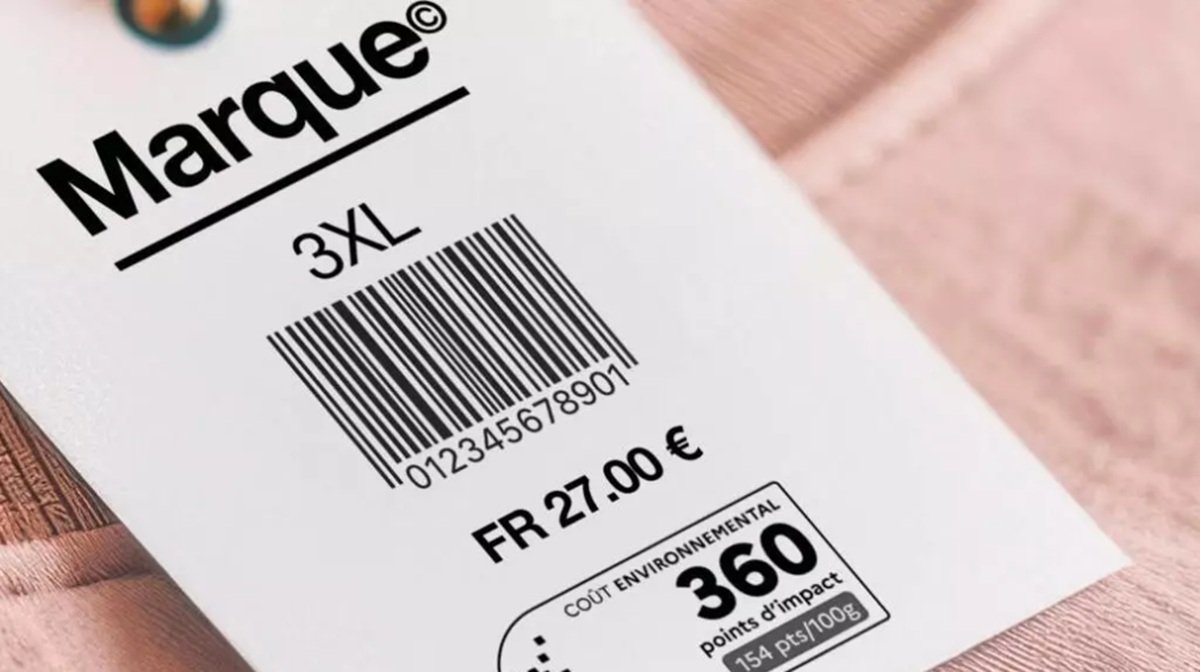

Environmental labeling for fashion, for the moment voluntary, comes into force. Fashion companies operating in the country, whether French or international, can from today begin to communicate the environmental cost of their garments. The measure came into force today, following its publication in the French Official Gazette at the beginning of September, and does not establish an obligation for companies.
For the time being, only companies wishing to do so will be able to use the portal set up by the French government to calculate the environmental impact of each of their garments. Once the information has been entered into the digital tool, it generates a score (ranging from 0, as the best score, or no environmental impact, to an infinite number). This number can then be published both on the companies’ online portals and on a physical label.
“This figure represents all the environmental impacts generated throughout the life cycle of each garment, from the production of the material to the disposal of the garment, passing through spinning, weaving, manufacturing, transport and even maintenance,“ explains the official text published by the French Executive.
Fashion will be able to rate the environmental impact of each garment on a scale from 0 to infinity
The medium- and long-term objective is that, through this number, consumers will be able to make more conscious decisions when buying fashion. The measure, however, also hopes to encourage better decision making among companies when sourcing. “And thus reduce the overall impact of the textile sector on the environment,“ the text adds.
For the moment, however, the calculation and publication of the impact is voluntary. In a year, however, if companies have not carried it out, the law provides that a third party, such as another company or an NGO, can do so instead.
To carry out the calculation of the impact, the tool analyzes, based on the criteria defined by the standardized European system approved by Brussels in the middle of the year, the impact on the climate or biodiversity, the release of microfibers or their cost when exported to other countries.
The measure is part of the French labeling scheme for textiles, which was introduced under the French waste prevention law for the first time and formalized in 2021 through the climate and resilience law. The measurement of the environmental impact of fashion has been put in place in coordination with both the French government and Ademe, or the French Agency for Ecological Transition.