Bangladesh 2026: Balancing Global Textile Dominance with Social Challenges
Asia’s fashion powerhouse solidifies its stance as a leading global supplier amid a landscape of price adjustments, political transitions, and heightened social and environmental demands. As 2026 approaches, the nation boosts capacity while facing increased scrutiny.
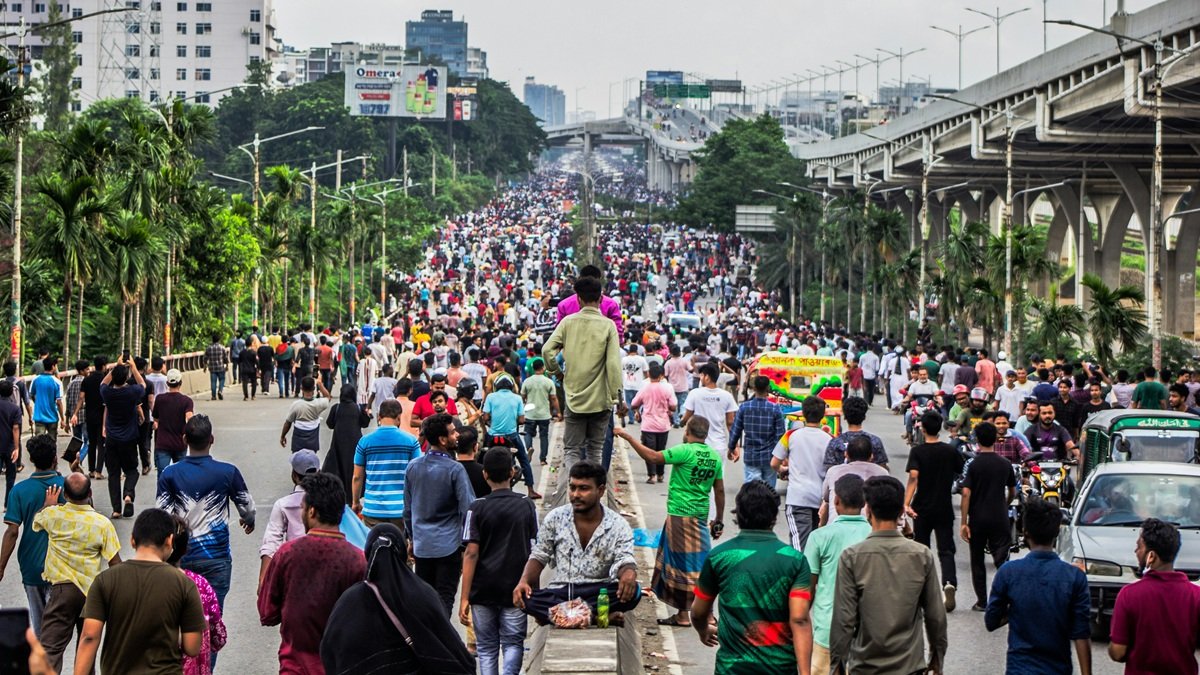

Bangladesh is defining its future as a major world marketplace for fashion sourcing between social pressure and industrial scale. Already consolidated as an international champion of fashion sourcing, Bangladesh is facing a strategic and production model change with two axes: greater unionization to respond to the latent social pressure in the country and a higher value-added product to cover all its enormous production capacity.
The country is already the world’s second largest clothing exporter, behind only China, a position it maintains thanks to its industrial capacity and its structural role in global fashion supply chains. The country is a key supplier to major international retail groups, especially in volume categories such as T-shirts, pants, sweatshirts and underwear, according to Export Promotion Bureau (EPB) and industry data collected by the United States Department of Agriculture (USDA).
The sector’s weight in Bangladesh’s economy is exceptional even within the Asian context. The garment industry accounts for around 81.5% of the country’s export earnings, making it the main driver of growth, employment and foreign exchange inflows, according to official figures for the fiscal year 2024-2025 provided by the EPB, a public agency in charge of export promotion, comparable to Spain’s Icex.
In the last closed fiscal year 2024-2025, Bangladesh exported $39.35 billion worth of garments, up 9% from the previous year. This development reflects the recovery of international orders after the adjustment experienced in 2023, in a context of moderating inflation in Western markets and revival of consumption, according to official data from EPB and Bangladesh Bank.
Bangladesh’s leadership is not based on garments alone, with more than 1,800 integrated textile mills in spinning, weaving and finishing. This infrastructure provides a stable supply to the garment industry, although some of the capacity remains underutilized, according to the Bangladesh Textile Mills Association (Btma).
Bangladesh has the capacity to consume up to 3.27 million tons per year, although only just over half of this is currently being utilized
According to data from the US Foreign Agricultural Service, Bangladesh’s textile industry has the capacity to consume up to 3.27 million tons of cotton per year. Currently, only slightly more than half of this capacity is being used, with an estimated consumption of 1.81 million tons in FY2024-2025. In FY2025-206, consumption is projected to “rise to 1.85 million tons, an increase of 2.4% driven by higher imports.“ The spinning industry uses cotton to produce cotton yarns and blends, and production of these is forecast to grow from 1.7 in FY2024-2025 to 1.9 million tons in FY2025-2026.
The textile sector directly employs close to four million people in Bangladesh, making it one of the largest industrial employment centers in the world. Garments are also one of the main ways of incorporating women into the labor market in Bangladesh, a factor that has been key to the country’s socio-economic transformation, according to sector data collected by Usda.
Bangladesh has achieved a high level of vertical integration in the knitwear segment, covering approximately 85% of local demand for knitted fabrics. However, in flat fabrics self-sufficiency drops to around 40%, forcing it to import large volumes of fabric, mainly from China, India and Pakistan, according to data from Btma and Trade Data Monitor.
Bangladesh’s cotton production is negligible compared to the total cotton consumed by its textile industry. The extent of cultivation of this raw material has not moved in the last three years, always around 45,000 hectares. In this situation, the Asian country needs to import cotton from other parts of the world on a massive scale.
During the fiscal year 2024-25, which started in August 2024, Bangladesh imported about 1.81 million tons of cotton. Brazil has become the main supplier of cotton to Bangladesh with a total of 415.000 tons, equivalent to 23% of imports, overtaking India, which has become the second largest supplier with 305,000 tons, followed by Benin with 231,000 tons, Cameroon with 135,000 tons, and the United States with 130,000 tons of cotton, according to figures from the National Board of Revenue (Nbr) and Usda.
Brazil has become the main supplier of cotton to Bangladesh with a total of 415,000 tons, equivalent to 23% of imports
Bangladesh’s international positioning continues to be supported by its cost structure, the availability of skilled labor and the ability to produce large volumes with tight lead times. These advantages explain why the country continues to be a strategic partner for large retailers, especially in a context of pressure on final prices, according to sectoral analyses included in the Usda report.
Sustainability and efficiency
In recent years, Bangladeshi industry has stepped up its investments in sustainability, energy efficiency and labor safety as a direct response to the demands of international brands and increased regulatory and reputational pressure on the supply chain, according to sector data cited by the U.S. Foreign Agricultural Service
.
In 2014, Bangladesh became the focus of all international attention when it experienced one of the largest industrial disasters in history: the collapse of Rana Plaza, a building that housed several fashion factories, in which more than 1,100 people died. In the aftermath of this incident, the international industry activated several alliances to improve safety at work in the country.
The Accord on Fire and Building Safety in Bangladesh (originally Accord on Fire and Building Safety in Bangladesh) involves major international fashion groups such as H&M, Bestseller, M&S, PVH, Primark, Asos, OVS, Benetton, Carrefour, Inditex and El Corte Inglés.
The country’s minimum wage has increased considerably in recent years, but remains one of the lowest in the world. A study carried out by the Global Labour Institute (GLI) at Cornell University in New York in February urged the government and the country’s textile sector to review workers’ wages more often.
The fashion sector employs some four million workers in Bangladesh, with a minimum wage of 12,500 taka ($107).
The current policy in Bangladesh involves a revision of the minimum wage every five years, which the center described as detrimental to workers, especially in an inflationary context. The fashion sector employs around four million workers in the country, with a minimum wage of 12,500 taka ($107).
The country’s Gross Domestic Product (GDP) per capital stands at $8,500, making Bangladesh one of the poorest countries in the world and particularly in Asia. The former East Pakistan has a population of 169 million people and is one of the most densely populated countries in the world.
The country now has the highest number of LEED-certified textile factories in the world with a total of 268. In fact, 68 of the 100 highest-rated factories in the world are there. The Leadership in Energy and Environmental Design certification is an international system used as a standard for evaluating buildings and industrial facilities. It was developed by the U.S. Sustainable Buildings Council (Usgbc).
Model change in Bangladesh’s textile industry
Looking ahead to 2026, Bangladesh faces the challenge of evolving from a model focused on price and volume to one with greater product complexity, better traceability and greater labor stability. The ability to maintain its competitiveness without losing attractiveness to international buyers will be crucial for the country to maintain its position as a major global fashion workshop in an increasingly demanding environment, according to the Usda analysis.
The Bengali government has already moved to speed up reforms to promote unionization in the country. It intends to lower by law the conditions for workers to form and join unions within companies. The text of the draft legislation has yet to be debated in parliament and has been criticized by the employers’ association Bgma.
The government’s change of strategy also comes shortly after the social unrest in the Asian country, which began last year in the university sector and lasted for almost a month. The riots resulted in almost 300 deaths among protesters and police. The Prime Minister, Sheikh Hasina, was forced to resign and leave the country.
Related content

U.S. and India Ink Surprise Trade Deal Following EU Accord
3 feb 2026 - 12:16

Capri’s Fresh Start: Turns a Profit and Slashes Debt Following Versace Sale
3 feb 2026 - 12:14
Latest news
U.S. and India Ink Surprise Trade Deal Following EU Accord
3 feb 2026 - 12:16
Capri’s Fresh Start: Turns a Profit and Slashes Debt Following Versace Sale
3 feb 2026 - 12:14

Rituals Closes 2025 with a 15.7% Surge, Reaching €2.43 Billion
3 feb 2026 - 08:05

Puma Shakes Up Operations with Training Division, Taps Former Adidas Leader
3 feb 2026 - 07:53