JW Anderson Returns to Profit in 2024 Despite 4.8% Revenue Dip
In a year marked by heightened expenses and operational setbacks, the British label has bounced back, achieving a net profit of 21.39 million pounds ($29.24 million). The positive outcome stems from a deft financial restructuring strategy.
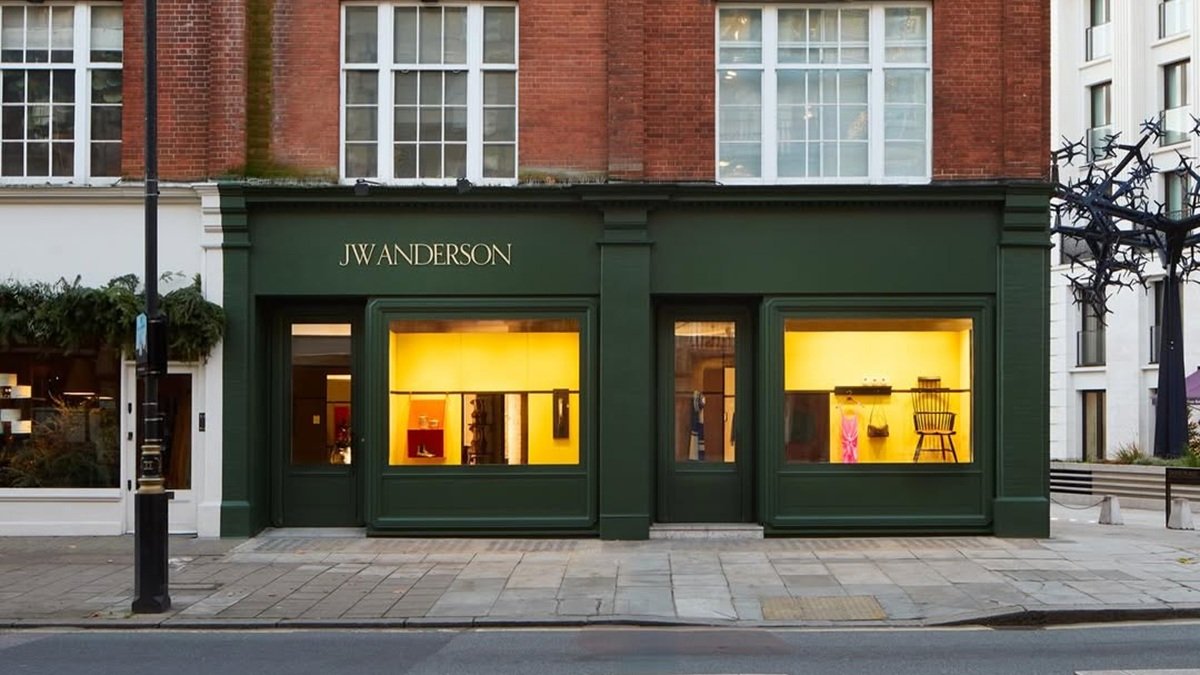

JW Anderson is back in the black. The British firm headed by Northern Irish designer Jonathan Anderson closed 2024 with a net profit of 21.39 million pounds ($29.24 million), compared with a loss of 3.50 million pounds ($4.78 million) in the previous year, according to the documentation deposited with Companies House for the year ended December 31st, 2024.
The return to profit came despite a lower volume of business. The company, known for its men’s luxury fashion designs, reduced turnover by 4.8% to 28.43 million pounds ($38.37 million), in contrast to the 29.86 million pounds ($40.8 million) recorded in 2023. Cost of sales was also cut and gross margin stood at 17.74 million pounds ($24.25 million), down from 18.50 million ($25.29 million) a year earlier.
Cost pressures, however, went further, with distribution and administrative expenses rising and the operating loss widening to 5.54 million pounds ($7.57 million), up from 2.27 million pounds ($3.10 million) in 2023.
The turnaround in the bottom line was mainly explained by financial leverage. Pre-tax profit reached 23.83 million pounds ($32.58 million), compared with a loss of 3.59 million pounds ($4.9 million) the previous year, in a move that the company attributed mainly to the “structuring” of an intra-group loan.
JW Anderson moved out of the red in 2024 despite contracting its sales.
In its business performance, the company linked part of the decline in activity to the timing of shipments. Specifically, it indicated that the drop in turnover was marked by the timing of spring-summer 2025 shipments. During the fiscal year, 48% of the season was shipped, compared to 54% in 2023. At the same time, the online channel recorded a flat performance, with modest growth.
Where there was traction was in retail, with the Milan store contributing a full year of activity and, together with the London boutique, driving 15% year-on-year growth in retail revenues, according to the same information.
The collaborations business also gained weight. Design collaborations increased 20% in the year, a figure the company linked to increased interest and engagement with the brand.
The fiscal year is also published at a time of professional transition for designer Jonathan Anderson. The creative was appointed in April 2025 as head of men’s design at Dior, following his departure from Loewe, and a few months later expanded its perimeter. In June last year, the LVMH firm also appointed him as head of women’s design and haute couture, placing him as the sole creative head of the main lines of the house.
Jonathan Anderson is, at the same time, creative director of the Dior collections
In parallel, British media indicated that Anderson would maintain his involvement in JW Anderson while taking over Dior, a fit that has been accompanied by a change of approach at the independent brand.
That shift has materialized in an evolution towards a more curatorial and lifestyle model, with a focus on objects and artisanal collaborations, beyond the classic calendar of collections. Various specialized media have described the reorientation as a commitment to a product and collaboration platform, with an expansion of categories.
The accounts filed in the United Kingdom also reflect a mixed shareholding. In the register of persons with significant control, Jonathan Anderson appears with a shareholding of more than 50% and less than 75%, while Sofidiv UK Ltd appears with a shareholding of more than 25% and up to 50%.
In the case of Sofidiv UK, the British register itself links it to LVMH, with 75% or more of rights, which confirms the presence of a corporate investor in the capital of JW Anderson through that company.
Related content

Jonathan Anderson Unveils Dior’s Premier Flagship in Beijing
17 dic 2025 - 11:15


Pharrell, Anderson and Jacquemus lead the way at Paris fashion week
24 jun 2025 - 07:00

Rituals Closes 2025 with a 15.7% Surge, Reaching €2.43 Billion
3 feb 2026 - 08:05
Latest news
Rituals Closes 2025 with a 15.7% Surge, Reaching €2.43 Billion
3 feb 2026 - 08:05

Puma Shakes Up Operations with Training Division, Taps Former Adidas Leader
3 feb 2026 - 07:53

UK: A Global Reflection on Middle Market Challenges
3 feb 2026 - 05:00

Saint James: Over a Century of Crafting Nautical Identity
3 feb 2026 - 05:00