Prada Invests €300 Million to Bolster Manufacturing During Versace Merger
As the ink dries on the Versace acquisition, the Italian conglomerate ramps up its industrial efforts with a strategic push across four key hubs and 25 factories. Sales forecasts predict a remarkable climb past $6 billion in 2025.



Prada invests in its industrial structure. The Italian hólding has allocated since 2019 more than €300 million to expand and modernize its network of factories, while launching four new production projects in Italy and the United Kingdom, and celebrates in Scandicci the twenty-fifth anniversary of its corporate academy, just as it prepares to close the purchase of Versace and exceed €6 billion in turnover by 2025.
As reported by the Italian business daily Milano Finanza, the group now has twenty-five production sites, 23 of which are in Italy, and has committed more than €200 million between 2019 and the end of 2024 for the valorization of the supply chain. The figure exceeds 300 million when incorporating the items budgeted for 2025, around 60 million euros, with the aim of preserving know-how, gaining capacity and securing the industrial base for its growth plan.
The current plan focuses on four projects: a new leather goods factory in Piancastagnaio (Siena), a specialized knitwear pole in Gubbio (Umbria), an increase in the production capacity of the Northampton site in the United Kingdom, and the expansion of the Foiano della Chiana plant in the province of Arezzo. These investments are in addition to flagship sites such as the Valvigna complex, and consolidate a production model anchored in the made in Italy districts and supported by industrial platforms abroad.
In parallel to the reinforcement of the factory, the group has chained nineteen consecutive quarters of growth. In the first nine months of 2025, Prada Group posted net sales of €4.07 billion, up 9% at constant exchange rates. The Prada brand suffered a slight correction of 1% in the third quarter, while Miu Miu maintained its role as the driving force in the polder with a rise of 41% in the nine months and 29% in the third quarter, having compared with growth of 105% in the same period of 2024.
Prada reinforces its industrial model with an investment in ‘made in Italy’
Industrial muscle underpins a growing financial ambition. Prada Group closed 2024 with €5.4 billion in net sales, up 17% on the previous year. The pace of growth, coupled with the industrial consolidation and the effect of the integration of Versace, allows us to anticipate, according to Milano Finanza, that the group could exceed 6 billion in turnover by 2025 and approach the long-term path set by its management.
In 2023, CEO Andrea Guerra told the same media outlet the possibility of “doubling” the business from €4.2 billion in 2022 to €8 billion through organic growth, i.e. without acquisitions. Today, with Versace integrated into the equation and a network of twenty-five factories in operation, this time horizon could be shortened compared to the initial window, which analysts put at less than ten years.
The industrial strategy of the polder relies on direct control of the value chain. The density of plants in Tuscany and Umbria, historical cradles of Italian leather goods and knitwear, reinforces the group’s ability to respond quickly to the market, preserve highly specialized trades and sustain its positioning in the high luxury segment. The new Piancastagnaio and Gubbio sites directly target key categories such as handbags, accessories and knitwear, while Northampton and Foiano della Chiana strengthen the footwear business and reinforce the geographical diversification of production.
The Versace operation is part of this industrial platform logic. The agreement, signed in April with Capri Holdings for the acquisition of 100% of the company for €1.25 billion, is expected to be completed in early December following approval from Brussels. With the addition of Versace to Prada and Miu Miu, the group aims to set up an Italian luxury hólding with more than €6 billion in sales and a complementary portfolio in terms of positioning, aesthetics and target customer.
Related content

Prada’s Lorenzo Bertelli Takes Helm in Versace’s Rebranding Effort
19 nov 2025 - 15:07
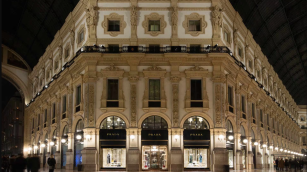
Prada Sustains Momentum with 6% Growth Through Q3
23 oct 2025 - 15:21

Prada Secures EU Approval for Versace Acquisition
30 sep 2025 - 14:39

Prada Finalizes $1.25 Billion Acquisition of Versace
2 dic 2025 - 06:28
Latest news
Swatch Sees 89% Profit Decline in 2025 Amid Tariff Woes and Sluggish Demand
30 ene 2026 - 04:26


Inditex’s Eduard Casabella on Oysho’s Sport Pivot and Growth Through Identity
29 ene 2026 - 18:40
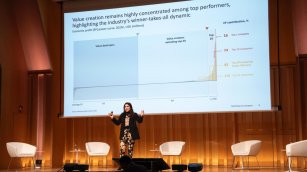
McKinsey’s Gemma D’Auria on Luxury’s Pullback and Fashion’s Resilience in 2026
29 ene 2026 - 18:35