Kering Ushers in a New Era: Strategic Overhaul and Layoffs at Alexander McQueen
In response to declining performance, the French group implements a decisive turnaround plan at its UK operations, targeting a return to profitability over the next three years by reducing the London office staff by 33%.
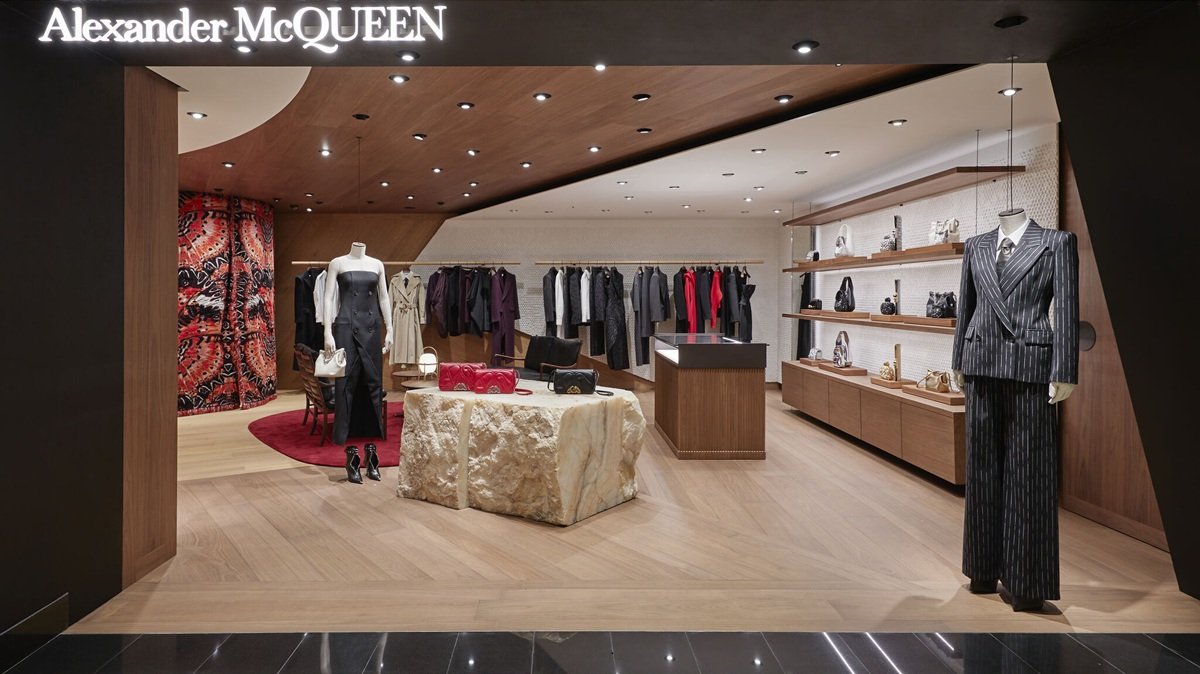

Kering takes the first step in its restructuring plan. Alexander McQueen, one of the smaller brands in its portfolio, has announced the launch of a strategic review that includes the elimination of 55 positions at its London headquarters, about one-third of the office staff. The aim is to return the company to profitability within three years.
The UK company has already begun the process of labor consultations in the UK, a step prior to implementing the layoffs, as part of a broader program to streamline operations and reduce costs. “We are committed to supporting our employees during this transition,“ the company said in a statement accessed by WWD.
The news comes a day after Kering presented its third-quarter results and confirmed a 10% drop in sales, to €3.415 billion, in a period marked by the strategic transition led by Luca de Meo.
Although the company has improved compared to the 15% decline in the previous quarter, the evolution confirms that the group continues to lag behind the market in a context of global slowdown in luxury.
Kering begins reorganization of its structure by optimizing resources at Alexander McQueen
Gucci, its flagship brand, fell again by 18% to €1.343 billion. Yves Saint Laurent fell 7% and Bottega Veneta held its own with a slight decline of 1%. The “other brands” segment, which includes McQueen along with Balenciaga, Brioni and jewelry brands, generated €652 million, down 5%.
McQueen is therefore one of the smallest brands in the group and has not reached the level of profitability of Kering’s growth drivers for years. Even during the tenure of Sarah Burton, natural heir of the late designer founder of the firm at the helm of creative direction, the brand failed to transform itself into a global luxury player. Since the end of 2023, the baton has been passed to Seán McGirr, with the challenge of redefining its identity under financial pressure.
Unlike other labels in the past, such as Stella McCartney or Christopher Kane, Kering has decided to keep McQueen in its portfolio, betting on its internal restructuring. “We have a clear strategy for all brands and we are executing it brand by brand, but there are no divestment plans,“ Jean-Marc Duplaix, deputy chief operating and finance officer, said in July.
The adjustments at McQueen are the first visible move in a broader plan that De Meo will detail in spring 2026, but which is already in the implementation phase. In September, the executive warned that the holding company would have to “reduce debt, cut costs and, where necessary, rationalize, reorganize and reposition some brands.“
Kering takes the first step in its restructuring plan. Alexander McQueen, one of the smaller brands in its portfolio, has announced the launch of a strategic review that includes the elimination of 55 positions at its London headquarters, about one-third of the office staff. The aim is to return the company to profitability within three years.
The UK company has already begun the process of labor consultations in the UK, a step prior to implementing the layoffs, as part of a broader program to streamline operations and reduce costs. “We are committed to supporting our employees during this transition,“ the company said in a statement accessed by WWD.
The news comes a day after Kering presented its third-quarter results and confirmed a 10% drop in sales, to €3.415 billion, in a period marked by the strategic transition led by Luca de Meo.
Although the company has improved compared to the 15% decline in the previous quarter, the evolution confirms that the group continues to lag behind the market in a context of global slowdown in luxury.
Kering begins reorganization of its structure by optimizing resources at Alexander McQueen
Gucci, its flagship brand, fell again by 18% to €1.343 billion. Yves Saint Laurent fell 7% and Bottega Veneta held its own with a slight decline of 1%. The “other brands” segment, which includes McQueen along with Balenciaga, Brioni and jewelry brands, generated €652 million, down 5%.
McQueen is therefore one of the smallest brands in the group and has not reached the level of profitability of Kering’s growth drivers for years. Even during the tenure of Sarah Burton, natural heir of the late designer founder of the firm at the helm of creative direction, the brand failed to transform itself into a global luxury player. Since the end of 2023, the baton has been passed to Seán McGirr, with the challenge of redefining its identity under financial pressure.
Unlike other labels in the past, such as Stella McCartney or Christopher Kane, Kering has decided to keep McQueen in its portfolio, betting on its internal restructuring. “We have a clear strategy for all brands and we are executing it brand by brand, but there are no divestment plans,“ Jean-Marc Duplaix, deputy chief operating and finance officer, said in July.
The adjustments at McQueen are the first visible move in a broader plan that De Meo will detail in spring 2026, but which is already in the implementation phase. In September, the executive warned that the holding company would have to “reduce debt, cut costs and, where necessary, rationalize, reorganize and reposition some brands.“
Related content
Kering’s Slide Continues: Sales Dip 10% Amid Transitional Quarter
22 oct 2025 - 16:55
LVMH Mirrors Kering’s Strategy, Contemplates Divestment from Fenty Beauty
22 oct 2025 - 07:02

Kering Employees Strike in Italy, Demand More Remote Work Days
21 oct 2025 - 07:33

Bottega Veneta’s Top Executive Joins Moncler as CEO
20 ene 2026 - 18:40
Latest news
Gordon Brothers Takes Over LK Bennett, Sets Stage for Global Expansion
28 ene 2026 - 12:33
Galeries Lafayette Finalizes Sale of BHV Building Amid Shein Controversy
28 ene 2026 - 12:30

VF Corp’s Q3 Results Shine with 28% Boost as Business Reorganization Unfolds
28 ene 2026 - 08:23

Claire’s Faces Another Setback in the UK with Second Bankruptcy in Six Months
28 ene 2026 - 08:21