Giorgio Armani Unveils Succession Strategy: Dell’Orco to Play Pivotal Role
Armani Group Navigates Succession Challenge with Organic Transition to Dell’Orco, Current Head of Men’s Design, Amid Global Luxury Demand Decline.
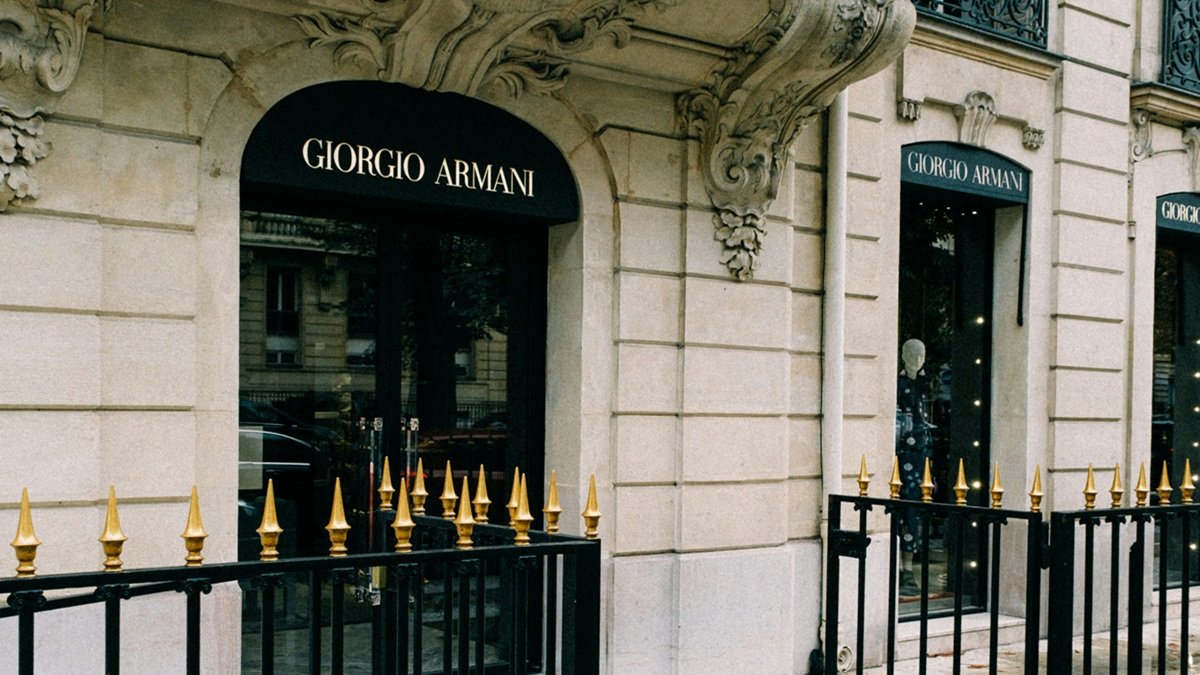

Giorgio Armani is facing the most delicate chapter of his half-century in the fashion industry: that of succession. At 91, the Italian designer has acknowledged that his plan for the future involves a gradual transfer of responsibilities to his closest circle. There will not be a “moment of rupture”, as he insisted in a recent interview with the Financial Times, but a gradual handover that preserves the identity of a company that, in 2024, generated €2.3 billion and remains independent, with the founder as sole shareholder.
The statement comes in an unprecedented context: for the first time since he created the firm in 1975, Armani did not come out to greet at the end of his June fashion shows in Milan and July in Paris. A brief hospitalization forced him to remotely direct the fittings and the sequence of his collections, maintaining control through video calls. In his place, it was Pantaleo (Leo) Dell’Orco, head of the men’s line and the creator’s right-hand man, who went out to greet the public, playing an increasingly visible role in the group’s day-to-day business.
“My succession plans consist of a gradual transition of the responsibilities I have always assumed towards Leo Dell’Orco, the members of my family and the work team,“ Armani told the Financial Times. The designer stressed that he wants the succession to be organic, without abrupt turns that would compromise creative and business continuity.
Armani today maintains an exceptional governance model in the sector, dominated by large conglomerates. He is creative director, CEO and sole owner of the company. In contrast to the concentration of power in large conglomerates such as LVMH or Kering, the Armani group has preserved its independence, a trait that represents an essential part of its value.
Armani faces a transition without rupture
Beyond the current declarations, Armani’s succession is not improvised. Reuters revealed in 2023 that the company’s bylaws have included since 2016 a protocol to ensure continuity, which includes the creation of the Giorgio Armani Foundation. The structure envisages a shareholding distribution among family members and collaborators, with the foundation as guarantor of the brand’s values, the protection of employment and the possibility of exploring an IPO only five years after the founder’s death.
In parallel, Armani confessed in 2024 to the Italian newspaper Corriere della Sera that he planned to retire in two or three years, a time horizon that places succession as an imminent issue.
In that scenario, Dell’Orco emerges as the natural heir apparent on the creative front. Linked to the designer for decades, he has assumed a growing role in fashion shows and is emerging as the guarantor of the Armani aesthetic, which is recognized for unstructured suits, understated elegance and timeless style. Dell’Orco’s public visibility in recent months is interpreted as a dress rehearsal for what is to come in the future.
Alongside him, the family, composed of nieces, nephews and longtime collaborators, is part of the circle called to sustain the legacy. Armani himself insists that this is not an individual succession, but a choral one.
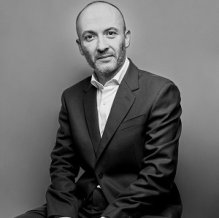
Leo Dell’Orco will be a key player in the new phase of the company.
The question is whether a company of Armani’s size can maintain this model without the helm of its founder. Chanel or Dior are examples of the sector that survived within the reach of their creators. However, the Armani case is different because of the breadth of its offer, from haute couture to perfumes, hotels, restaurants and decoration.
In September, during Milan Fashion Week, Armani will celebrate its 50th anniversary with an exhibition at the Pinacoteca di Brera, the first that the museum has dedicated to fashion. The gesture has the force of a living testament, a review of half a century of creation.
The group’s latest results showed, however, some deterioration in response to the macroeconomic context.
The Italian company reduced its turnover by 5% in 2024, to €2.3 billion, hit by the general slowdown in luxury. Europe remained the top market, with 49% of sales, followed by the Americas with 22% and Asia-Pacific with 19%, affected by the slowdown in activity in China.
Related content
Armani Faces €3.5 Million Fine for Misleading Advertising on Labor Practices
1 ago 2025 - 15:07

Armani Unveils ‘Armani/Archivio’: A Digital Tribute to 50 Years of Fashion
25 jul 2025 - 05:00
Armani Group Reports 24% EBITDA Drop and 5% Sales Decline in 2024
2 jul 2025 - 15:16
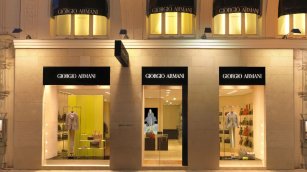
Giorgio Armani Appoints Former Gucci Exec as CEO of Americas
14 ene 2026 - 06:47
Latest news
Birkenstock projects double-digit growth through 2028 with renewed strategy
29 ene 2026 - 11:16

Levi Strauss Boosts Profitability: Dodges Tariff Impact and Triples Earnings
29 ene 2026 - 11:15
H&M keeps its finger on the pulse and earns 4.6% more at fiscal year-end
29 ene 2026 - 11:10
Gordon Brothers Takes Over LK Bennett, Sets Stage for Global Expansion
28 ene 2026 - 12:33