Shein’s Parisian Impact: Retail Exodus from BHV as Government Grapples with Crisis
The arrival of China’s retail powerhouse at the legendary department stores triggers a historic crisis. With brands withdrawing, delayed payments, a citizen petition, and a heated debate on ultra fast fashion during political unrest, the industry is on edge.
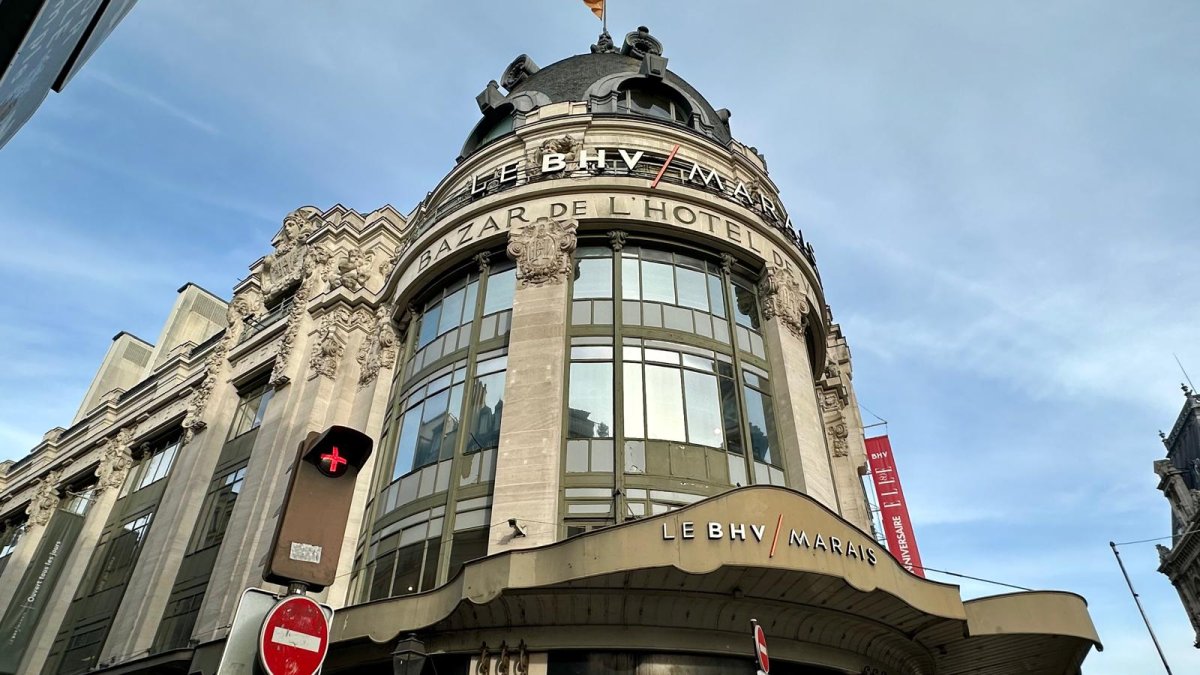


The storm is raging in the heart of Paris. While the new Prime Minister Sébastien Lecornu presented his resignation on Monday, just a few hours after having announced the names of the future ministers of his government, another earthquake shook the Gallic market like an incessant wave that has been making headlines since last week. Sharing equal prominence in the industry’s media space with Balenciaga’s first fashion show under the creative eye of Pierpaolo Piccioli, the controversy following the announcement of Shein’s landing in the department store on rue de Rivoli has unleashed an economic, ethical and symbolic chain reaction that goes far beyond the fashion trade.
Reactions to the deal between the Société des Grands Magasins (SGM) group, owned by the Merlin family, and the Chinese fast-fashion giant have been swift. The operation, conceived as a traffic boost and which will take physical form next November, when Shein will set up shop on the sixth floor of the building with a sales area of more than 10,700 square feet, has opened a double breach.
On the one hand, Galeries Lafayette opposes the marketing of Shein products in some of the spaces managed in affiliation format by SGM, a problem that would affect five centers in other cities. On the other hand, there has been a deep split with the ecosystem of brands that gave life to the BHV.
In recent months, dozens of firms have reported non-payments, relatively discreetly, by the management of the BHV Marais. The department store was acquired just a few months ago by SGM from Galeries Lafayette, the former owner, and the expected major relaunch has not taken place, so its managers hope that the landing of Shein will be a coup for their business.
The BHV Marais department store is in the midst of a wave of brand leaks and accusations of non-payment
However, the reality is far from the ambitions of the project and the consequences are expected to be catastrophic for a department store that was already struggling. With accumulated debts which, according to the French Union of Fashion and Clothing Industries (Ufimh), would exceed seven million euros, BHV is facing a turbulent present. Some companies claim that they have not been paid since July and speak of “chaotic” management under the new shareholder.
A large number of brands led by French names such as Le Slip Français or Maison Lejaby have decided to leave the center, citing both a lack of transparency and a radical change in business direction. The result is none other than a general stampede of firms that have collected their products or even dismantled their corners as a public pressure mechanism to force BHV to relent and settle its outstanding accounts. For example, Guillaume Gibault, founder of Le Slip Français, announced the closure of his space after a decade of collaboration, appealing to recover “the pride” of producing and selling in France.
The Fédération Française du Prêt-à-Porter Féminin, chaired by Yann Rivoallan, speaks openly of a “disaster foretold” and of a management that “has failed to pay those who sustain French commerce”. For his part, the president of NellyRodi and co-president of Ufimh, Pierre-François Le Louët, describes the situation as “a live bankruptcy”, arguing that brands were withdrawing their garments from the BHV “tired of unfulfilled promises”.
The backlash is not limited to suppliers. Figures in the Parisian ecosystem such as Maxime Brousse, co-founder of the second-hand platform specializing in design and decoration Selency, recall that the BHV was for years a benchmark for responsible consumption, with spaces dedicated to recycling and sustainability. “Today it chooses the opposite path,“ Brousse laments, calling Shein’s arrival an “image mistake” and a “blow to the entire sector.“
Shein’s physical landing has received a block response from the sector
In the same vein, Christophe Verley, president of Maison Serge Lesage, denounces that business conditions have become unviable: falling traffic, negative margins and a general feeling of abandonment. For many, the agreement with Shein represents the symptom of a management more interested in immediate volume than in long-term consistency.
The controversy has spilled over into the political arena. The first deputy mayor of Paris, Emmanuel Grégoire, has launched the petition “No to Shein at the BHV”, along the lines of the profound disagreement with the decision shown by the mayor, Anne Hidalgo. The signature, which already exceeds 2,000 supporters, is also supported by the impact director of Vestiaire Collective, Dounia Wone; the. General Manager of the La Caserne platform, Maëva Bessis, and the aforementioned Yann Rivoallan. The text defends a “creative, responsible and local” fashion and warns that hosting Shein “is incompatible with the ecological and social commitments of the city”.
The movement joins the French legislative agenda, marked by the bill against ultra-fast fashion, which will penalize platforms with environmental taxes and advertising restrictions. The initiative, promoted by the Parliament itself and backed by the Ministry of Economy, has become the symbol of French resistance to a model that contrasts with the discourse of industrial relocation.
The BHV episode reopens the debate on what “French fashion” means today. What began as a problem of non-payment and real estate management has become a question of identity. The Banque des Territoires, the financial arm of the state that negotiated its participation in the purchase of the building, has shown its discomfort with the alliance and could withdraw from the project, according to the local business press.
Shein’s physical landing coincides with a global crisis in French ready-to-wear
Consultant Félicie Le Dragon, for her part, prefers to open the door to reflection by questioning whether Frédéric Merlin, SGM’s top manager, can really “take all the misery of the French retail world on his shoulders”. For the expert, the leader is not “the cause of all evils, but the media part of an iceberg that has sunk the French textile industry” and the controversy has more to do with “a symptom of political inertia”. And he does not hesitate to point the finger directly at Shein which, in its lobbying initiatives, took on the recruitment of former ministers to accelerate its deployment on the market.
The scene, with brands removing their products from the shelves and federations calling for a boycott, illustrates a deep rift between local commerce and the logic of the algorithm, between savoir faire and immediate profitability. France, a pioneer in legislating against fast fashion, is thus experiencing a conflict that synthesizes the tensions in its own industry.
The BHV, a symbol of the Parisian middle class and traditional commerce, is now the scene of a cultural and economic battle that is defining the course of French fashion. In a country where even the government is trembling and fashion brands are going into receivership at an accelerated pace, the future of retail is being played out on the border between ethics and business.
Related content


French Fashion Brand Pimkie Partners with Shein, Marks Industry Shift
22 sep 2025 - 07:12

Shein Faces Increased UK Pressure Amid Fresh Tax Evasion Claims
8 sep 2025 - 10:50

Shein Faces €150 Million Penalty from France over Cookie Violations
4 sep 2025 - 17:40
Latest news
Swatch Sees 89% Profit Decline in 2025 Amid Tariff Woes and Sluggish Demand
30 ene 2026 - 04:26


Inditex’s Eduard Casabella on Oysho’s Sport Pivot and Growth Through Identity
29 ene 2026 - 18:40

McKinsey’s Gemma D’Auria on Luxury’s Pullback and Fashion’s Resilience in 2026
29 ene 2026 - 18:35