

From Steps to Stories: Exploring Veja’s Production Journey in Brazil
The French brand unveils a cinematic journey through Brazil, highlighting its production process from the rubber forests of the Amazon to recycling initiatives with local waste-picking cooperatives.
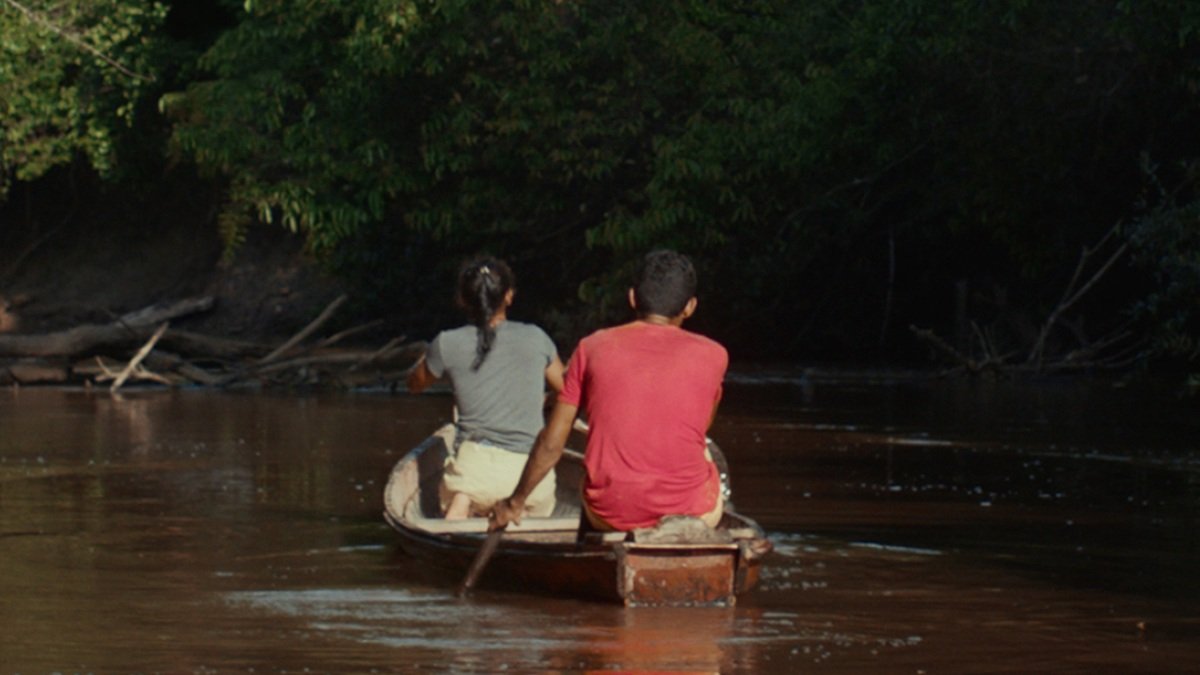


In Três Pontas, in the Brazilian state of Minas Gerais, Patricia, Maria, Rosa, Berto, Luis and Evelini are some of the people who spend their days collecting and sorting lixo, a huge amount of urban waste that includes cardboard, packaging and plastic bottles. They work as catadores, a trade that sustains much of the country’s “informal” recycling system and feeds production chains such as Veja’s, although it almost never appears in campaigns. The image, far from being glamorous or approaching the more formatted green communication, reflects rather the b-side of a system that is destined to reinvent itself: hundreds of socially excluded people who seek a second chance in garbage bags and, grouped in organized cooperatives, manage to structure the foundations of a growing economy around national recycling.
This routine arrived on Tuesday night at one of Europe’s best-known theaters. In front of hundreds of spectators in Paris, some catadores (the name given to the profession of collecting garbage) saw their work projected on the big screen of the Grand Rex during the premiere of Far From the Spotlight, the documentary that Veja has dedicated to its supply chain, to the production processes and to those who make its sneakers possible on the other side of the Atlantic.
Among them was Luênia Maria de Silva, president of an organization that groups 240 workers and one of the protagonists of the film. “We feel valued and recognized in our work and our struggle,“ she told the audience, as a synthesis of her claim. Le Grand Rex, inaugurated in 1932 and considered an icon of Parisian art deco, has for decades hosted movie premieres and concerts by stars such as Madonna, so if it now projects the story of the Brazilian tasters it helps to understand what Veja is looking for with this project.
Far From the Spotlight is a choral film of about thirty minutes directed by French Canadian Jérémie Battaglia and co-produced by La Blogothèque. The film follows the daily lives of four people in four locations in Brazil: a catadora, a seringueira who collects latex in the Amazon, an organic cotton producer and a factory manager in the south of the country, with the focus on their biographies rather than on the final product.
Veja takes the Amazon to the boulevards of Paris in the form of a documentary
From the stage, François-Ghislain Morillion, co-founder of Veja, recalled the company’s beginnings. “More than 20 years ago we took on the challenge of launching a sneaker business that respects man and the environment,“ he said; “it seemed very abstract, but we wanted to make it concrete with production units in Brazil, people and families that we bonded with through this slightly crazy story.
The entrepreneur acknowledged that “it is difficult” to explain what the company really does. “We only get to tell our story through the journey, we want to get that emotional message to more people and cinema is a great transmission vector for that, reflecting what is at stake in those territories,“ he added, acknowledging the social and geopolitical issues at stake in the area.
His partner and friend, Sébastien Kopp, linked the film to the project’s origins in the Brazilian jungle. “We realized that we haven’t talked enough about the project that led us to the Amazon and communities that no one reaches out to,“ he explained.
He also acknowledged the modesty that has always accompanied the team. “We’re a bit boomers and we’ve never been good at filming ourselves to upload to Instagram,“ he joked; “besides, once you find yourself there it’s a humbling cure that doesn’t invite putting yourself in the spotlight, a certain modesty.
In Kopp’s words, the documentary and its two companion pieces are the result of a “very vast three-year project that follows the understanding of sneaker production through its two hundred stages of making.“ In addition to the half-film, Veja and La Blogothèque screened two ten-minute short films that complete the value chain map.
Tasters, recycled polyester and fair trade in the spotlight
The first, entitled 200 Steps and directed by Chryde, founder of the audiovisual production company specializing in improvised concerts, takes the form of a musical that traces the construction of a sneaker, from the rubber tree and cotton in the field to the assembly lines in Brazil. The second focuses precisely on the catadores, independent workers who collect and sort waste and organize themselves into cooperatives.
Olivia Lyster, Veja’s sourcing manager in Brazil and in charge of the company’s recycled plastic production chain, also spoke. “It is a service that is little recognized and valued -she assured-; we bought the recycled plastic bottles to work with recycled polyester because we were already specialists in working with raw material producers promoting fair trade and the idea was to replicate it to plastic”.
The focus on recycling cooperatives fits with the trajectory of the company, which since 2005 has woven a network of rubber and cotton production in Brazil and purchased thousands of tons of organic and fair trade raw materials for its collections. Founded in 2004 by Kopp and Morillion with an initial investment of €10,000, the company has been expanding its international map and, two decades after its first expeditions to the Amazon, exceeds €250 million in turnover and sells around four million pairs of sneakers a year, without ever having opened the capital.
Veja’s experiment with cinema ends, for the moment, in an apparently simple image that shows the seams of the business. There is no campaign ad, no new model, no big final claim. Just an attempt to put images and names to a supply chain that usually prioritizes numbers, sustainable goals and impact graphics.
Related content

Veja Lands in Los Angeles With First Store, Marking Retail Expansion
4 jul 2025 - 15:28

Jewelry shields Richemont
19 ene 2026 - 04:09
Asics Strengthens Production: Onitsuka Tiger Launches First Factory in Japan
16 ene 2026 - 08:03

Latest news
Jewelry shields Richemont
19 ene 2026 - 04:09
Asics Strengthens Production: Onitsuka Tiger Launches First Factory in Japan
16 ene 2026 - 08:03

Etam Group Restructures Leadership: Undiz CEO Elevated to Head Main Brand
16 ene 2026 - 07:54


