

Who’s Next Retains European Allure Amidst French Market Shake-Up
A refined landscape with heightened standards marks the start of France’s trade show season, featuring over 700 brands.
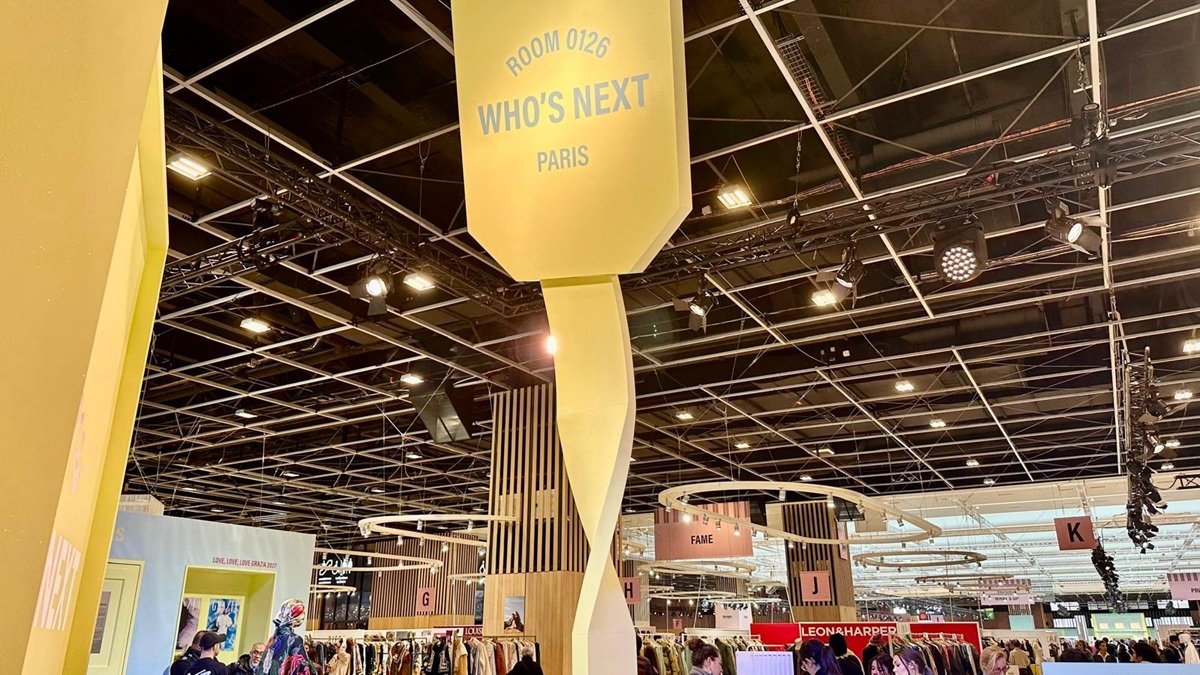

France is starting the trade fair year at a time of profound recomposition of its fashion ecosystem. After a tough 2025 for the local industry, with long-established brands that have disappeared or have entered restructuring processes, and in a context that has accelerated the erosion of the multi-brand channel, especially in small and medium-sized cities, the professional event Who’s Next returned to Porte de Versailles (Paris) with the aim of defending its role as an international venue and demonstrating dynamism around the market.
Although the general outlook for the French sector is far from positive in the face of the acute ready-to-wear crisis, the situation is not catastrophic for many of the players who are still on the move: trade shows, buyers and brands. Selling fashion and making money from it has become more difficult in France, impacting all the industry’s satellite activities, but it has not become a mission impossible, just a challenge in which much more effort needs to be invested, agree the sector’s entrepreneurs.
The adjustment of the French scene leaves, on paper, room for companies already established or new entrants to gain share in categories and places where there used to be more supply. However, it also paints a picture of a more fragile market, with less commercial density and a climate of restrained confidence. In this scenario, France continues to be the natural market for many Spanish companies, due to its proximity, cultural affinity and weight of consumption. Precisely for this reason, the current situation has a double interpretation: as an opportunity and, at the same time, as a demanding market that requires fine-tuning positioning, channels and access formats.
Held from January 17th to 19th, on the eve of the start of fashion week as usual, Who’s Next brought together around 700 brands, including fashion, accessories and lifestyle proposals, with the aim of consolidating its role as a European platform for commercial contact in a market that is readjusting, both in France and in professional shows. The result was a fair that works as several in one, with an offer segmented by universes and a constant flow of visitors, closer to a large market than to a niche show.
Who’s Next featured more than 700 international brands and opened up space for new categories
The general feedback among exhibitors pointed to good traffic and to a winter that is once again working as a commercial season, with buyers looking for saleable product and collections with a high point. In this context, several French exhibiting companies agreed on a shared appreciation: a notable presence of Spanish buyers, with Italy also active, while a lower relative weight of visitors from the United States, the Middle East and part of Asia was perceived. In ready-to-wear, some brands also noted fewer buyers from the West Indies, a regular at the event for the purchase of summer collections, due to the mismatch of seasons.
At the same time, the fair went a step further in its content and prescription dimension. Conceived around the Room 0126 concept , inspired by the universe of hotels, the edition boasted a careful aesthetic in pastel tones and thematic routes. At the entrance, editorial curation gained ground as a tool for orienting the buyer and sorting out the commercial noise. In addition, an experiential component was added to the stand’s language, with specific activations designed to attract traffic.
Likewise, the new presentation of the beauty area brought together a dozen brands, mainly French. The area, located in a central space, served as a crossroads between curiosity and shopping, reinforcing the idea that contemporary retail mixes categories and that beauty is incorporated as a natural complement in certain multi-brand stores and concept stores.
In general, the brands consulted by Modaes were satisfied with the outcome of the fair, in terms of traffic and quality of contacts. “ The participation has gone very well, although we have missed Asian and American buyers from other editions,“ said Carlota Furest, CEO of Beatriz Furest, to Modaes. The brand, which has a long history at the Parisian fair since its first attendance in 2020, celebrated its good performance in markets such as France, Belgium and Italy. “In the UK, the last country we have entered, our product is fitting in wonderfully,“ smiled Furest.
Positive feelings also at the Yerse stand, whose managers were “happy with the winter campaign”. For the brand specializing in knitwear, the Parisian fair is “the main meeting point” with the French customers it already has and a lever to “strengthen exports”. In fact, its participation made it possible to sign its forthcoming entry into new markets such as Lebanon, Japan and Taiwan.
Yerse, which will also participate in London’s Scoop and Italy’s White Milano, defended the role of trade fairs “especially in the face of the crises in Russia and the East”. Focused on the expansion process in the Nordic countries, the company already has more than 1,200 points of sale internationally, with France and Italy as its main markets. In Spain, “a market that has recovered in all three channels”, Yerse is currently registering double-digit growth, said its managers.
Salon International de la Lingerie
In the event’s ecosystem, lingerie maintained a determining weight by occupying the first floor of the fair. The French women’s lingerie market reached €2.01 billion between January and October 2025, in a context of more rational consumption. Volume fell 2.6%, but the average price advanced 3.1%, a sign of a shift towards quality, durability and added value.
The structure of spending confirms why the technical product remains a driver. Bras accounted for 57% of spending, compared to 37% for panties, with fit, materials and construction as central business drivers. In parallel, pajamas and homewear are consolidating their weight, in line with a consumer seeking hybrid home/outdoor uses.
Inside the event, this widening of the perimeter translated into an offer that went beyond traditional lingerie, with shapewear, non-bra solutions, men’s proposals and home collections. There was also a visible effort to prescribe, with curated spaces in concept store format that operated as product islands, designed to inspire retail and signal seasonal cues.
In the central axis of the first floor, the hierarchy of the show was visible through the larger and more crowded stands. Historical intimate apparel brands such as Chantelle, Dim, Wacoal, Lise Charmel, Maison Lejaby or Simone Pérèle concentrated much of the traffic, along with the presence of the Van de Velde group, which brought together in the same environment the Spanish Sardá, Marie Jo and PrimaDonna. The tour also included an aisle Made in Germany, with firms such as Anita and Rosa Faia, which emphasized the weight of the technical product and the adjustment within the universe of lingerie.
Interfilière reinforced the industrial base of the show, Shoppe as a lifestyle oasis
The integration of Interfilière into the second floor tour reflected the fact that the market is pushing for a better-made product and that this promise needs industrial support. Raw materials, components and technical solutions coexist with the finished product, bringing brands and suppliers closer together at a time when the sector is seeking to shorten cycles, justify value and respond to a more demanding consumer.
The accessories and costume jewelry section introduced, on the other hand, a more accessible layer within the whole. At the same time, the Shoppe Object Paris format was launched, with more than 60 brands such as Papier Tigre or Serax, mainly French but also featuring Korean, British, Japanese and American proposals. The space reinforced the diversification and the reading of hybrid retail that runs through the entire fair, where fashion, home and gift increasingly coexist in the same point of sale.
The offer was articulated around small format and rotation products, from stationery and cards to candles, decorative objects and functional pieces, designed to complete the assortment in concept stores and mid-positioned multi-brand stores without raising prices.
Related content
Spotlight on B2B Events: Where to Place Your Bet This Season
19 ene 2026 - 05:00
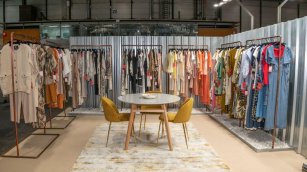
Momad Revamps Strategy: Summer, Quality Format and Runway Synergies
12 dic 2025 - 04:51
L’Oréal invests 383 million in AI technology center in India
21 ene 2026 - 16:01
Latest news
L’Oréal invests 383 million in AI technology center in India
21 ene 2026 - 16:01

CWF Fortifies Position in Kids’ Fashion Market with Catimini Purchase
21 ene 2026 - 13:38
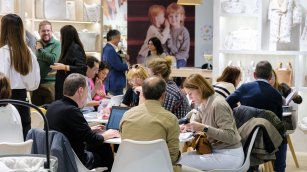
Fimi Kicks Off 100th Edition Featuring More Than 700 Exhibitors
21 ene 2026 - 12:43

Burberry Sees 0.91% Growth in Q3, Reaches €764 Million
21 ene 2026 - 10:57


