Japan’s Diplomatic Tensions and Economic Woes Stir Concerns in Uniqlo’s Origin
Boasting a per capita GDP of $46,000 and Western-aligned policies, Japan is rising as a key player in the international fashion landscape. Fast Retailing, the powerhouse behind Uniqlo, underscores the country’s significance in the industry.
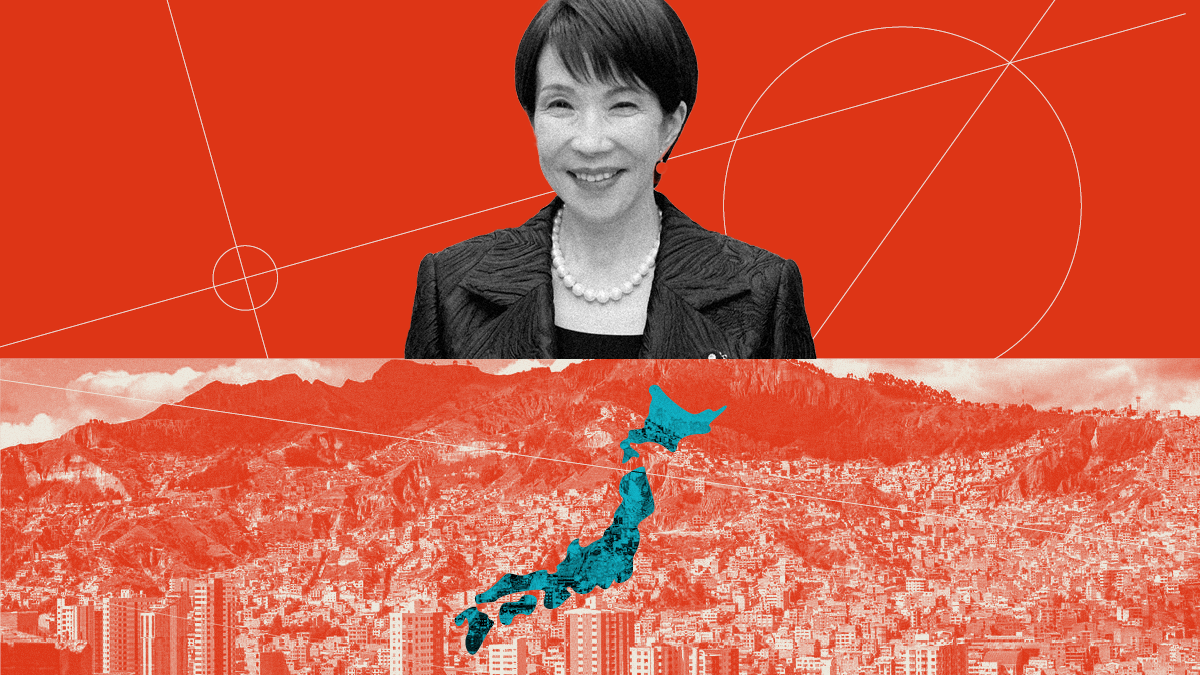

Yonaguni Island was made popular in 2021 by Puerto Rican singer Bad Bunny, who released an eponymous single that topped the Western charts for months. In the song, Benito Martinez, the artist’s real name, uses the Japanese island as a representation of a faraway, hard-to-reach place he would be willing to go to for love. Bad Bunny’s connection is no coincidence, since the island, which is part of the Ryukyu group of islands, is characterized by difficult access and stands as the westernmost point of Japan, barely a hundred kilometers from Taiwan.
It is this proximity to the controversial island, which on paper is part of China but has been operating independently for years, that has sparked a diplomatic crisis between Japan and China, the two Asian giants. The conflict erupted in early November, when the newly appointed Prime Minister, Sanae Takaichi, stated before the country’s Parliament that in the event of China resorting to the use of force on Taiwanese territory, her country’s military intervention would be justified.
The diplomatic conflict has quickly escalated, and has had its first economic consequences, especially for Japan, which has seen how in just a few days Chinese citizens, the country’s main tourist flow, have cancelled hundreds of thousands of tickets to the archipelago. The growing tension between the two sides of Asian politics is also occurring at a time of change for Japan: Takaichi, who belongs to the most ultra-conservative wing of Japanese politics, is the first woman to take charge of the government.
A four trillion dollar economy
Japan rises to the top of the rankings of economies around the world, with positions ranging from third to fifth place. With a population of 123.2 million inhabitants at the end of 2024, the group of islands that make up the country (consisting of more than 6,852 islands, of which only about 400 are inhabited), accumulate a Gross Domestic Product (GDP) of four trillion dollars, according to CIA World Factbook data.
Japan’s economy, however, is heavily dependent on foreign trade, with both imports and exports accounting for more than 20% of the country’s GDP in both cases. This vulnerability has been progressively reflected in the country’s economy, especially with the global economic slowdown. After growing by 1.7% in 2023, the Japanese economy recorded a slight contraction in the first half of 2024, but recovered during the second quarter, managing to close the year with a 0.1% increase in GDP.
The main forecasts, as of October, of the International Monetary Fund (IMF), are for the country to close 2025 growing by 1.1%, four tenths more than estimated in July, while GDP will slow down again in 2026, with an increase of 0.6%. The international organization’s estimates for Japan, despite being positive, place the country at the tail end of growth among the major economies. Compared to Japan’s GDP growth, the US economy will grow by 2%, the European Union average by 1.2% and the United Kingdom and Canada by 1.3% and 1.2%, respectively.
The country’s dependence on the outside world, which, moreover, has no land borders with any other state, has already taken its toll on Japan. According to the latest available data, Japan’s GDP contracted by 0.4% between July and September compared to the previous quarter, precisely because of the fall in exports due to the tariffs imposed by the United States.
The data, shared by the government this week, show that Japanese exports fell by 1.2% in the period, compared to a 2.3% rise in the second quarter, while imports fell by 0.1%, also compared to the previous quarter’s growth of 1.3%. On a year-on-year basis, the drop was even greater, at 1.8%.
Sea, cars and robots
Japan’s geography is both a challenge and a historical driver for the country. Its vast maritime extension as an archipelago makes it one of the world’s largest fish producers. The same reason, however, has historically hindered the development of agriculture, with only 11% of the territory being suitable for cultivation. Thus, the weight of the primary sector in the economy is barely 1%, while the industrial sector accounts for 26.9% of GDP and employs 24% of the population.
Traditional sectors such as the automotive industry, with companies like Toyota, have shaped Japanese industry, which, however, has also developed in the heat of the latest technologies, especially in sectors such as robotics. Manufacturing output, however, which alone accounts for 19% of GDP, fell by 2.3% at the end of 2024, the third consecutive decline.
Lastly, the services sector accounts for 71.4% of the country’s GDP and employs more than 73% of the working population. The weight of the financial sector stands out, together with others such as real estate, although retail consumption also stands out as a relevant lever for the economy. Tourism has been on the rise in the country, becoming one of the major destinations on the Asian continent, receiving almost 37 million international visitors in 2024, five million more than in 2019, before the outbreak of the pandemic.
The financial, real estate and retail sectors are driving the weight of the services sector in the Japanese economy
Fashion in the heat of a giant
Private consumption, including fashion, has become one of the pillars of the country’s growth, thanks to the high purchasing power of the population, which has a per capita GDP of up to $46,100. The growing role of fashion in the economy can be seen in the trajectory of the large Japanese fashion operator, Fast Retailing.
Uniqlo’s parent company has become the third largest fashion retailer worldwide in the last decade, behind only Inditex and H&M, and overtaking Gap for the bronze medal in 2015.
Since then, the company has been progressively widening its gap with the U.S. giant: at the close of its last fiscal year, ended in August, Fast Retailing posted sales of 3.4 trillion yen (€22.7 billion), up 12.8% from the previous year, above the $14.9 billion that Gap turned over in its own fiscal year. The company has also been closing the gap with its next rival, H&M, which posted sales of €21.377 billion in its own full year, just over €2.1 billion more than Fast Retailing.
There are, however, other major national operators that stand out in the international fashion ecosystem. On the one hand, the cosmetics company Shiseido, but also Asics, which has carved a niche for itself in the sports industry with its eponymous brand, but which also has other brands in its portfolio, such as Onitsuka Tiger.
In international fashion, Japan is emerging as a key consumer market in Asia. At the end of 2023, Japan imported $41 billion worth of fashion, according to data from Harvard University’s Atlas of Economic Complexity, representing 3.15% of the global share.
This has led some of the sector’s major operators to have a physical presence in the country. Inditex, on the one hand, operated a total of 68 stores in the country at the end of 2024, most of which are Zara stores (64 stores), while the Galician giant also operated four Zara Home stores at the end of the year.
Related content

Bolivia’s Political Shift: Unveiling a New Frontier for Fashion
27 oct 2025 - 05:00


Bangladesh: 12 months after the Monsoon revolution
28 jul 2025 - 05:00

Birkenstock Charts Robust Growth Path to 2028 with Fresh Strategy
29 ene 2026 - 11:16
Latest news
Birkenstock Charts Robust Growth Path to 2028 with Fresh Strategy
29 ene 2026 - 11:16

Levi Strauss Boosts Profitability: Dodges Tariff Impact and Triples Earnings
29 ene 2026 - 11:15
H&M Holds Steady: 4.3% Profit Surge in 2025 Approaches €1.06 Billion Mark
29 ene 2026 - 11:10

Gordon Brothers Takes Over LK Bennett, Sets Stage for Global Expansion
28 ene 2026 - 12:33