Bangladesh: A Year After the Monsoon Revolution, Elections and Trade Transformation in Focus
Twelve months post-revolution, Bangladesh is in a rebuilding phase, thanks in part to its robust textile industry, as the country prepares for its first elections since the prime minister’s downfall.
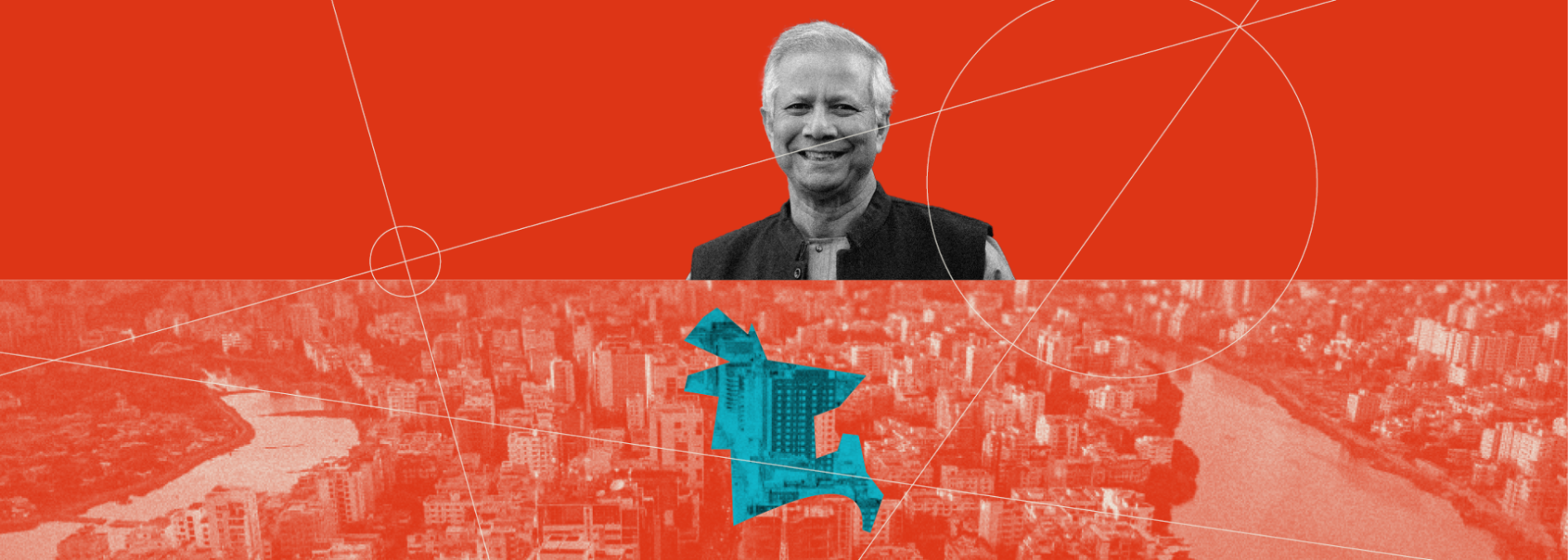


It will soon be a year since the first protests that turned the lives of Bengalis upside down. What began as a student demonstration against the reinstatement of a quota system for civil servant positions ended as a political, economic and social revolution, with more than a thousand deaths and a prime minister on the run, and was dubbed the Monsoon revolution. The Nobel Peace Prize winner Muhammad Yunus has been leading the country since then on an interim basis, with the first elections already in sight, in April 2026.
The prime minister has not had an easy year. Speaking at the World Economic Forum earlier this year, in fact, Yunus recounted how he flatly rejected the first proposal to take charge of the country. “We knew we needed a government, but how do you create one?” the leader wondered.
His reluctance to take charge of Bangladesh has been validated as the months have passed. Since the resignation and subsequent flight of the then prime minister, Sheikh Hasina, in August of a year ago, the Asian country, one of the world’s leading textile producers, has experienced a monsoon, new social protests and the arrival of Donald Trump, president of the United States, with his decision to impose tariffs on world trade. All in twelve months and after a revolution that devastated the country in its wake.
Bangladesh in figures
With just over 171 million inhabitants and a Gross Domestic Product (GDP) of 437.4 billion dollars, Bangladesh mainly shares a border with India, with the exception of a small area bordering Myanmar, and is located close to China. The country thus stands in the middle of a textile triangle, making it one of the world’s leading fashion suppliers.
A year of chaos, however, will take its toll on the Bengali economy, which is expected to grow by 3.8% in 2025, according to the latest forecasts of the International Monetary Fund (IMF). The figure, although high by the usual growth rates for European powers, is below the 4.5% increase for developing Asian countries as a whole. This increase is also lower than that recorded in 2024, when Bangladesh’s economy grew by 4.2%, even after half a year of unrest.
Looking ahead, the IMF estimates that the country will return to the growth path, with an economic growth of 6.5% in 2026 and another 6.6% in 2030, above the 4.6% and 4.5% estimated for the developing Asia region in the same years. According to the entity’s forecasts, in fact, few economies in the region will grow above the Bengali economy, with the sole exception of India, with an increase of 6.3% by 2026.
The inflation rate is, however, one of the main challenges facing the country. At the end of 2024, prices rose by 9.7%, well above the 1.6% average for developing Asian countries. The latter, however, is also expected to moderate in recent years, to stand at 8.4% at the end of 2025 and, finally, at 4.8% one year later.
According to data from the International Labor Organization, the country’s labor force totals 71 million people, with a labor market participation rate of close to 50%. Among young people, the unemployment rate is estimated at 16.8%, especially high among women.
A large part of Bangladesh’s GDP, 51.24%, is concentrated in the services sector, according to data from the Bangladesh Bureau of Statistics, followed by another 37.56% in the industrial sector. Finally, agriculture accounts for the remaining 11.2% of the Bengali economy.
More than 80% of Bangladesh’s exports are concentrated in the fashion sector.
An unknown giant in fashion
Fashion is one of the country’s main economic drivers, responsible for up to 80% of its exports to the rest of the world. Almost all the major companies in the sector, in fact, have a network of suppliers in the territory, including the Spanish fashion giants.
According to data from the Atlas of Economic Complexity, developed by Harvard University, the country sold products abroad for 51.3 billion dollars at the end of 2023, with a slight annual decrease of 0.2% in the last five years. The United States is the country’s main customer, accounting for 15.4% of Bengali exports, closely followed by Germany, with another 15.06%, and the United Kingdom, with 7.58%.
According to the same data, of the total exports, 42 billion represent the textile, garment and leather and footwear industry, and well above the next category, services, of which Bangladesh exported 6.4 billion dollars. The weight of the textile industry is such that, at the height of the protests a year ago, which caused the closure of many of the country’s factories as well as electricity and telecommunications cuts, the country’s textile employers’ association put the sector’s daily losses at 150 million dollars.
With data still provisional, the World Trade Organization (WTO) put the value of Bangladesh’s ready-made garment exports in 2024 at another 38.48 billion, a slight increase of 0.21% over the previous year. The figure represents 6.9% of the global share, also slightly down from the 7.4% it accounted for at the close of 2023.
The entity’s data, however, maintain Bangladesh as the second largest exporter of garments worldwide, only behind the Asian giant, China, which captures 29.6% of the global market share. After the Bengali economy comes Vietnam, with exports valued at 33.94 billion dollars, followed by other powers such as Turkey, India, Cambodia and Pakistan.
Related content

Swatch Sees 89% Profit Decline in 2025 Amid Tariff Woes and Sluggish Demand
30 ene 2026 - 04:26


Inditex’s Eduard Casabella on Oysho’s Sport Pivot and Growth Through Identity
29 ene 2026 - 18:40
McKinsey’s Gemma D’Auria on Luxury’s Pullback and Fashion’s Resilience in 2026
29 ene 2026 - 18:35
Latest news
Swatch Sees 89% Profit Decline in 2025 Amid Tariff Woes and Sluggish Demand
30 ene 2026 - 04:26
Inditex’s Eduard Casabella on Oysho’s Sport Pivot and Growth Through Identity
29 ene 2026 - 18:40
McKinsey’s Gemma D’Auria on Luxury’s Pullback and Fashion’s Resilience in 2026
29 ene 2026 - 18:35