Leggings Out, Denim In: Jeans Market Poised for a 42% Surge by 2030 Amid Cotton Price Hike
The global denim market is set to reach $121.76 billion by 2030, posting an impressive annual growth rate of over 6%. At the same time, cotton prices are climbing, expected to rise by up to 3% over the next two years, while production dwindles.


Denim has once again become a bull market. With the market forecast to grow by over 6% annually through 2030, to more than $120 billion in value, the new heat in the global denim market is driving business for companies such as Levi Strauss, Gap and American Eagle. Falling production and rising cotton prices in the coming years, however, which will increase by almost 3% in 2026 and 2027, loom as the big barrier to the industry’s development.
The global denim market reached a value of $86.7 billion at the end of 2024, and is forecast to reach $121.76 billion by 2030. This translates into a growth of 42% in six years, or compound annual growth rates of 6.09% each year.
“Denim remains a staple garment among different demographic groups thanks to its durability, versatility and constantly evolving designs,“ explains the latest denim market report. The growing Western influence in emerging markets, as well as a greater urbanization of these territories or the general interest in more sustainable practices within fashion, such as organic cotton, have also boosted the demand for these garments.
The denim market will reach a value of $121.76 billion by 2030
According to data from the consulting firm Grand View Research, the Asia Pacific region stands as the fastest growing market for denim consumption and manufacturing, with forecasts to reach a value of $34,614.8 million by 2030, with compound annual growth of up to 6.7% each year.
Within the region, India is positioned as the market that will register the highest year-on-year increases, although North America, the market that saw the birth of denim as the fashion fabric it is today, will lead the consumption of this material.
Along with the versatility and utility of denim, which was born precisely as the ideal fabric for the work clothes of American miners during the gold rush, price is another lever for the return of denim to the closets of consumers around the world.
The industry’s momentum could take longer than expected to reach the bottom line of the sector’s companies, mainly due to the upward trend in the price of cotton. According to the World Bank’s latest forecasts on global commodity prices, each kilogram of cotton will be worth $1.7 by the end of 2025, 10.9% less than the previous year.
This, however, will be the last year in the coming years in which the price of cotton will contract. According to the international organization, each kilogram of cotton will cost up to $1.75 in 2026, up 2.9%, and will rise again, another 2.9%, in 2027, to $1.8 per kilogram.
India dominates market growth, although North America remains at the forefront of turnover
This price increase will be accompanied by a global contraction in cotton production of up to 2% during the 2025-2026 season, according to the latest data shared by the U.S. Department of Agriculture and collected by the World Bank. This drop will be led by Australia, with 27% less cotton production, Turkey, with another 9% less, and the United States, with 8% less. The three markets, together with China and India, account for more than two thirds of world production, warns the agency.
The rise in cotton prices will coincide with a generalized fall in the price of raw materials, of which the World Bank has warned. According to the Bank’s forecasts, the price of all raw materials in 2025 will fall by 7.4% by the end of 2025, followed by another contraction of 6.8% in the following year.
And where some win...
Denim, jeans or trousers, whatever they are called, there is only one fabric that has marked such a clear before and after in the modern history of fashion. An American icon, denim is beginning to flood back into closets (and now cultural debates) around the world. Along with the loss of strength of athleisure fashion (impacting operators such as Lululemon or Under Armour), and the closing of the Y2K cycle, championed by fabrics such as lycra and nylon, the characteristics of denim (durable, resistant and reliable) are gradually permeating a society dominated by uncertainty and fearful of the loss of purchasing power.
Thus, the first consequences of denim’s comeback can already be seen in the evolution of the sector’s major players. First of all, Levi Strauss, which at the beginning of last year launched its new roadmap: Project Fuel. Along with the appointment of a new CEO, Michele Gass, the undisputed icon of denim is also immersed in a transformation that has already included cutbacks, layoffs and even the sale of Dockers, along with a shift towards a direct-to-consumer model.
To make this plan work, however, Levi’s has also accompanied it with a new communication phase, hand in hand with another great American icon: Beyoncé. Shortly after the release of her album Cowboy Carter, the denim company launched Reimagine, a campaign that reinterprets the brand’s legacy and most influential items, always around the singer’s image.
The great activator of this revaluation of denim, however, has been Gap. Despite not specializing in denim like Levi’s, Gap’s drive to re-enter the center of cultural relevance has also given a boost to a category so inherently American.
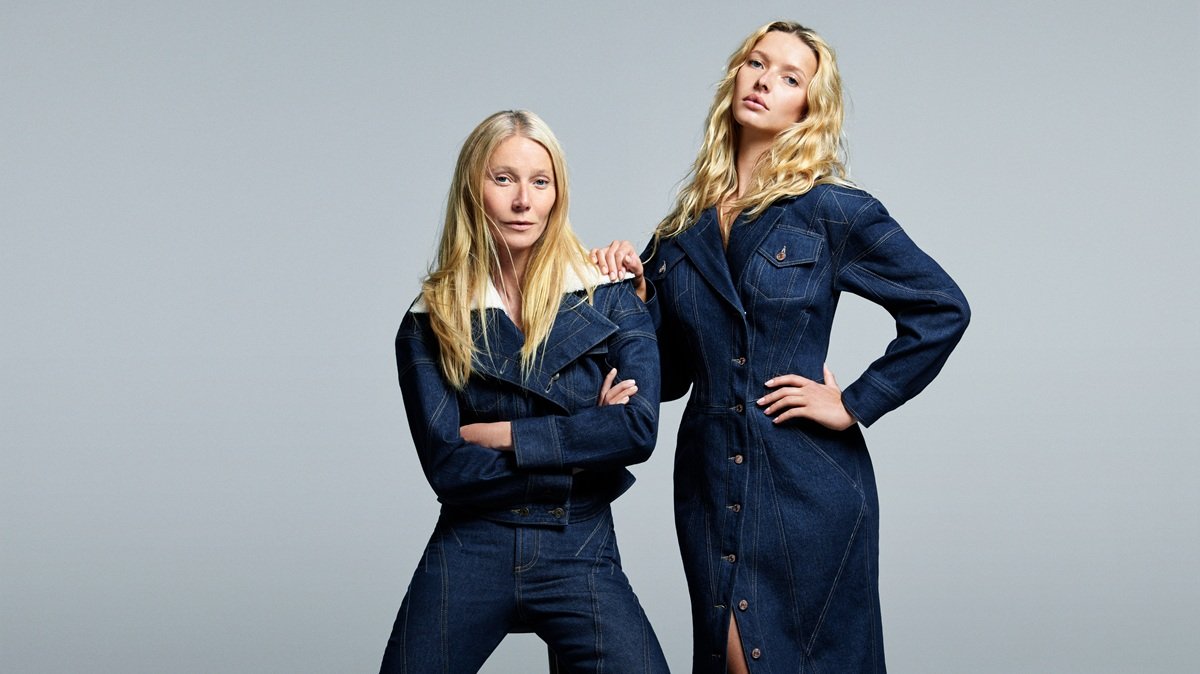
Just as Levi’s has Gass, from the end of 2023 Gap is counting on Richard Dickson and Zac Posen to carry out this plan. And in the face of Reimagine, the U.S. retail giant has Better in Denim. Once again, with a focus on cost reduction, but also on communication, Gap is gradually gaining weight in the current cultural debate by selecting public figures such as Gwyneth Palin and Zac Posen.Gwyneth Paltrow and her daughter, Apple Martin, the face of the giant’s latest collection, and the female music group Katseye, the stars of the campaign’s main video, which has already surpassed 400 million views. The Linen Moves campaign, with the song Back on 74 by the British band Jungle, or Get loose, with Troye Sivan, are just some of the examples of Gap’s new strategy.
Levi’s and Gap have launched major communication campaigns around denim
The third actor that has jumped to the center of the debate, and a much less expected one, has been American Eagle, which in late July launched a controversial and viral advertising campaign with the help of actress Sydney Sweeney. Under the slogan Sydney Sweeney has great jeans, the company launched a pun between jeans and genes, alluding to Sweeney’s good genetics (and pants).
Controversy soon followed the ad’s release, and that reached even the White House, with Donald Trump’s public endorsement of the company causing American Eagle’s stock to skyrocket in the days that followed. With the image boost generated after his campaign, and despite closing the second quarter of the year with a flat sales evolution, to 1,283 million dollars, the US company expects to grow at single digits for the rest of the year.
Levi’s has begun to see the first results of its strategic plan. The U.S. giant closed the third quarter of the financial year (ended August 25th) with a turnover of $1.54 billion, 7% more than in the previous year’s period. The group’s profits also multiplied to $122 million, compared to $23 million in the same period of 2024.
Gap, for its part, also closed the second quarter with a flat sales performance, but its net income soared. At the end of the period (ended August 2nd), the US group sold $3.725 billion, in line with the $3.720 billion of the same period in 2024, while profit rose from $206 million to $216 million, an increase of 4.85%.
...others lose
The rise of denim and these icons of a segment of American fashion, however, have also brought the consequent fall of trend representatives who lag behind. The biggest example of this is Lululemon, the Canadian group closed the second quarter with a reduction of more than 5% in its net result, to earn $370 million, all, despite having sold 6.5% more.
In less than a year, in fact, from September 2025 to September this year, Lululemon has lost almost 40% of its stock market value, especially weighed down by the poor performance of its business in the United States. Although the company closed the second quarter with an increase in turnover, in the United States, its largest market, Lululemon’s sales have been declining for several quarters.
Under Armour, meanwhile, ended the second quarter with a drop of almost 5% in its turnover, to $1.33 billion. The sportswear company also posted a loss for the period, posting a net loss of $18.81 million, compared to a profit of $170 million for the same period last year.
The poor business performance has also led both companies to reduce their forecasts for the full year. While Under Armour projects a drop of between 4% and 5% in revenues and an operating profit of between 19 million and $34 million, Lululemon projects sales of between $10.85 billion and $11 billion, between 2% and 4% more, and a reduction in gross profit of $240 million.
Related content

Primark’s New Strategy: Denim and Democratization to Capture Low-Cost Market
17 sep 2025 - 05:00

OTB: The Relentless Warrior with Denim as Its Atman
11 mar 2025 - 05:00

Gap Expands Beyond Fashion with Paramount’s Leadership in Entertainment
15 ene 2026 - 17:06
Levi’s Spain Boosts Revenue to $90 Million with Colombian Expansion
9 ene 2026 - 05:00
Latest news
Gordon Brothers Takes Over LK Bennett, Sets Stage for Global Expansion
28 ene 2026 - 12:33

Galeries Lafayette Finalizes Sale of BHV Building Amid Shein Controversy
28 ene 2026 - 12:30

VF Corp’s Q3 Results Shine with 28% Boost as Business Reorganization Unfolds
28 ene 2026 - 08:23

Claire’s Faces Another Setback in the UK with Second Bankruptcy in Six Months
28 ene 2026 - 08:21