

European Union Trials Customer Clothing Recycling Incentives in Spain
Spain will soon be home to an innovative EU-funded project featuring smart containers designed to gather used clothing, offering consumer incentives. The pilot, under the TexMat and Horizon Europe schemes, is also slated for testing in Finland.
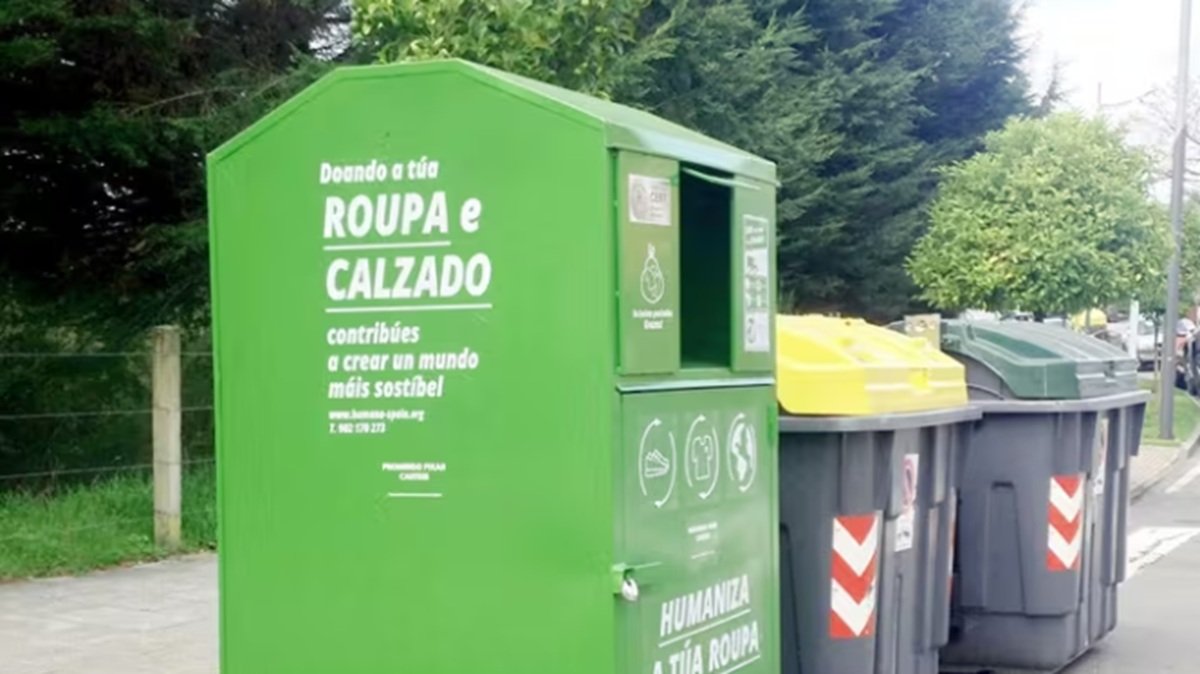

Recycling clothes in exchange for a prize for users. Spain will be one of the two countries chosen by the European Union (EU) to test a pilot program for collecting used clothing “with rewards” for consumers. The initiative, financed with Horizon Europe funds, will be developed in parallel in Finland and will serve as a reference for a possible EU-wide deployment.
The project is part of TexMat, a European initiative endowed with more than €6.76 million and with an implementation schedule between October 2025 and March 2029. Led by the VTT Technical Research Centre of Finland and involving fourteen partners from seven countries, TexMat seeks to accelerate the transition to a more sustainable and circular textile economy.
According to the European Commission, the aim is to “develop new business models, hardware and software technologies, and policy tools to involve and engage consumers in the separate collection of textile waste and in boosting reuse.“ All this with a view to the European Union’s climate targets for 2030 and 2050, aligned with the European Green Pact.
The Spanish pilot will be based on the installation of automated and intelligent containers on public roads. The Universidade da Coruña, Humana Fundación Pueblo para Pueblo, Iris Technology Solutions and Rovimatica will participate in its development, which will be in charge, respectively, of the business models, waste management, digital solutions and the development of the container and the associated application.
Consumers will receive an economic incentive for recycling garments through a rebate linked to second-hand markets
These containers will incorporate technology capable of pre-sorting the garments deposited and assessing their quality, automatically generating a “compensation” for the user. Brussels states that the solutions “will offer consumers an economic incentive”, through “new reimbursement schemes linked to second-hand markets”, with the aim of extending the life cycle of textile products and supporting extended producer responsibility (EPR) systems.
“Through automated collection and sorting, the TexMat solution contributes directly to the development of the future digital product passport and paves the way for a successful extended producer responsibility system for textiles,“ says Ece Şanlı, Humana’s circular economy manager. In the same vein, Elina Ilén, project coordinator at VTT, stresses that the initiative “has great potential to transform the collection and resale of used garments” and “free consumers to decide which garments can be reused or recycled,“ optimizing textile waste management in Europe.
Related content
New Era for European Textiles: A Ten-Company Recycling Alliance Emerges
14 oct 2025 - 14:14


Saks Global Files for Bankruptcy
14 ene 2026 - 06:52
Latest news
Saks Global Files for Bankruptcy
14 ene 2026 - 06:52

Andrea Rigogliosi Steps in as Diesel’s New Chief Executive Officer
14 ene 2026 - 06:50


