New Era for European Textiles: A Ten-Company Recycling Alliance Emerges
The organization has unveiled a manifesto urging European Union authorities to adopt three crucial policy pillars to accelerate the circular transformation within the fashion industry.
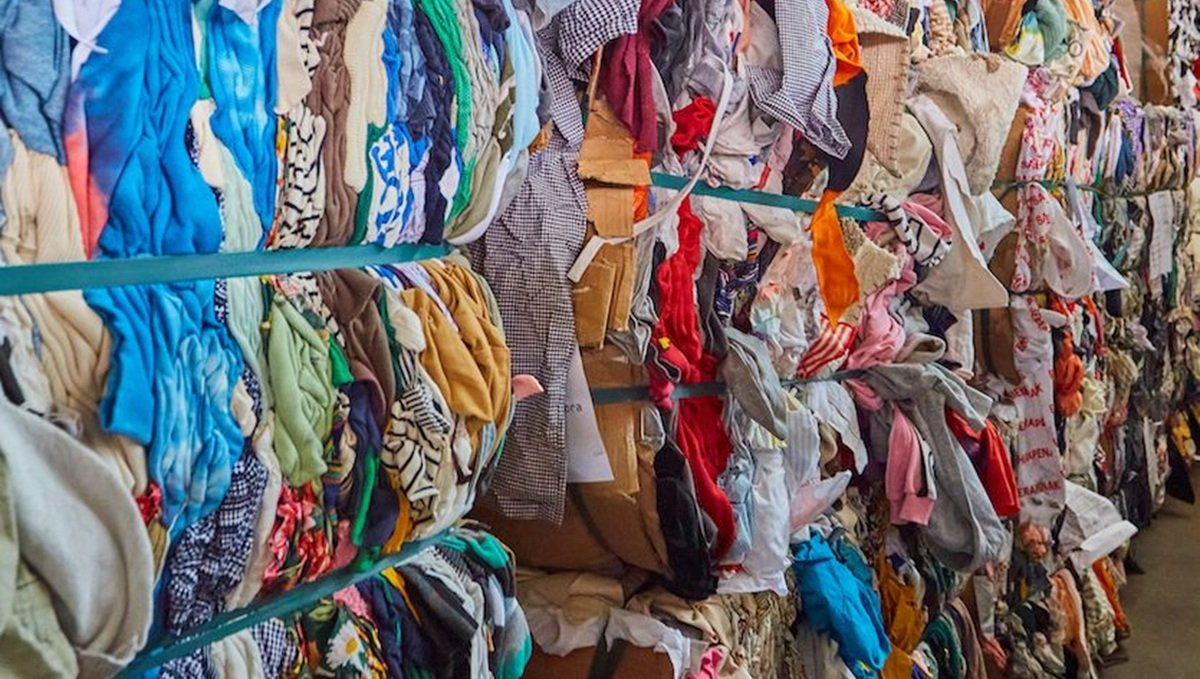

More lobbying in European fashion. A dozen companies, ranging from the Catalan textile sorting and recycling company Coleo to the French company Reju, have joined forces to form a new alliance within the sector, the European Circular Textile Coalition. With twelve founding members, the body has already launched its first manifesto, in the form of a call to action to EU authorities.
Under the slogan A world without resources is possible, the coalition’s objective is to capitalize on sustainable opportunities, to the point of turning post-consumer textile waste into a lever for employment, innovation and competitiveness. “We refuse to think that textile waste is inevitable, seeing it as a solvable challenge for our generation,“ explains the organization.
Among its members, the European Circular Textile Coalition has, for now, only one Spanish presence, the waste management and recycling company Coleo. The French recycling company Reju, along with other players in the fashion value chain such as recyclers and sorters (Resortecs, Synergies TLC, Nouvelles Fibres Textiles or Erdotex) and manufacturers (Tissage de Charlieu, European Spinning Group) are also part of the driving force.
A dozen companies, including Coleo, are already members of the organization
The group of entities has highlighted the need for European authorities to match their regulatory ambitions with investment in European recycling systems and infrastructure. The imminent entry into force of Extended Producer Responsibility (EPR) in all Member States has increased the pressure on these schemes, which are often not prepared to process the full amount of waste expected.
For the moment, different entities in Spain, the Netherlands or even the United Kingdom, from recycling employers’ associations to third sector organizations, have already warned of a possible collapse in their national infrastructures: “Without adequate preparation of the systems, even the best regulations run the risk of not being sufficient”, explained the European Circular Textile Coalition.
The organization’s manifesto has established three political pillars needed to drive this change in the industry, which firstly involve relocating production to Europe to ensure the competitiveness of the EU value chain. The coalition also highlights prioritizing post-consumer recycling to ensure the highest quality of recycled fibers and establishing an “ambitious but realistic” mandatory percentage of recycled content in garments.
“Voluntary efforts have proven insufficient, we must build a set of standards to drive demand,“ added the body, which invites other industry players to join the coalition.
Related content

UK Seeks Funding for Ambitious Textile Recycling Infrastructure Initiative
6 oct 2025 - 06:18
Rehubs Pushes Recycling Goals to 2032 Due to ‘Industry Constraints’
26 sep 2025 - 07:09

France Infuses $49 Million to Stabilize Textile Recycling Infrastructure
21 jul 2025 - 14:42

Swatch Sees 89% Profit Decline in 2025 Amid Tariff Woes and Sluggish Demand
30 ene 2026 - 04:26
Latest news
Swatch Sees 89% Profit Decline in 2025 Amid Tariff Woes and Sluggish Demand
30 ene 2026 - 04:26


Inditex’s Eduard Casabella on Oysho’s Sport Pivot and Growth Through Identity
29 ene 2026 - 18:40

McKinsey’s Gemma D’Auria on Luxury’s Pullback and Fashion’s Resilience in 2026
29 ene 2026 - 18:35