

EU Unlocks Market with Historic Free Trade Agreement with India
Under the new trade pact, European exporters could see annual tariff savings of up to €4 billion. The EU is optimistic about doubling its exports to the Asian market once the agreement is operational.
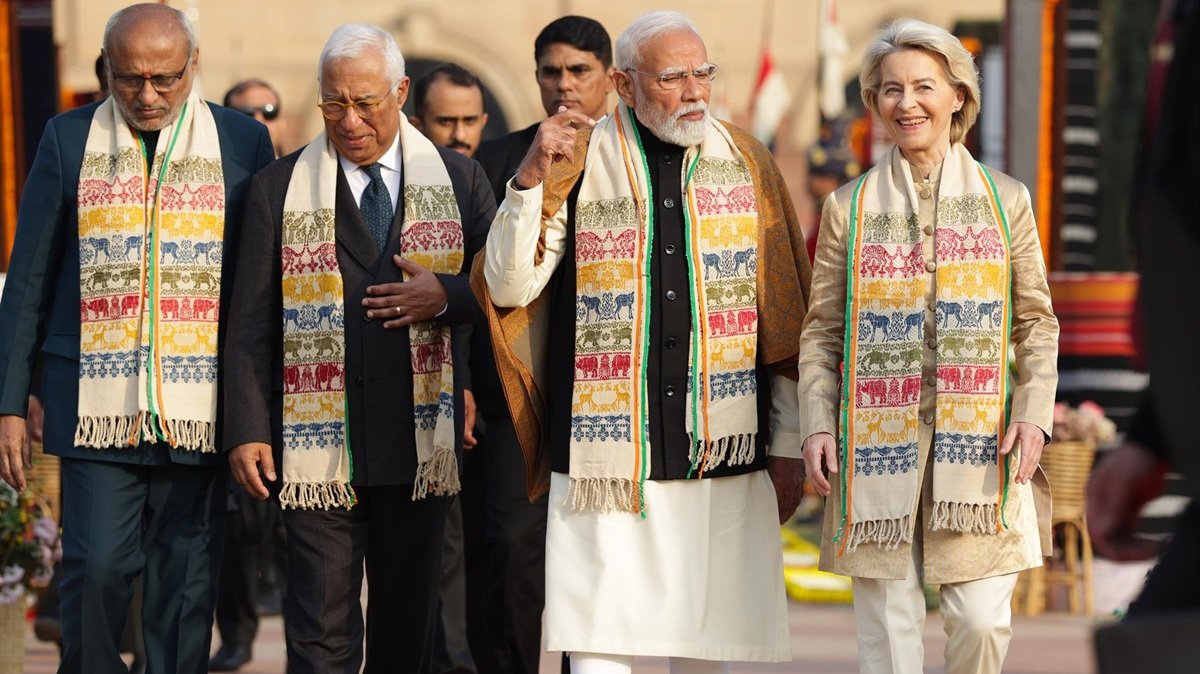

The European Union and India announced Tuesday the basis of a “historic” free trade agreement that will save European exporters up to 4.4 billion in tariffs each year, but which leaves out sensitive agricultural sectors such as rice, sugar and beef, the details of which will still have to be negotiated in the coming months.
The pact, which the two parties describe as “the mother of all agreements”, comes after two decades of difficult negotiations and as a response to the search for new reliable trade partners, in the face of geopolitical tensions that are forcing the EU to break with its traditional dependencies on Russia or China and the need to seek alternatives to the United States and its tariff war.
The European Union expects to “double” its exports to India once the new Free Trade Agreement is in force, which does not fully open up markets, but will drastically reduce the tariffs faced until now by European exporters in sectors such as wine (from 150% to a range of between 20% and 30%) which, in practice, meant a total closure of the market.
The EU aims to “double” its exports to India once the new Free Trade Agreement is in force
For example, tariffs on EU cars will be gradually cut from 110% to 10%, with a quota of 250,000 cars per year; while sales of machinery (up to 44% now), chemicals (22%) and pharmaceuticals (11%) will be reduced to zero tariffs. European steel and iron will also see the disappearance of duties on their sales to India, which until now amounted to 22%.
In the agricultural sector, European olive oil will benefit from a zero tariff, compared to the 45% paid until now, and meat preparations will also be reduced from 110% to 50%, spirits from 150% to 40% and sheep meat from 33% to 0%. Fruit juices and processed foods such as pastries, pasta, chocolate and pet food will also benefit from the end of tariffs (compared to the current 55%).
There is also agreement on rules of origin to ensure that only products that have been “significantly processed” in one of the markets can be exported under the preferential regime to the other region, in order to prevent third countries from exporting to India and re-exporting their quotas to the EU market from there.
In addition, the agreement will grant EU companies privileged access to the Indian services market, including key sectors such as financial services and maritime services, according to the EU executive, which negotiates trade pacts with third countries on behalf of the EU-27.
The agreement will give EU companies privileged access to the Indian services market
The agreement also requires respect for the fundamental principles of the International Labor Organization (ILO) and includes legally binding commitments on issues such as decent working conditions, labor inspection and responsible business conduct, as well as provisions on UN and ILO conventions promoting women’s economic empowerment and gender equality.
The EU and India also commit to “collaborate” in the fight against climate change and the sustainable management of natural resources, including through the implementation of the UN Paris Agreement, the Convention on Biological Diversity and the Convention on International Trade in Endangered Species of Wild Fauna and Flora.
First bilateral summit in six years
The President of the European Council, António Costa, and the President of the European Commission, Ursula von der Leyen, have been in New Delhi since Monday to mark the conclusion of negotiations and participate in the first EU-India summit in years, together with the country’s Prime Minister, Narendra Modi. After the agreement at negotiators’ level, the new trade framework will also need the approval of the Council (governments) and the European Parliament to be formally adopted by the EU.
“After a year of tireless negotiations and more than a decade of preparation, we have achieved the biggest free trade agreement in history; tariffs are reduced and opportunities are liberalized, this shows that mutually beneficial trade is real and that a genuine partnership is worthwhile,“ said Modi.The EU trade negotiator, Commissioner Maros Sefcovic, celebrated in a first message on social media after the announcement of the agreement, which will create a market of almost 2.2 billion people, almost a quarter of the world’s GDP.
“Today marks a historic moment as we open a new chapter in EU-India relations, in trade, security and people-to-people ties. Our Summit sends a clear message: in a changing world order, the EU and India remain united as strategic and reliable partners,“ said Costa.
Von der Leyen, in turn, highlighted the fact that the EU and India are “making history”, but defended that “it is only the beginning” and that from now on they will “grow the strategic relationship to make it even stronger”.
Related content
India’s Labor Landscape Transformed for 640 Million
26 nov 2025 - 05:00
US Fashion Lead Challenged: China and India Closing the Gap by 2029
2 dic 2025 - 09:14


LVMH Tightens Grip on Loro Piana with $1 Billion Stake Boost to 94%
27 ene 2026 - 15:28
Latest news
LVMH Tightens Grip on Loro Piana with $1 Billion Stake Boost to 94%
27 ene 2026 - 15:28

LVMH Navigates Luxury Tightening: Sales Slip a Mere 1% to €80.8 Billion in 2025
27 ene 2026 - 15:26

Ferragamo Misses €1 Billion Milestone in 2025 Amid 5.7% Sales Decline
27 ene 2026 - 15:22

Amer Sports Taps Tommy Hilfiger Expertise to Strengthen Arc’teryx Leadership
27 ene 2026 - 11:53


