Revolutionary Labor Framework in India to Transform Lives of 640 Million
India is embarking on a transformative journey with the addition of over 100 million workers to its labor force within six years, setting the stage for enhanced competitiveness as its economic growth surges.
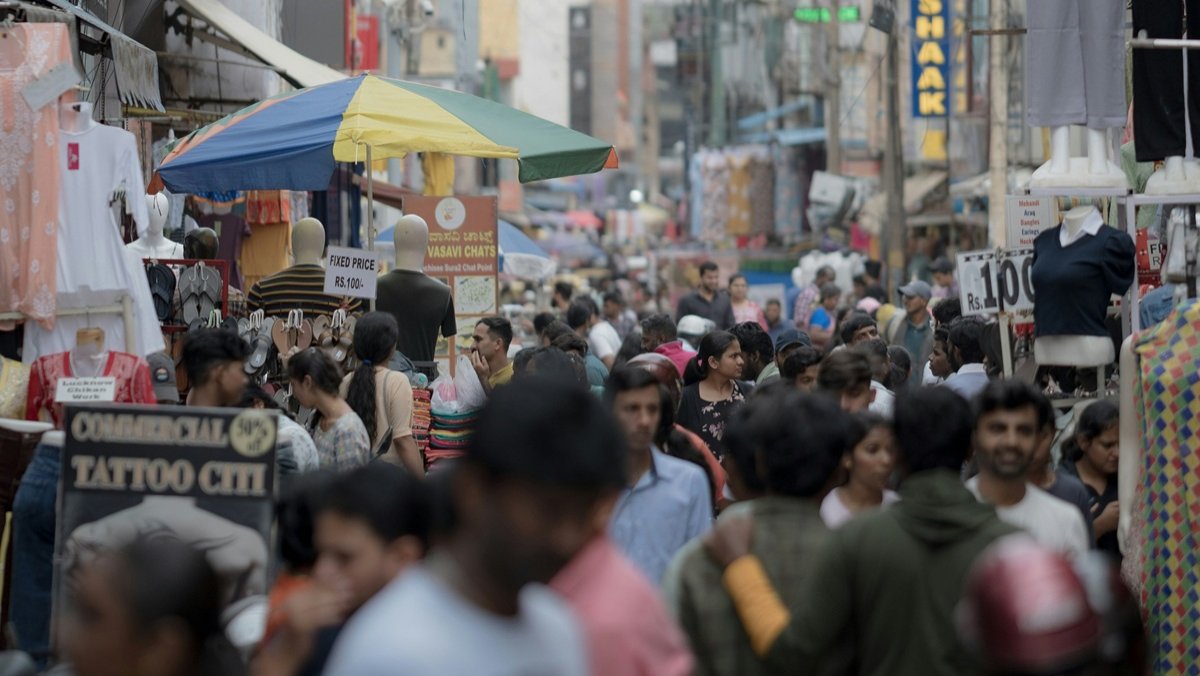


India shakes up the world map of labor. The world’s most populous country, with more than 1.4 billion inhabitants, is not yet the territory with the most workers, a position that has been held for years by China. India’s growing population and government efforts to maintain economic growth rates, however, contrast with China’s aging working-age population, opening a window of opportunity for the Indian market.
Now, the country’s more than 640 million workers face a new paradigm with the biggest labor reform worldwide in decades. The newly implemented regulatory framework seeks to increase the standard of living in the country, whose economy is expected to grow by 6.6% by the end of 2025. The reform also aims to facilitate the growth of companies to compete with other international players.
According to the latest official data, the country had a total of 643 million workers at the end of 2024, an increase of more than 168 million workers in absolute terms in the last six years. During that period, moreover, the country’s government highlights that the unemployment rate has fallen from 6% in 2018 to stand at only 3.2% at the close of 2024, and more than fifteen million women have entered the labor market.
India had more than 646 million workers at the end of 2024, 168 million more than six years ago
In order to adapt labor legislation to a market that is adding millions of workers every year, as well as to adapt to digitalization, automation and, in general, to the evolution of the Indian economy, last Friday the government of Narenda Modi began to implement four labor codes that will reorganize the labor legislation.n of the Indian economy, last Friday the Government of Narenda Modi began implementing four labor codes that will reorganize labor legislation in the country. These four rules are the result of the simplification of 29 existing laws, some of which were drafted during the British colonial rule over the country, and aim, as explained by the Executive, to “ensure improvements in wages and health and safety”.
To this end, the new labor framework has focused both on basic rights such as social security coverage and wage increases, as well as on the specificities of the Indian labor market, which include temporary work and the presence of women in the labor market. In the background of this measure, the Modi government also seeks to simplify labor compliance for companies and to attract international private investment to India.
“The previous framework was not responsive to the changing realities of the economy in terms of employment, creating uncertainty and increasing the administrative burden for both workers and industry,“ explains the country’s Ministry of Labor. Among the main changes, the new labor framework includes a ban on informal employment contracts, through a mandatory job appointment letter, as well as increased social security and minimum wage coverage for sectors such as part-time or subcontracted workers.
Minimum wage hikes or increased social security coverage are some of the measures of the new Indian labor framework
Regarding the minimum wage, the four codes establish that all workers, including those in the formal and informal sectors, must receive a universal minimum wage. According to the Government itself, prior to the reform the law covered only 30% of the economy, affecting only the formal sectors. Although the Executive has not set an official figure for the minimum wage, it assures that it will be established on the basis of the standard of living, with a margin of regional variation, but that no territory may set a wage lower than a base figure.
Another of the main focuses of this new framework is subcontracted workers, with the companies involved now having to allocate 1.2% of their turnover to the payment of Social Security to their workers. According to government data, there are currently 10 million subcontracted workers in the country, a figure that will rise to 23.5 million by 2030.
In addition, the four simplified codes eliminate restrictions on hiring women in certain jobs and night shifts and reduce the number of companies that will need government approval to carry out layoffs from 100 workers to 300 workers, among others. This measure has been harshly criticized by the country’s labor unions, which denounce that it will be easier to dismiss personnel.
From the business point of view, the regulatory simplification also aims to raise the competitiveness of companies in a country with a Gross Domestic Product (GDP) of four trillion dollars. “These codes empower both workers and companies, creating a protected workforce adapted to an increasingly changing work framework, thus paving the way towards a more resilient, competitive and self-sufficient country,“ the government stresses.
Related content

Fashion Alliance: India and Saudi Arabia Set Sights on Doubling Fashion Trade
17 nov 2025 - 07:30


Global Fiber Leaders: from China to India
5 nov 2025 - 05:00

Myntra Sees Profit Skyrocket Beyond $50 Million During Fashion Frenzy in India
16 sep 2025 - 07:10
Latest news

Birkenstock projects double-digit growth through 2028 with renewed strategy
29 ene 2026 - 11:16

Levi Strauss Boosts Profitability: Dodges Tariff Impact and Triples Earnings
29 ene 2026 - 11:15

H&M keeps its finger on the pulse and earns 4.6% more at fiscal year-end
29 ene 2026 - 11:10

Gordon Brothers Takes Over LK Bennett, Sets Stage for Global Expansion
28 ene 2026 - 12:33