Colombia Eyes Tariff Cuts on Yarn and Fiber to Boost Domestic Apparel Industry
In an effort to empower the apparel sector, the new decree addresses the scarcity of local materials, as the industry contends with a 10% import duty.
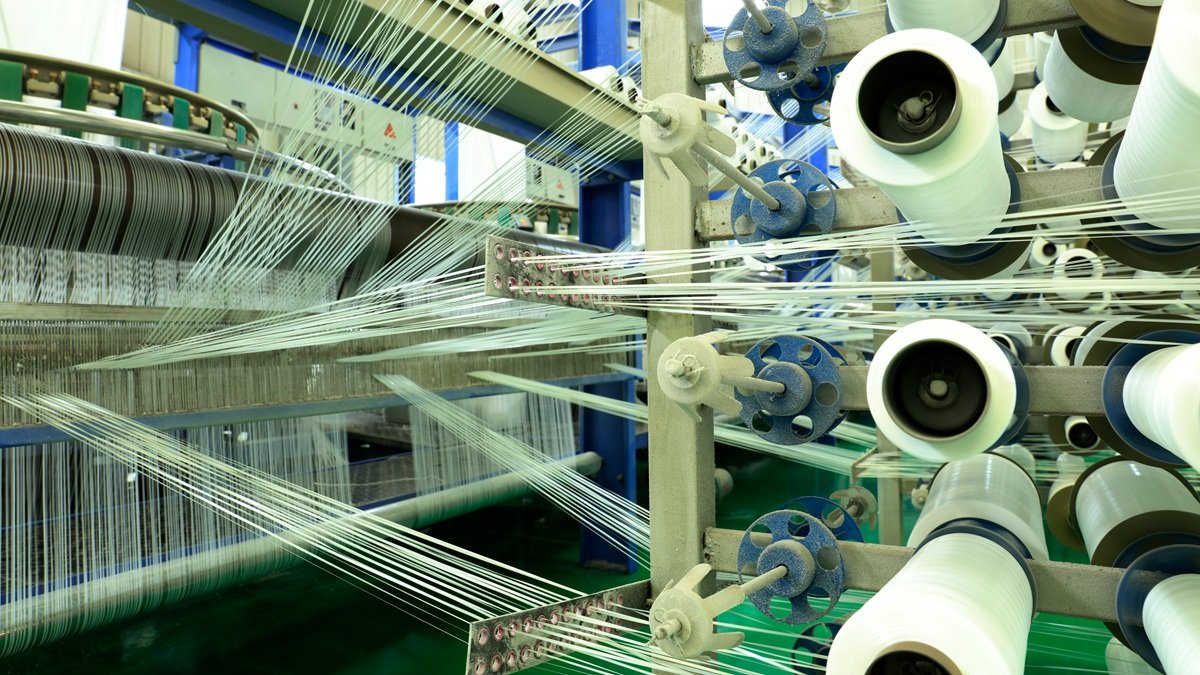

Colombia moves to protect its apparel industry. The Colombian government has proposed eliminating tariffs on yarns, fabrics and leathers for two years in order to lower production costs and strengthen the competitiveness of the country’s textile industry. Although the country has traditionally had a strong apparel industry, it is facing an increasingly weak production sector that puts it at risk.
As reported in El Colombiano, the initiative takes the form of three projects contained in a decree. The first is to eliminate tariffs for a group of 37 yarn subheadings that do not have domestic production; the second includes fabrics and leathers that also do not have domestic supply, and the third, valid for one year, covers ten subheadings such as cotton yarns, filaments and synthetic or artificial fibers, whose domestic production is insufficient.
Between January and July, Colombia would have imported about 79,235 tons of cotton, 16.5% more than in the same period of the previous year, for a value of $300.67 million. As for yarns and fabrics of textile fibers, foreign purchases reached 154,955 metric tons. Imports of knitwear and garments totaled 68,219 tons, up 37.9%. Imports of 37,159 metric tons of leather and footwear were recorded, up 29.4%.
Colombia imported 16.5% more cotton during the first half of the year than in the same period last year
According to Guillermo Criado, president of the Colombian Apparel Chamber, Colombia only produces 5% of the yarns demanded by the industry, so the remaining 95%, with a 10% tariff, is imported. “The spinning process represents barely 1% of employment in the chain. We cannot put 2.5 million jobs at risk to protect a marginal segment,“ he explained. In this sense, Criado insisted that cotton cultivation reached up to 400,000 hectares in the 1970s, while today it does not exceed 15,000 hectares.
On the contrary, the Colombian Cotton Confederation (Conalgodón) warns that reducing tariffs from 10% to 0% would discourage cotton planting and would go against the reactivation of the sector, affecting employment. In fact, it estimates losses of up to 13% of farmers’ income. The president of Conalgodón, César Pardo, has stated that cotton is going through “its most critical situation in the last twenty years” and that the implementation of the decree would mean the disappearance of the domestic market.
With the debate still open, the Government does not agree. The Ministry of Commerce has insisted that measures will be implemented to protect the domestic industry, and has argued that, once the local production capacity is covered, the remaining demand is what can be imported without tariffs, with limits to avoid unfair competition. The objective is not only to strengthen the domestic industry, but also to attract foreign capital. However, the Ministry of Agriculture has already shown its disagreement and has emphasized “the need to preserve local production capacity”.
Related content

Grupo Uribe: The Quiet Colombian Force Behind Europe’s Fashion Resilience
8 oct 2025 - 05:00


Birkenstock projects double-digit growth through 2028 with renewed strategy
29 ene 2026 - 11:16

Levi Strauss Boosts Profitability: Dodges Tariff Impact and Triples Earnings
29 ene 2026 - 11:15
Latest news
Birkenstock projects double-digit growth through 2028 with renewed strategy
29 ene 2026 - 11:16
Levi Strauss Boosts Profitability: Dodges Tariff Impact and Triples Earnings
29 ene 2026 - 11:15

H&M keeps its finger on the pulse and earns 4.6% more at fiscal year-end
29 ene 2026 - 11:10

Gordon Brothers Takes Over LK Bennett, Sets Stage for Global Expansion
28 ene 2026 - 12:33