The Next Leap for Colombian Fashion: Building Brand, Story, and International Presence
Medellín played host to around 400 top executives and entrepreneurs from the fashion world last Thursday at the Colombia Fashion Summit, where the focus was on addressing the sector’s challenges with insights from leaders such as Vélez, Crystal, and Totto.
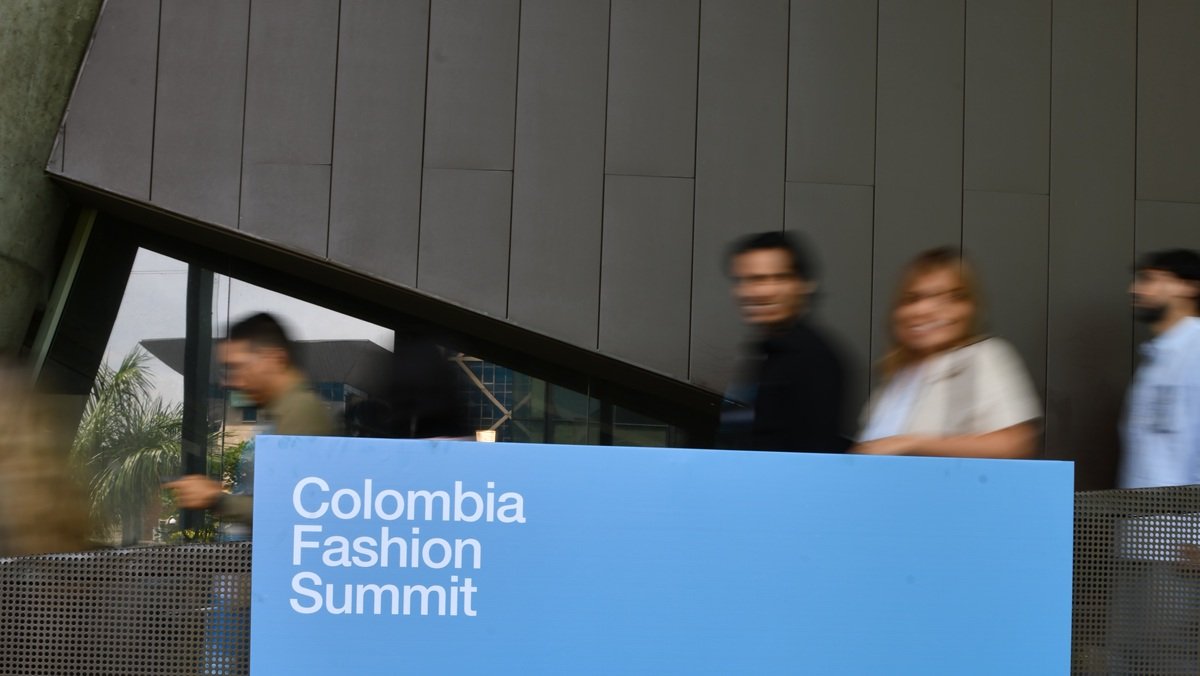


A still powerful local industry, a rich fabric of national brands and a growing distribution network. These are three of the elements that make up the fashion ecosystem in Colombia, with consolidated companies such as Grupo Crystal, Cueros Vélez and Totto, as well as strong companies such as Undergold. But the Colombian fashion industry faces the challenge of taking the next leap forward with the construction of brands that are able to conquer the international consumer and coexist with the new challenges of a sector conditioned by geopolitical changes, at a time of maximum cultural turmoil in the country. Nearly 400 executives and businessmen from the main companies in the sector met last week in Medellin to discuss this at the first edition of the Colombia Fashion Summit.
The meeting, promoted by Inexmoda and Modaes and born as a spin off of Barcelona Fashion Summit (the main professional meeting of the sector in Spain and one of the most important in southern Europe), became for a day in the think tank of the sector in Colombia through a program of round tables, talks and presentations by national and international experts.
Sebastián Díez, president of Inexmoda, and Pilar Riaño, founder of Modaes, were in charge of opening Colombia Fashion Summit with a reflection on the sector, in which they highlighted the challenges of fashion in the country, but also in the international market. “As a global industry, fashion has suffered with three major crises in recent years: the Great Recession, first, the Covid-19, later and the crisis of confidence, now -reflected the founder of Modaes-; the sector must ensure that political and economic uncertainty does not impact even more on the loss of value of fashion for consumers.“

Internationalization was one of the great axes of debate at Colombia Fashion Summit, in a country that has created groups that have jumped borders in the Americas, but few have managed to reach Europe.It is necessary to be clear about your identity as a brand, but also your scalability,“ said Tito Fernandez, of Kika Vargas, “but also to have the financial capacity, because it is a long process and it can take time to see a peso”.
Montserrat Figueras, at the helm of Sita Murt, and Teresa Copano, of Lola Casademunt, stressed the importance of having “a differentiated value proposal” to compete internationally. They also insisted on the need to be “selective” in countries, channels and partners, as did Fernández, who added the need for “patience”. “We must look for multicultural teams, with the ability to adapt to the characteristics of each market,“ said Figueras.
The businessman at the helm of Kika Vargas dwelt on some of Colombia’s own characteristics that hinder the internationalization process. “Ecommerce is not easy from here: a website in Colombia has limitations with payment gateways, so we sell online from the United States,“ he explained. Juan Lotero, from Bioracer, also pointed out difficulties for companies with local production, such as delivery times from Colombia. “The first thing is analysis, looking for data; second, adapting to each market, and third, people, looking for teams and partners in each country,“ concluded Copano.

With brand building as a great to do pending in the development of the Colombian fashion industry, María José Castaño, from Llyc, focused on the importance of managing this intangible asset. “We are in a world under pressure, with a more demanding and less loyal consumer -she reflected-; we are facing a profound transformation, with elements such as sustainability, digitalization and ecommerce”.
In the opinion of the communication expert, “price matters, but it is not enough” and today the consumer “asks for quality and origin, but also proposal: he wants to connect from an emotional point of view”. “Fashion today is about differentiation or dilution, building from the narrative, from the territories... in the face of an increasingly critical consumer and at a time when anyone can boycott a brand,“ she said.
Patricia Alonso, from Adolfo Domínguez; Andrea de Juan, from Silbon, and Juan Franco, from DDB, also analyzed the role of the brand in the fashion industry and, above all, in internationalization processes. In the opinion of the three experts, brands today must create stories that connect with audiences, at a time when the product of fashion companies has ceased to be only clothes and has become, above all, their stories.
Brands have become generators of stories and, as such, they must have an editorial line, which, according to Alonso and De Juan, does not imply taking sides in everything that happens in the world, but only in what is in line with the story of each brand.
Fernando Maudo, advisor to international companies such as Kiabi and with a long career in the sector, starred in one of the conversations of the day together with Sebastián Díez. “We are in a moment of back to basics: we have no visibility and whoever makes a five-year plan today is brave, and in ten years, reckless,“ he exclaimed.
In such a convulsive moment as the current one, “fashion companies must react fast, but more than fast, they must do it well,“ said Maudo, who made “an appeal to common sense to entrepreneurs.“ “There is a lot going on around us, but we cannot forget that the goal must be to build a value proposition that generates revenue and, at the same time, have cost control,“ he said.
“Using a soccer metaphor, Colombian fashion plays in the first division, but it lacks a leap for it to be able to play in the Champions League, and that leap is branding,“ said Maudo, who also analyzed the role of teams. Companies must have good teams, and teams must be given work with control,“ he recommended; “this is a great duty of the CEO: we must be extremely demanding with people, because demand is the basis for progress.
Another recommendation, in this case for owners. “Let’s professionalize the boards of directors: the owner of the company is in the tower and in the tower he is alone and it is cold -he said-; it is important that the owners have a group of people who will tell them what they do not want to hear”.

Lina Lopera participated in the round table To do growth: size and scale to compete, providing keys to the expansion of a company like Tous. The head of the jewelry brand in the Americas region pointed out that it follows a “glocal” strategy: “as a Spanish brand we are Colombians in Colombia,“ she said. Lopera pointed out that “the barriers to entry in the sector are increasingly lower”. In view of this, “the key is differentiation and telling attractive stories based on reality, story doing”.
For Sara Medrano, general manager of the Spanish brand Alma en Pena, the advantage of large companies is that “they have structure, lung, but small companies are close to the consumer and we are quick and flexible to react”.
The Tous executive pointed out that, despite its size, Tous maintains a “start-up mentality” and, at the same time, praised the advantages of a family business, in which “we think about the next generation, not the next quarter”.
How fast should growth be? Medrano pointed out that going from 50 million to 300 million euros in turnover “is very complicated, because you need a team, structure and lung”. “My one-year-old daughter wants to run, but she falls; first she has to crawl,“ he said.

Domingo Barrachina, commercial area advisor at Flabelus and with experience in the commercial and expansion areas of companies such as Tous, Pikolinos or Hoff, pointed out that it is key to understand the moment of each company and its phase in the market. If the time is right, he said, “I differ from the need for patience: I come from places where there was no patience, but a lot of logic.“ “The important thing is to be profitable,“ he added.
What is more important, the brand or the product? For Lopera, “a customer will forgive you once for a bad product, but no more”. At the same time, “a product without a brand runs the risk of ending up as a commodity”. For Barrachina, product and brand are fundamental. “Making fashion without a product is like making paella without rice”, but “the product alone is no longer enough, since there may be 5,000 others like you”.
As for marketing, in Barrachina’s opinion “the key is not to spend a lot, but to know how to connect with your customer”. Medrano pointed out that “it is important that what you offer makes them feel something more”. At the same time, the executive stressed that brands “we are obliged to reinvent ourselves: we cannot look the other way when the world changes”.
Regarding the right teams for expansion, Barrachina pointed out that “the important thing is to hire well”, which does not mean hiring the best, but “the right team for the company’s moment”.The CEO of Alma en Pena said in this regard that “a satisfied and involved team is directly proportional to the success of a company”, and also noted that “you have to let people make mistakes”.
“What value does sustainability generate? And it is not a must have, it is essential; it is a driver of competitiveness and positioning in the eyes of consumers,“ reflected Rafael Covarrubias, of EY
Sustainability was another key word at Colombia Fashion Summit 2025. Although it is not yet a legal imperative as it is in Europe, the transformation of business models in search of a lower impact is already present in the discourse, although still in the realm of purpose. “What value does sustainability generate? And it is not a must have, it is an essential; it is a driver of competitiveness and positioning in the eyes of consumers,“ reflected Rafael Covarrubias, of EY.
Thanks to sustainability, according to the expert, “it is not necessary to sell like a giant to have high valuations”, since the formula of “sustainability plus attractive product plus margins generates attractive multiples” for investors.
In any case, Covarrubias gave a wake-up call to companies and encouraged them to ask themselves if they are only “communicating green” or if they are also “operating green”. “It is absurd to do the strategic plan and then the sustainability plan, because then sustainability will remain a mere aspiration: if it is done together with the strategy, it becomes a commitment that translates into a valuation multiple,“ he said.
“Why doesn’t Colombia export more fashion? We are not taking advantage of all the potentialities, we are not showing them - Covarrubias said -; Colombian fashion lacks positioning and vision on sustainability that support business”. “If, beyond surviving, we want to compete we must add sustainability,“ he said; “if we want to lead we must have ambition and integrate the attributes in the model”.

Some weaknesses, some strengths and, above all, many opportunities. Executives and entrepreneurs at the head of some of Colombia’s fashion brands of the moment starred in the last round table of Colombia Fashion Summit, in which an in-depth analysis of the situation of the country’s fashion companies was made.
Executives such as Adriana Ochoa, CEO of Nalsani, the company that owns the Colombian brand Totto; Luz Eugenia Gallo, vice-president of brand strategy, sustainability and international expansion at Crystal, and Jorge Rodríguez, manager of the Colombian brand Cueros Vélez, agreed on the growth potential of Colombian brands in the sector, but also on the difficulties in developing it.
Ochoa recalled some of the setbacks in the internationalization processes undertaken during his professional career, both in fashion and in other companies, stressing the importance of knowing each market in depth and designing a strategy adapted to each of them.
Simón Bermúdez, founder of Undergold (which has managed to position itself strongly among the youngest consumers), said that some of the challenges facing Colombian fashion are centered on the use of technology, innovation and labor, but he also pointed to the “challenge of growth”. Mateo Bermúdez, who heads Undergold’s operations, also pointed to challenges such as security in the country and the problem of copying and smuggling.
Nearly 400 executives and businessmen gathered at the Colombia Fashion Summit to reflect on the challenges facing the sector
Luz Eugenia Gallo said that “new generations have other work preferences and it is difficult to find labor” in the apparel industry. Jorge Rodríguez pointed out in this regard that “we have to give a lot of importance to those who work in our factories”. Mateo Bermúdez advocated increasing workers’ salaries, but warned that “clothing manufacturers have low margins and, therefore, they cannot invest in technology and workers earn little”. In the future, said Mateo Bermúdez, “there will surely be less labor, but it will be more technified and better paid”.
Among the strengths of the Colombian fashion industry, the Crystal director pointed out that the brands “have a unique and cheerful aesthetic, as well as sensuality and craftsmanship”, and recalled that the sector exports these factors for other brands, including luxury brands.
The chief executive of Cueros Vélez highlighted the diversity and attractiveness of Colombian fashion brands, in addition to the “great internal talent”, together with the “ease of adapting and making decisions”. “We have a huge opportunity for growth in the Latin American market,“ he said. Adriana Ochoa pointed out that “there is a story to tell behind the craftsmanship” and, regarding internationalization, she bet on strengthening in the country and having fundamental bases”.
“Many mistakes are made when one goes to internationalize: you have to go with an entrepreneurial mentality -reflected Rodriguez-; each country is different and we must be humble: when we go out nobody knows us”.
Related content

S. Díez (Inexmoda) on Colombian Fashion: Competing with Value, Not Prices
18 sep 2025 - 05:00
Colombia Fashion Summit Debuts with Totto, Vélez, Tous, Sita Murt and Silbon
2 sep 2025 - 10:30

Gordon Brothers Takes Over LK Bennett, Sets Stage for Global Expansion
28 ene 2026 - 12:33

Galeries Lafayette Finalizes Sale of BHV Building Amid Shein Controversy
28 ene 2026 - 12:30
Latest news
Gordon Brothers Takes Over LK Bennett, Sets Stage for Global Expansion
28 ene 2026 - 12:33
Galeries Lafayette Finalizes Sale of BHV Building Amid Shein Controversy
28 ene 2026 - 12:30

VF Corp’s Q3 Results Shine with 28% Boost as Business Reorganization Unfolds
28 ene 2026 - 08:23

Claire’s Faces Another Setback in the UK with Second Bankruptcy in Six Months
28 ene 2026 - 08:21