China’s Economy to Expand by 4.9% in 2025, Braces for a Slower Start to the New Year
China’s GDP is expected to expand by 4.9% in 2025, declining to 4.4% the following year. As internal consumption falters and the housing market undergoes corrections, the World Bank stresses the need for structural reforms to support demand.
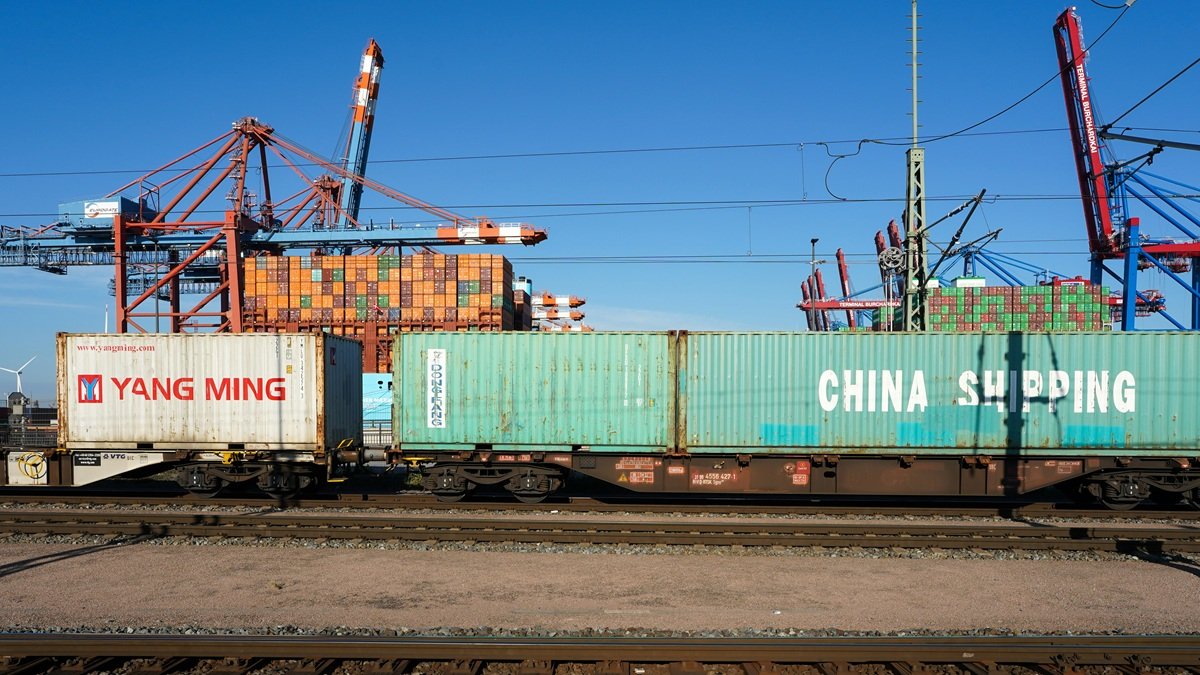

External demand continues to drive the Chinese economy. The country’s solid growth in the third quarter of 2025 was supported by resilient exports, although signs of weakness in domestic demand surfaced again, according to the World Bank’s latest China Economic Update. China’s gross domestic product (GDP) advanced 1.1% quarter-on-quarter between July and September, bringing cumulative growth for the year to 5.2% year-on-year.
“Despite trade policy uncertainty,“ the report notes, “demand from developing countries sustained exports.“ Moreover, “fiscal and monetary stimulus policies pulled domestic consumption and investment.“ However, the agency warns that household spending remains subdued, affected by a weak labor market and the wealth effects of falling house prices.
The World Bank expects China’s economic growth to moderate to 4.9% in 2025 (only one tenth less than in 2024) and 4.4% in 2026, in a scenario in which consumption will continue to be pressured by the real estate adjustment and cautious income expectations. Investment could receive a limited boost from new fiscal stimuli announced in October and from greater stability in global trade policy.
However, the institution stresses that “weak corporate margins and the prolongation of the adjustment in the real estate sector could dampen a stronger recovery”. Export growth will also tend to soften, although the partial reduction of tariffs after October could offer some additional support.
Despite trade policy uncertainty, demand from developing countries supported China’s exports, according to the World Bank
In this context, the World Bank points out that “the priority for China’s economic policy is to strengthen domestic demand in an uncertain external environment”. The report advocates “combining short-term stimulus with structural reforms aimed at strengthening social protection, improving the business environment, facilitating an orderly adjustment of the real estate sector and strengthening local fiscal sustainability”.
The organization also devotes a specific section to the high level of savings of Chinese households, which reaches 31% of disposable income, mainly concentrated in housing and bank deposits. To boost consumption, the World Bank considers it key to develop alternative financial instruments such as pension plans, life insurance or investment funds; to deepen capital markets and to advance in financial reforms that allow for a more efficient allocation of capital aligned with long-term growth.
Related content
Chinese Inflation Hits 0.7% in November, Setting a New 21-Month Record
10 dic 2025 - 07:24
China’s Historic Leap: Trade Surplus Exceeds $1 Trillion for the First Time
9 dic 2025 - 14:43
US Fashion Lead Challenged: China and India Closing the Gap by 2029
2 dic 2025 - 09:14
The Great Fashion Reversal: China’s Export Struggles
25 nov 2025 - 05:00
Latest news

Swatch Sees 89% Profit Decline in 2025 Amid Tariff Woes and Sluggish Demand
30 ene 2026 - 04:26


Inditex’s Eduard Casabella on Oysho’s Sport Pivot and Growth Through Identity
29 ene 2026 - 18:40
McKinsey’s Gemma D’Auria on Luxury’s Pullback and Fashion’s Resilience in 2026
29 ene 2026 - 18:35