Richemont’s First-Quarter Resilience: Jewelry Shines Amid Watch Challenges
The Swiss luxury conglomerate behind Cartier and Montblanc closes the first quarter with a 3% growth, despite a 7% decline in its watchmaking segment and sluggish performance in Asia.
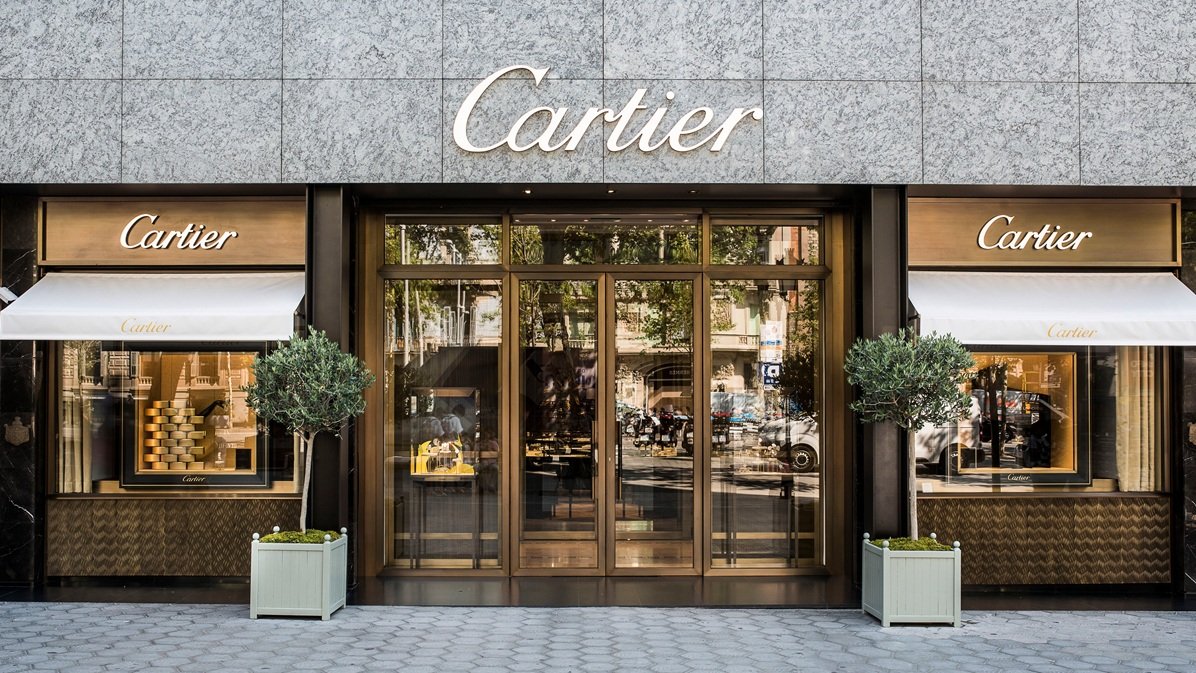

Richemont, the world’s second largest luxury goods company, closed the first quarter up. The Swiss company ended the first three months of the year (period ended June 30) slightly above analysts’ forecasts, with a 3% growth derived from the good pace of sales in its jewelry division, but penalized by the performance of watch brands.
The owner of Cartier and Montblanc ended the first quarter with sales of €5.4 billion, up from €5.2 billion in the same period of 2024. The company has been suffering for a year from the crisis in the luxury sector, affected by weak sales in China, an element to which is now added the escalation of tariffs, which will affect the watchmaking sector.
The company, which has highlighted the “volatile macroeconomic and geopolitical environment, concentrates the bulk of its business in jewelry. With sales of €3.9 billion, Richemont’s jewelry division (with brands such as Buccellati, Cartier or Van Cleef & Arpels) has recorded a 7% growth in the first quarter. This is, according to the company, the “third consecutive quarter of double-digit growth”.
Richemont slightly beat analysts’ forecasts, with sales of €5.4 billion in the first quarter
The watchmaking business, on the other hand, reduced its sales by 10%, to €824 million, mainly affected by a decline in China, Hong Kong and Macao, as well as in Japan, compensated, according to the group, by growth in America.
In the business as a whole, Europe is the region where Richemont posted the best performance, with growth of 11% to €1.29 billion. This was followed by the Americas, up 10% to €1.33 billion, and the Middle East and Africa, where the group grew by 11% to €524 million.
At the other end of the scale, the company’s performance in Asia weakened considerably. In Japan alone, Richemont’s business in the first quarter fell by 13% to €527 million, while in Asia as a whole the decline was 4% to €1.73 billion.
By channels, the Swiss group posted growth of 3% in retail (to €3.73 billion), 3% in online (to €323 million euros) and 2% in wholesale (to €1.35 billion).
The group, which closed the first quarter with a “robust” financial position (with net cash of $7.4 billion after the sale of Ynap), closed 2024 with sales of €21.39 billion, up 3.79%, and net income of €2.75 billion, up 16.77%.
Related content

Richemont Reshuffles Watch Portfolio as Baume & Mercier Transitions to Damiani
22 ene 2026 - 17:33

Jewelry shields Richemont
19 ene 2026 - 04:09

Richemont Sparkles with 11% Sales Rise, Driven by Jewelry Demand
15 ene 2026 - 07:38

Richemont Thrives Amid Luxury Slowdown: Reports Fourfold Profit Increase
14 nov 2025 - 06:09
Latest news

Swatch Sees 89% Profit Decline in 2025 Amid Tariff Woes and Sluggish Demand
30 ene 2026 - 04:26


Inditex’s Eduard Casabella on Oysho’s Sport Pivot and Growth Through Identity
29 ene 2026 - 18:40

McKinsey’s Gemma D’Auria on Luxury’s Pullback and Fashion’s Resilience in 2026
29 ene 2026 - 18:35