Recyclocal Textiles: A Joint Venture Revolutionizing Textile Waste Management
The textile waste recycling sector gains momentum as a key player makes an international move through Recyclocal, a coalition of industry leaders. The project kicks off with a starting capacity of 4,000 tons, with aspirations to reach 10,000 tons.
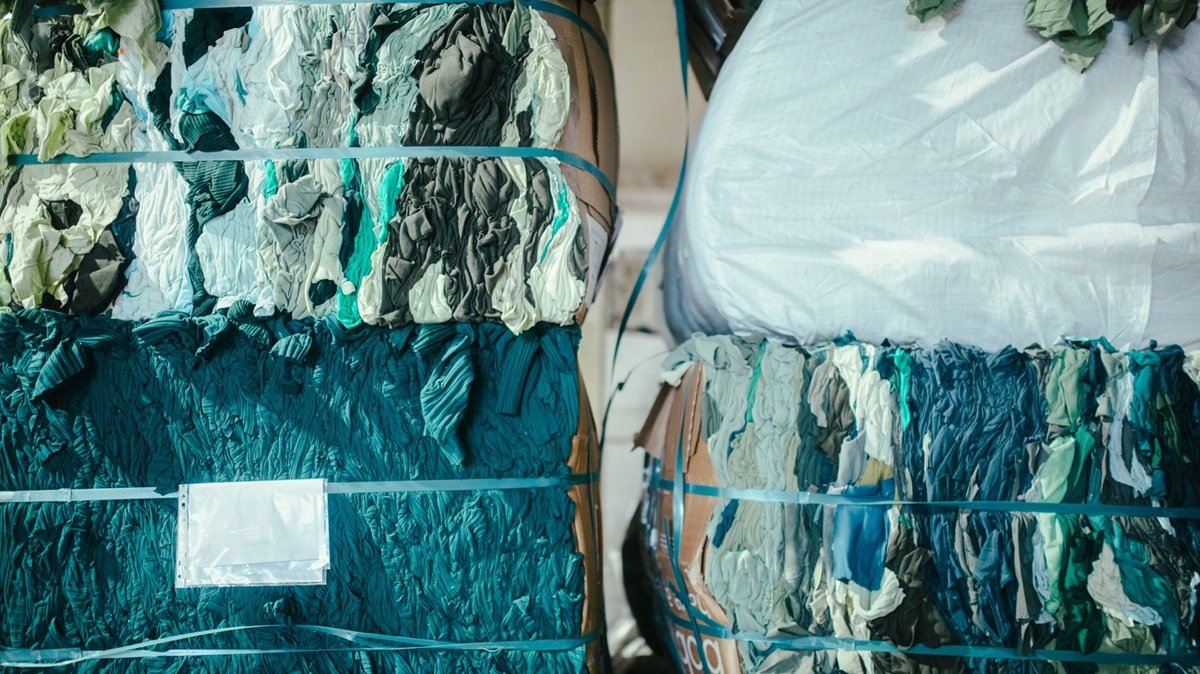

Coleo begins its international journey. In the Vernet region, a few kilometers from Toulouse (France), Spanish Coleo’s first international waste plant has just started operating. The facility started operating a couple of weeks ago with an initial capacity of between 3,000 and 4,000 tons, but with the objective of more than doubling this amount in the medium term.
Specifically, the plant specializes in the management and classification of textile waste, both by type of material and by fabric color. The project is part of the international strategy that Coleo launched more than a year ago, with the formation of Recyclocal Textiles, a joint venture that brings together the know-how of different players in the textile industry, including both the Spanish company and other companies in the textile industry. This joint venture brings together the know-how of different players in the textile industry, including both the Spanish company and other companies in the sector such as Filatures de Parc, a wool spinning company owned by Chanel, and a cluster of regional circular economy companies in the south of France.
The 21,000-square-feet facility has a capacity of up to 4,000 tons, although the goal is to manage and sort up to 10,000 tons of waste in a period of three to five years, according to Emmanuel Kasperski, president and coordinator of Recyclocal, as explained to Modaes.
Last year, Coleo formed Recyclocal Textiles together with other actors in the country
“The real capacity to sort this amount already exists, but we need to train the teams and gradually integrate them into the plant,“ says the manager. At the moment, the plant employs ten workers, which will gradually increase to a workforce of up to 70 people.
The disposal of the material is also assured, says Kasperski, because once the waste has been sorted, it is sold to Recyclocal’s own partners, and each one integrates it into its own business. “The waste finds an outlet on the market very quickly, since our members are the ones who buy the material,“ says the group’s executive.
Recyclocal was founded in the middle of last year by Coleo and three other partners: Filatures de Parc, the Chanel company specializing in spinning, Recycl’occ Textile, the cluster made up of fifty textile companies in Occitania, and Paul Boyé Technologies. Over time, the company has added new partners, such as the insulation company Buitex, the recycler PETshka, the waste collector Philtex and the weaving company Regain.
To carry out this sorting process, the plant’s machinery has integrated Wastex, Coleo’s own sorting technology. “With Coleo, we were immediately interested in integrating them into the project, both because of their technology and their experience as a waste manager in the industry,“ says Kasperski.
In terms of material supply, the raw material arriving at the Recyclocal plant comes both from a series of agreements with collectors of post-consumer waste, such as Philtex, and from post-industrial waste, which is purchased from a network of industrial companies.
The plant began operating a few weeks ago, with an initial capacity of up to 4,000 tons
France, spearheading textile recycling in Europe
The location of Coleo’s first international plant is no coincidence, as France is the country with the most advanced legislation on textile recycling and extended producer responsibility (EPR). The project, in fact, was launched with initial support from Refashion, the French fashion industry scrap, which articulates nationwide the waste collection and management obligations of fashion companies in France.
In addition to this initial investment, Refashion also provides an allowance for each ton of waste that Recyclocal sells to companies to continue the useful life of the garments. According to Kasperski, this aid per ton makes it easier for them not to have to sell the material so expensively, thus boosting the sector.
The U.S. next gen company Circ, in fact, has also chosen France as the location to build its first major industrial-scale recycling plant. Following an investment of €500 million, the chemical recycling company plans to start operating the facility by the end of 2028.
Coleo, for its part, adds with this plant one more facility to its network, together with the facilities it operates in Galicia and Catalonia areas, although it is already working to put into operation a fourth plant, also in Galicia, oriented to the management of textile waste.
Related content

Repsol Foundation Invests in Coleo: Acquires 14% Stake in Recycling Division
18 nov 2025 - 07:27
McKinsey’s Gemma D’Auria on Luxury’s Pullback and Fashion’s Resilience in 2026
29 ene 2026 - 18:35


Mango’s Toni Ruiz on Founder Legacy, Continuity, and Reinvention
29 ene 2026 - 18:33
Latest news
McKinsey’s Gemma D’Auria on Luxury’s Pullback and Fashion’s Resilience in 2026
29 ene 2026 - 18:35
Mango’s Toni Ruiz on Founder Legacy, Continuity, and Reinvention
29 ene 2026 - 18:33

Cambridge’s Daniel Ralph on Forecasting Over Predicting in an Unstable World
29 ene 2026 - 18:31