

Repsol Foundation Invests in Coleo: Acquires 14% Stake in Recycling Division
A textile waste and recycled fiber firm from Spain strengthens its stake in Coleo Network, the group entity managing the company’s waste plant operations.
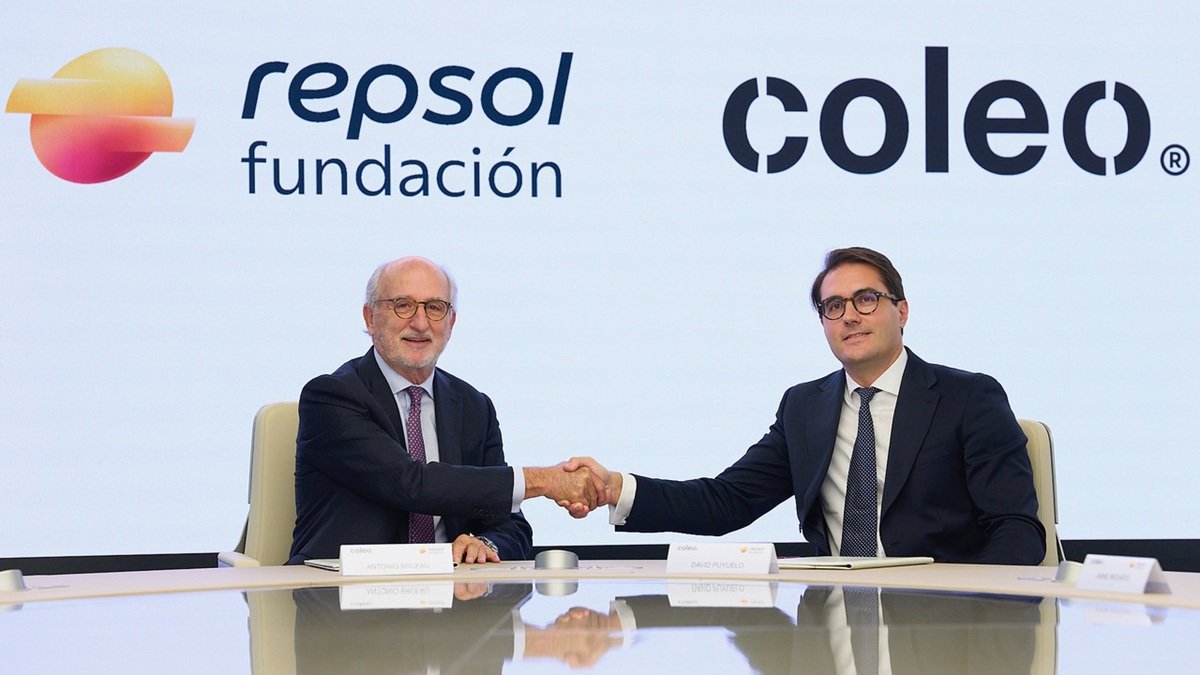

Coleo reorganizes its capital. The Spanish textile waste management and recycling company has given a minority stake in the company’s recycling division to the Repsol Foundation. Specifically, the entity has acquired a 14% stake in Coleo Network, the group company that manages and controls the company’s network of textile waste treatment plants.
The operation, signed by Coleo’s CEO, David Puyuelo, and Repsol’s chairman, Antonio Brufau, and of which the amount has not been disclosed, aims to promote the opening of new plants for the management of textile waste.“It means developing a business in full growth and with enormous economic, social and environmental potential in a strategic area such as textile recycling,“ said Brufau.
Both parties foresee that the entry of Fundación Repsol in the company’s capital will facilitate the opening of new waste management plants, and the consequent growth of the Catalan company. “Having Fundación Repsol as a partner represents a key support for Coleo in developing our vision of a European textile circularity based on a balance between industrialization, technological development and social impact,“ explained Puyuelo.
Coleo plans to continue increasing its network of waste management plants
The company, headquartered in Mataró (Barcelona), currently operates a network of three of its own plants for waste management, located in Galicia, Catalonia and the south of France. In parallel, the group also has another series of facilities in which it carries out other parts of the process, such as weaving, and aims to start up a fourth plant in Galicia, in Laracha, also oriented to the management of textile waste.
“The business model (of fashion) is moving towards a more sustainable production and Europe, with Spain at the forefront, is leading this transformation”.The two companies have explained in a joint communiqué, for which they have highlighted the need for “collaboration and cooperation between the sector and society”. Fundación Repsol’s investment in the company, in fact, is part of the company’s strategy to promote projects focused on job placement and environmental protection, as well as the “sustainable growth of the economic fabric”.
As Coleo explained, around 50% of the people working in each of the company’s plants belong to a group at risk of exclusion. “Social integration and job creation have been in the company’s DNA since they started operating as waste managers,“ they explained.
Founded in 2013 as a textile supplier on the outskirts of Barcelona, Coleo turned its business towards waste management and the production of recycled fiber in 2019. Since then, the company has brought more than ten million garments to market for its portfolio of customers, which includes some of Spain’s biggest fashion retailers. The company operates through different business lines such as Coleo Reycling, which includes the reception, sorting and preparation of material for recycling, and reports to Coleo Network; Coleo Fibers, dedicated to the production of recycled fiber, and Coleo Studio, through which finished garments are designed and manufactured for third parties.
Fundación Repsol, for its part, has stakes in other companies to achieve its sustainability objectives, such as Grupo Sylvestris, dedicated to carbon dioxide capture and offsetting emissions, Hispaled or Koiki, dedicated to energy efficiency and sustainable logistics.
Related content


Jewelry shields Richemont
19 ene 2026 - 04:09
Asics Strengthens Production: Onitsuka Tiger Launches First Factory in Japan
16 ene 2026 - 08:03
Latest news
Jewelry shields Richemont
19 ene 2026 - 04:09
Asics Strengthens Production: Onitsuka Tiger Launches First Factory in Japan
16 ene 2026 - 08:03


