Are CEOs Obsolete? Fashion’s Executive Shake-Up Gains Momentum
Amid macroeconomic uncertainties and the evolving preferences of new generations, leadership teams face unprecedented challenges. What once succeeded may no longer suffice, prompting companies to frequently reassess their executive suites for survival.
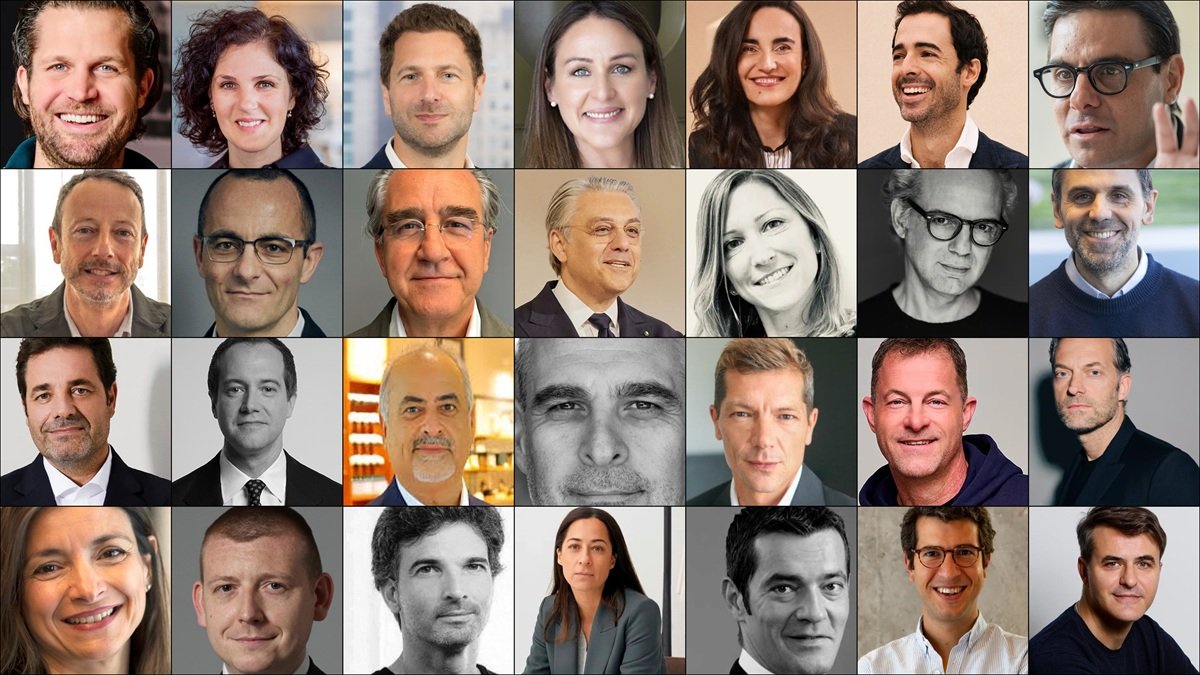

A new global context, new consumers, with renewed needs and demands, and more volatile jobs than before: it is the perfect storm to achieve a real dance of chairs among the top management of the fashion business, also in Spain. In the last twelve months there have been relays or appointments in giants such as Kering, which has resorted to a profile outside the sector with Luca de Meo; also in Puma, which in April broke with Arne Freundt and appointed a former Adidas CEO, or at Decathlon, which has not even given a year to Barbara Martin Coppola and has promoted Javier Lopez to the front line.
Pandora, Dunhill, Fendi, Geox, Vestiare Collective, Jill Sander or Foot Locker join the list, along with Valentino, which appointed Riccardo Bellini as its new first-in-command, as did Thom Browne with Sam Lobban. The list is completed by Lacoste, Bata Group, The Body Shop or Bath & Body Works, among many others.
In early summer, Pronovias announced the departure of Marc Calabia and his replacement by Cristina Alba Ochoa, and in the last month it has been Tous who has seen the departure of its hitherto CEO, Carlos Soler-Duffo, and has signed Susana Sanchez, coming from Parfois, which in turn has incorporated Luis Maseres, coming from Mango.
The maxims are always the same: companies in economic difficulties, many of them in the luxury industry, or companies that need to renew their deepest positioning strategies, and whose boards of directors can only find a way out of the crossroads by renewing the first line of management.
Julio Collado, founder and CEO of Luxe Talent, a search and recruitment consultancy specializing in the fashion industry, explains that “we are living in a time of ferment and change in the fashion world like never before”. She mentions the ecological transition, the impact of Artificial Intelligence and, above all, the change in consumers. “Generation Z is looking for more authentic brands, and that also translates to the world of work,“ he acknowledges.
“Generation Z is looking for more authentic brands, and that also translates to the world of work,“ says Julio Collado
Beyond global changes, after all, the trigger for a company to bet on a profound change in management is, fundamentally, “a matter of results, margins and profits”. When there are, “a change of chief executive is forced”. The same happens with creative directors when there is a decline in sales. “The brands that are suffering the most, in fashion and luxury, and are reducing margins, are the ones that are looking for a CEO change,“ he says.
For her part, Ana Fresno, principal of retail, fashion and luxury at Heidrick&Struggles (an executive advisory, consulting and talent solutions firm), reflects on “the unprecedented speed” at which consumer changes and trends are happening. “The consumer is more demanding” in terms of hyper-personalization, digitization, access to AI and attainment of experiences. This, coupled with globalization and “a more challenging context,“ forces companies to “review their leadership more frequently,“ he says. “CEOs must be able to interpret complexity, anticipate and adapt quickly, something that does not always match the profiles that have worked in previous stages,“ he adds. In addition, he argues that “each new appointment generates a drag effect that causes more turnover and accelerates the generational handover in senior management.“
On the other hand, Fresno stresses that geopolitics has become a central variable in the day-to-day management of companies. “International tensions, uncertainty in supply chains and increasing regulatory complexity mean that companies are looking for leaders with global experience and a more strategic vision,“ he says. Indeed, he explains how in some cases CEOs are being brought in from non-fashion sectors or companies that have already faced highly volatile contexts. In June, Kering entrusted its management to former Renault CEO Luca de Meo to kick-start its transformation.
“The needs of companies do not always coincide with the profiles that have worked in previous stages,“ says Ana Fresno
For Martin Poppe, partner and CEO of Sedna Executive Search (specialized in the recruitment of senior executives in the retail and consumer sector at European level), the changes in top management respond to “a divergence of pressures” that has turned “the top leadership position into something much more volatile”.
Moreover, today, “many companies are demanding rapid results and accelerated transformations to remain competitive in an increasingly dynamic environment”. That causes “boards to have less patience with CEOs who fail to meet targets in short time frames.“ Pressure mounts. “Poor performance becomes more visible and CEOs are judged more strictly,“ he says.
Poppe confirms that rapid developments “are forcing companies to reinvent their business models.“ In this context, “a new CEO can better represent that change and lead the repositioning with greater agility and effectiveness,“ he says. Moreover, in an industry like fashion, “where trends and consumer behavior are constantly changing, this need for rapid adaptation intensifies the frequency of change even more.
“Underperformance becomes more visible and CEOs are judged more strictly,“ says Martin Poppe
Finally, Page Executive’s senior partner, Cristina Ródenas, explains that changes in top management can occur due to changes in shareholding, or simply because “another strategy is implemented in the company and another stage is entered”. On other occasions, they are “moments of cost restriction combined with a drop in sales”. In addition, he notes: “In professional careers there are personal stages in which it is wise to retire before entering a burn-out”. Acquisitions, mergers and acquisitions also generate movements “and so do generational changes in family companies”, he concludes.
According to the latest survey by Heidrick & Struggles, a talent management advisory firm, with more than 1,000 respondents, 53% of boards consider succession planning to be a priority, although it is activated when it is necessary to do so. Twenty-six percent say it should be an ongoing strategic discipline, while 21% are reluctant to do so, believing that CEO departures are only planned when there is an emergency or crisis.
In addition, the study notes that leaders who are confident in their succession planning and broader talent strategy are up to 60% more likely to record stronger financial performance compared to those who are not.
Cristina Ródenas (Page Executive) believes that companies are demanding CEOs with “new backgrounds” and, specifically, “with a high component in branding, one of the historical shortages in the fast fashion world”. In addition, they are required to have “a certain degree of sensitivity to the product and the brand. In addition, agility, flexibility, responsiveness, charisma and leadership, as well as “a profile that is both creative and sensitive, analytical and digital”.
For Collado (Luxe Talent) the key is also “to understand the moment that is being experienced at the management level in the company, in terms of customer; tounderstand the situation to be able to make coherent internal decisions”. At the same time, “approaching the new customer, but also the new employee”.
For Fresno (Heidrick & Struggles), the industry is looking for “leaders with new ways of seeing things, more diverse, not only in gender, but also in mentality, background and experiences”. In addition, “the profile of the CEO is transforming towards a more transversal figure, capable of connecting business, technology and purpose”.
For Poppe, finally, the level of demand has increased, especially linked to their level of adaptation in a volatile environment. “A CEO in the fashion industry today needs much more than business acumen; he or she must be a leader with the ability to adapt quickly, strategic focus and a deep understanding of the new consumer,“ he concludes.
Related content

Fashion’s Leadership Shake-Up: A New Era of CEOs and Creative Directors
8 jul 2025 - 06:00

U.S. and India Ink Surprise Trade Deal Following EU Accord
3 feb 2026 - 12:16

Capri’s Fresh Start: Turns a Profit and Slashes Debt Following Versace Sale
3 feb 2026 - 12:14

Rituals Closes 2025 with a 15.7% Surge, Reaching €2.43 Billion
3 feb 2026 - 08:05
Latest news
U.S. and India Ink Surprise Trade Deal Following EU Accord
3 feb 2026 - 12:16
Capri’s Fresh Start: Turns a Profit and Slashes Debt Following Versace Sale
3 feb 2026 - 12:14
Rituals Closes 2025 with a 15.7% Surge, Reaching €2.43 Billion
3 feb 2026 - 08:05

Puma Shakes Up Operations with Training Division, Taps Former Adidas Leader
3 feb 2026 - 07:53