Sebago’s Spanish Revival: BasicNet’s Selective Retail Push in Heritage Trend Wave
Italian holding company, known for brands like Kappa, K-Way, and Superga, is revamping its presence in Madrid and preparing for a dual opening in San Sebastián. “Our aim is to establish stores across Spain,“ says co-CEO Alessandro Boglione.
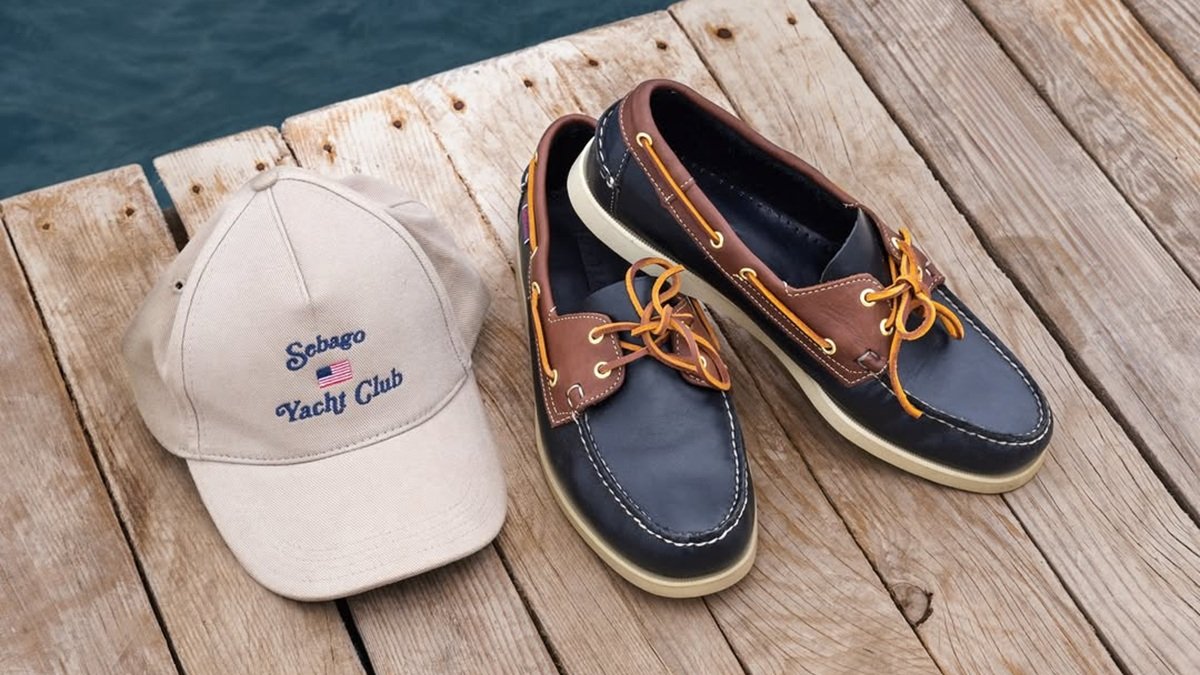

Step by step, Sebago is gaining meters and relevance on the Spanish BasicNet map. The U.S. footwear brand, one of the heritage pillars of the Turin-based group, has consolidated its presence in the country with the refurbishment of its store in Madrid, the continuity of its flagship store in Barcelona and an upcoming store shared with K-Way in San Sebastian, in the midst of the group’s acquisition offensive with Woolrich and Sundek.
In Madrid, Sebago has been operating since September 2024 at 84 Serrano Street, in the heart of the Salamanca district, with a 100-square-meter space that serves as a showcase for its new phase: less of a classic shoe store, more of a nautical and contemporary casual universe. The recent refurbishment reinforces this idea, with a clearer reading of its major product families and more weight of ready-to-wear. The brand’s other major anchor in the market is Barcelona, with a store on Provença street that enjoys a mix of local and international customers and a story that links the imaginary of New England with Mediterranean culture.
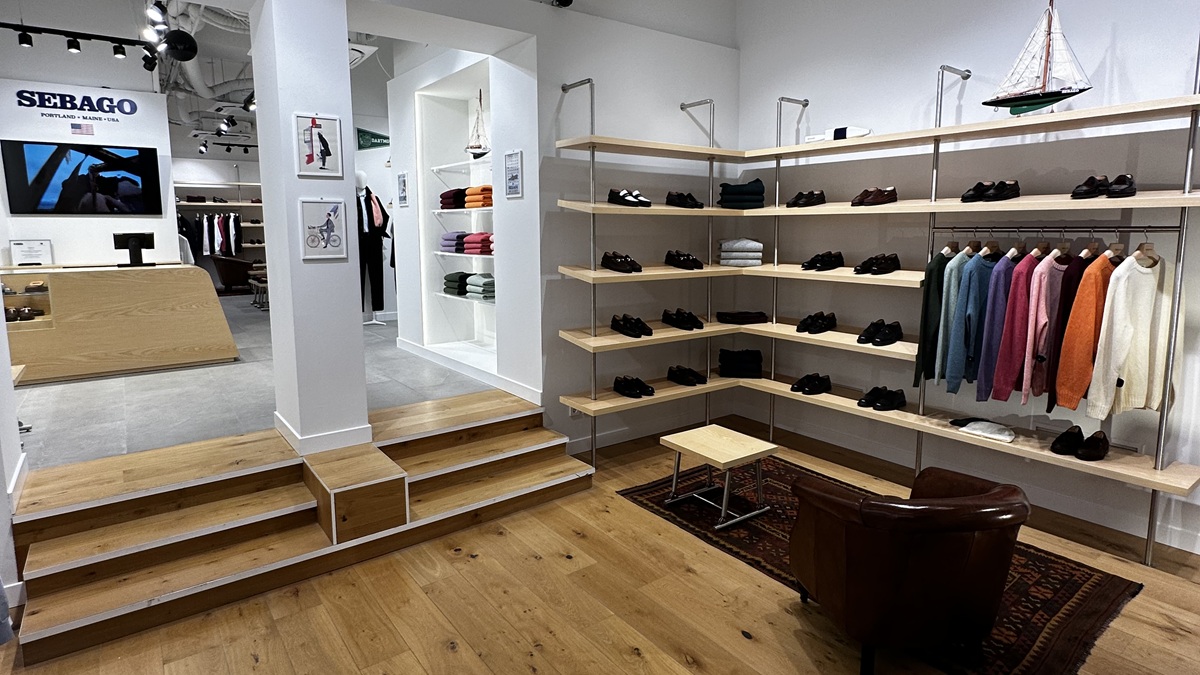
In addition to these two stores, San Sebastian will be added in the coming weeks , where the company is preparing the opening of a double store with K-Way, also owned by the Italian group, of about forty square meters. The store, which will open between the end of December and the beginning of January, will divide the space equally between Sebago’s moccasins and boat shoes and K-Way’s technical outerwear.
The move in retail comes as BasicNet strengthens its role as a heritage branding helder. The Turin-based company has made the lightweight model its hallmark by focusing on product design and development, centralizing research and marketing, and delegating production and distribution to a network of collaborators. In Spain, it combines direct management and local partners, using the country as a showcase for concepts that it then replicates in other European markets.
Spain, retail laboratory for Turin-based BasicNet
In this context, the conglomerate’s goal is to gain density. “We want to have stores all over Spain; in all the cities where there should be a Sebago store and today there isn’t, we want to be”, summarizes Alessandro Boglione, co-CEO of BasicNet to Modaes, assuring that the group does not set limits, but aims to develop a “capillary presence” because it is aware that its brands “like”. The reform of Serrano and the new double store in San Sebastian are, for the moment, the first steps of the roadmap in the national territory.
The local gear is supported by a solid structure. The Crudité Company acts as sales and communication partner for Superga and Sebago in the country, while strategic supervision is maintained in Turin. In parallel, the group has a showroom in Madrid from which it coordinates the operations of the K-Way and Robe di Kappa brands and where collection and distribution decisions are made for the Iberian peninsula. Under this umbrella, each brand refines its role with a differentiated offer. Superga seeks to return to the trend as a democratic sneaker icon, K-Way stands out as a specialist in technical outerwear, Kappa in sporty vintage and Sebago as the emblem of the American moccasin and the classic nautical.
Behind Sebago’s turnaround is Marco Tamponi, an anthropologist and literature graduate, who came to the group in 2017. “I landed in the company with a very clear assignment: to recover the value of Sebago and transform it from a shoe brand into a lifestyle brand,“ he recalls in a conversation with Modaes. His starting point was not a seasonal moodboard, but the archive and the tradition around the meaning of Sebago in the years when a pair of moccasins defined a look before the street wave of sneakers.
From archive to lifestyle: Tamponi’s plan for Sebago
When BasicNet took over the firm in July 2017, Sebago was dragging notoriety, but out of place. “The brand was well known, but mostly by an older generation,“ says Tamponi; “in Spain, it had become almost an old man’s shoe, while in other countries it was trapped in the idea of a summer boat shoe. Thus, the first challenge was to bring the product “back to the height of its history” and “recover the meaning for which the brand existed”.
The team decided to go back several decades, recover lasts, materials and models that embodied the original DNA and, from there, draw the roadmap. “The first thing we did was make a list of things we could and could not do,“ recalls the manager; on the no side were vintage and nostalgia; on the yes side, classic. Tamponi’s borderline is more than clear: vintage is perceived as “a relic out of place, classic is a product that holds up just as well in 1970 as in 2025” because its balance of form and material does not depend on the trend of the moment.
The equation is completed by the price. The moccasin is experiencing a boom driven by luxury and replicated by fast fashion, and there Tamponi detects a gap. “We detected a great niche in men’s fashion for a product that combined four things: fit, durability, style and fair price,“ he notes. “We have always tried to make Sebago a smart product: well made, able to last a couple of generations and priced in line with today’s buying power” Between the four-figure runway shoe and the ephemeral copy, Sebago wants to be reasonable with prices around €200 a pair.
Fashion offer and community consolidation, key to the strategy.
At the same time, the brand has expanded its perimeter. Footwear is still at the center, but fashion is gaining weight and the team’s goal is for it to represent around a quarter of the business. “If you want to be a lifestyle brand, you can’t just talk about shoes,“ sums up Tamponi. Sweatshirts, knitwear, light jackets and accessories complete a closet that moves Sebago from the shoe rack in the hallway to the entire closet.
Community building is another piece of the strategy. The creative avoids the word influencer, but admits that the project relies on friends of the brand spread across different cities who tell Sebago from their own style. The context accompanies the preppy style. After two decades of athleisure hegemony, men’s fashion has shifted towards a classic casual where the unstructured blazer, the chino and the moccasin are back in the spotlight.
“Spain has always been a very strong market for both Sebago and Superga,“ Tamponi stresses. In the case of the former, moccasins and boat shoes have a long history among classic customers, but the brand is also starting to attract a younger consumer who mixes the shoe with denim, light tailoring or technical garments.“ Our goal is to propose basics that don’t need to be expensive to be iconic,“ he adds.
The reinforcement of the group in Spain comes in parallel with a new acquisition offensive: BasicNet has agreed to acquire Woolrich, in a deal valued at 90 million euros, and has entered beachwear with the purchase of Sundek, through the takeover of Kickoff, valued at 33.5 million euros. The family and multi-brand status of the holding company sets the pace.
“Working in such a company gives you something very valuable, which is time, we don’t have to react to the quarter, we can think about the value of the brands in ten years,“ Tamponi concludes. In short, few stores and a lot of storytelling is, as of today, the formula with which BasicNet wants to transform the “evergreen shoe” into the classic to which the next generation aspires.
Related content

BasicNet Expands Portfolio: Acquires Sundek to Dive into Beachwear Market
5 dic 2025 - 07:43


Gordon Brothers Takes Over LK Bennett, Sets Stage for Global Expansion
28 ene 2026 - 12:33

Galeries Lafayette Finalizes Sale of BHV Building Amid Shein Controversy
28 ene 2026 - 12:30
Latest news
Gordon Brothers Takes Over LK Bennett, Sets Stage for Global Expansion
28 ene 2026 - 12:33
Galeries Lafayette Finalizes Sale of BHV Building Amid Shein Controversy
28 ene 2026 - 12:30

VF Corp’s Q3 Results Shine with 28% Boost as Business Reorganization Unfolds
28 ene 2026 - 08:23

Claire’s Faces Another Setback in the UK with Second Bankruptcy in Six Months
28 ene 2026 - 08:21