Tous’s Valldeperas on Strategy: “Balance is Key, Not Overstocking or High Tariffs”
The jewelry brand’s logistics head boasts a diversified supply chain strategy, minimizing geopolitical dependence. With operations centered around a single logistics hub, the model is replicated across other locations.
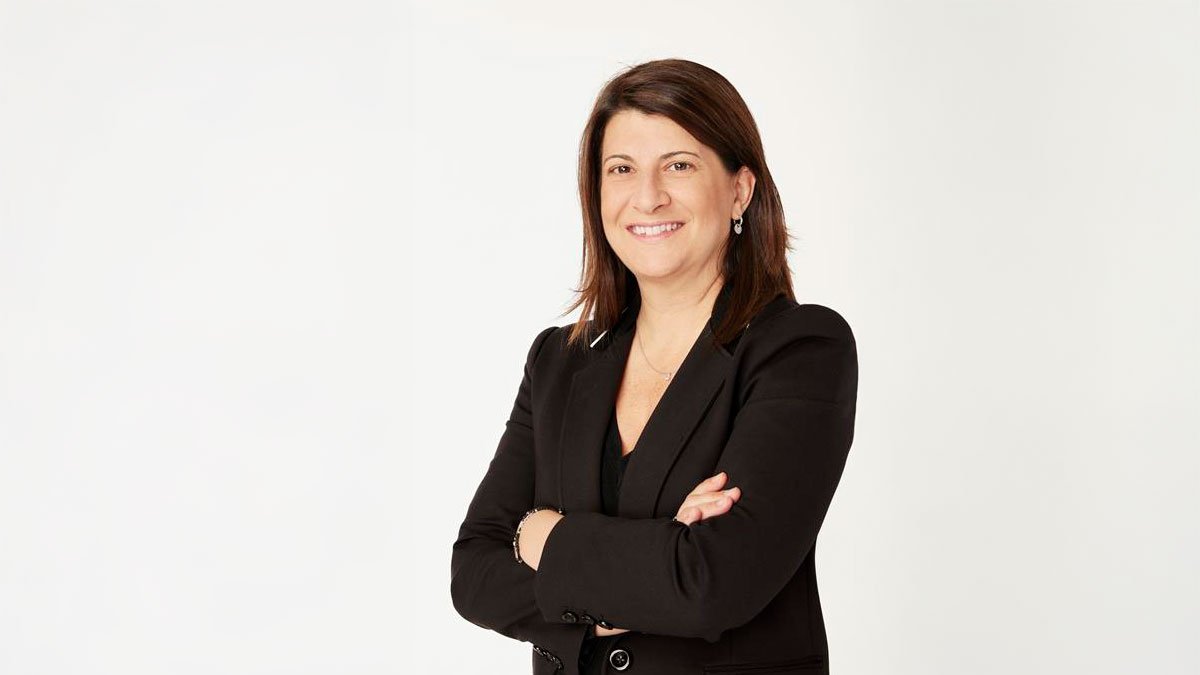


With more than twenty years in operations and logistics behind her, Mercè Valldeperas has spent the bulk of her professional career at Tous. The current logistics director of the Spanish jeweler has been in the position for more than 17 years, since 2008. She joined the multinational in 2002 as head of purchasing and distribution in the accessories department, a position she held for six years. “I know the house,“ Valldeperas sums up. By training, she is an industrial engineer and completed a Management Development Program (PDD) at Iese Business School, as well as a master’s degree in operations and innovation at Esade. “Logistics is my world,“ she says. If you ask her, the key to success in her management is undoubtedly knowing how to balance.
Question: Tell me how the logistics area is organized: Does it depend on operations? What areas do you oversee?
Answer: Logistics is coordinated by the financial director and the general manager, who is in charge of the financial part, the production of our own factory in Sabadell (Barcelona) and logistics. This allows us a strategic coordination between the financial part, production and the final part of global logistics.
Q.: And, sourcing, would that also be inside?
A.: No, the sourcing area is not, although there is a lot of coordination. What is managed in logistics is the import and export of all product categories. We ship to more than 40 countries, where we have more than 600 stores. And we are also sending from here, from Manresa (Barcelona), what comes from the online channel to the whole world, and also wholesale. All the management of imports, purchases, etc., is managed in logistics.
Q.: Is logistics outsourced or is it carried out internally?
A.: We have a logistics center in Manresa, which would be our own, with more than 8,000 square meters, close to the headquarters. This allows us to coordinate very well with the rest of the areas. And there is a team of people who are in charge of everything from the reception to the preparation and dispatch of orders to the stores we have around the world. In other important markets we manage it with external platforms, but always with our way of working transferred to those centers so that the final impact on the customer is no different and that everyone has the same shopping experience. In the markets we have outsourced, our goal is always to have the fastest possible delivery to the end customer. Even so, from Manresa we also manage shipments all over the world. We try to make sure that all logistics are fed by these different logistics centers and hubs in order to maximize the global chain of everything we move.
Q.: What changes in a logistics process between moving garments and moving jewelry?
A.: The main processes (reception, preparation, dispatch) are the same for all products. But in jewelry we do have peculiarities due to the fact that we have to comply with the law of metals. Everything that is received must go through a manual punching process, one by one, and it must be done by an independent external certifier. This is the most complex thing to manage. Then, apart from that, there are very strict quality controls in all processes. The advantage of the jewelry store is that it is small, which facilitates preparation.
Q.: Mexico and the United States are two very important markets for the company, is the company prepared for the tariff shock?
A.: We are a 100-year-old company, in which many things have happened. Therefore, we have a sufficiently diversified supply chain so that we do not have to depend on geopolitical issues. Fortunately, we work in 40 countries. The diversification of suppliers and the way we have to operate in logistics allows us to have that leeway to withstand these problems. We also have our own factory here in Spain, which is a plus. It is a factory that is modernized with cutting-edge jewelry technologies and this also gives us more peace of mind in all these aspects.
“We have a diversified supply chain so we don’t depend on geopolitical issues.“
Q.: Both are large markets, also by extension is logistics structured the same in Europe as in the U.S. or Mexico?
A.: Our quality standards have to be the same worldwide. We have carried out many efficiencies in the logistics center, especially revising processes to be faster, even if we have parts that are manual, and what we try to do is to transfer it to all these suppliers. They are logisticians, we are jewelers, but we have also managed logistics for many years, we have learned and we try to transfer these learnings to the different operators we have so that the customer does not perceive differences in the end.
Q.: Is it a good strategy to choose to send the goods before the arrival of customs duties?
A.: I wouldn’t say so much that we decided to ship. They are regular shipments. The bestsellers are being replenished, we plan well for demand. You have to find a balance between having an ‘overstocked’ country and not paying too many tariffs. It’s a natural thing: if you have good planning, you can anticipate or mitigate a little the effects of these tariff increases.
Q.: What would you recommend: a single centralized center or several around the world?
A.: I am a great believer in balance. Depending on the type of product, markets, tariff barriers, entry barriers, transits, you opt for different models. You have to combine everything. You have to have the product at the right time, with a controlled cost. This conditions the number of centers you have to have. The more centers, the more the stock grows; you have to keep an eye on it. But, on the other hand, you also want to provide a good service. We try to find the formula to have the service and the product on time to obtain efficient logistics.
“The more logistics centers, the more the stock grows; you have to keep an eye on it”
Q.: Is more logistics less sustainability? Is the environmental impact of logistics operations taken into account in the case of your company?
A.: Sustainability has always been in our DNA. In logistics, of course, we are also focused on making a contribution. In the logistics center, for example, we try to be paperless. We have made changes to have shorter transits and reduce the carbon footprint.
Q.: Are you considering opening logistics centers near important markets such as Spain, Poland or Mexico?
A.: We are focused on omni-channel. We have small hubs in countries where we have stores. We take advantage of our stores as shipping points to the end customer for online. You can make returns, go to buy the store and have it shipped to your home, and I think this is a great advantage. These points of sale can also support you throughout the chain. As for the possibility of opening them on our own, it depends on how everything evolves. The volumes are the ones that make us think about it. But, for the moment, we are going with this model, although it is something to be valued.
Q.: In recent years, air transport has risen sharply in fashion imports and exports. Is speed more important today than costs?
A.: Again, balance. We have the great advantage that jewelry takes up very little volume and, because of the product’s sensitivity to environmental effects, air transport is often more convenient for us. But you have to compensate. There are times when you can plan. Then you try to minimize your carbon footprint by shipping by sea. There are other times when you have to react fast and get there sooner.
Q.: Can all the goods be blown up? Should it be done?
A.: It depends on your needs. If you have time to plan there is no need to fly. And it also depends on the volume and the product. For example, we also sell accessories. In the end, transportation is transportation. The conditions you have with each operator depend on what you need at each moment, the volumes, the type of product, the conditions of care they need. But there are no secrets either, there is no magic formula.
“If you have time to plan, there is no need to fly, but it depends on the volume and the product.“
Q.: What about Artificial Intelligence (AI) applied to logistics? Is it only for the big guys?
A.: Artificial Intelligence is something you have to know and see to what extent you can apply it. Every company is different, has its speed and has its needs. Of course, we are taking steps to incorporate it. Not only in logistics, but at the company level, because otherwise you are left behind. In logistics, there are useful tools for automation, for example. But the basic thing is to have well-defined processes before starting to use tools and to transfer this transformation to the teams. We are working on these changes in the warehouse. But you have to start with small projects, because first you have to know what the technology can give you, feel comfortable with it and, from there, move forward.
Q.: How automated should a logistics center be?
A.: It depends on what you have in products. If you don’t first do a good process review, with super good teams focused on going towards change, it doesn’t work. Quality in logistics is measured by responsiveness. You cannot implement automations just because you have to automate, but you have to value everything and, in the end, doing so has to help you to be flexible. I am a great believer in teams, in people, who are the ones who help you move forward.
Related content
Tous Restructures Leadership as CEO Carlos Soler-Duffo Departs After Seven Years
17 sep 2025 - 07:16
Colombia Fashion Summit Debuts with Totto, Vélez, Tous, Sita Murt and Silbon
2 sep 2025 - 10:30
Gordon Brothers Takes Over LK Bennett, Sets Stage for Global Expansion
28 ene 2026 - 12:33

Galeries Lafayette Finalizes Sale of BHV Building Amid Shein Controversy
28 ene 2026 - 12:30
Latest news
Gordon Brothers Takes Over LK Bennett, Sets Stage for Global Expansion
28 ene 2026 - 12:33
Galeries Lafayette Finalizes Sale of BHV Building Amid Shein Controversy
28 ene 2026 - 12:30
VF Corp’s Q3 Results Shine with 28% Boost as Business Reorganization Unfolds
28 ene 2026 - 08:23

Claire’s Faces Another Setback in the UK with Second Bankruptcy in Six Months
28 ene 2026 - 08:21