

Liverpool: The French Drawers Sparking Modern Retail in Mexico
Forged amidst European imports, modern architecture, and an unwavering drive to resonate with every generation, Mexican department stores remain the prime playground for fashion brands.


Long before Mexico City’s Zócalo became crowded with tourists every day of the year, merchants in the 18th and 19th centuries came to the Mexican capital’s plaza to the commercial epicenter known as the El Parián market. It was created by the authorities of the then viceroyalty that sought to regulate informal commerce in Mexico. During the riot of 1692, Indians and mestizos set fire to the Viceroyalty Palace and the fire destroyed the market and the stalls, known until then as cajones.
The importance of El Parián was such that it was decided to build a similar trading system, although of greater complexity and durability. The market was positioned as a symbol of commerce in the capital of New Spain and foreign merchants congregated there, mainly Filipinos and Chinese who sold imported merchandise.
The custom of selling in crates lasted beyond the transcendence of El Parián, which ended up being demolished due to the deterioration caused by the revolts and Mexican independence. The information on how it was commercialized in Mexico crossed borders and reached a young man of French origin who was looking to make a niche for himself in the country.
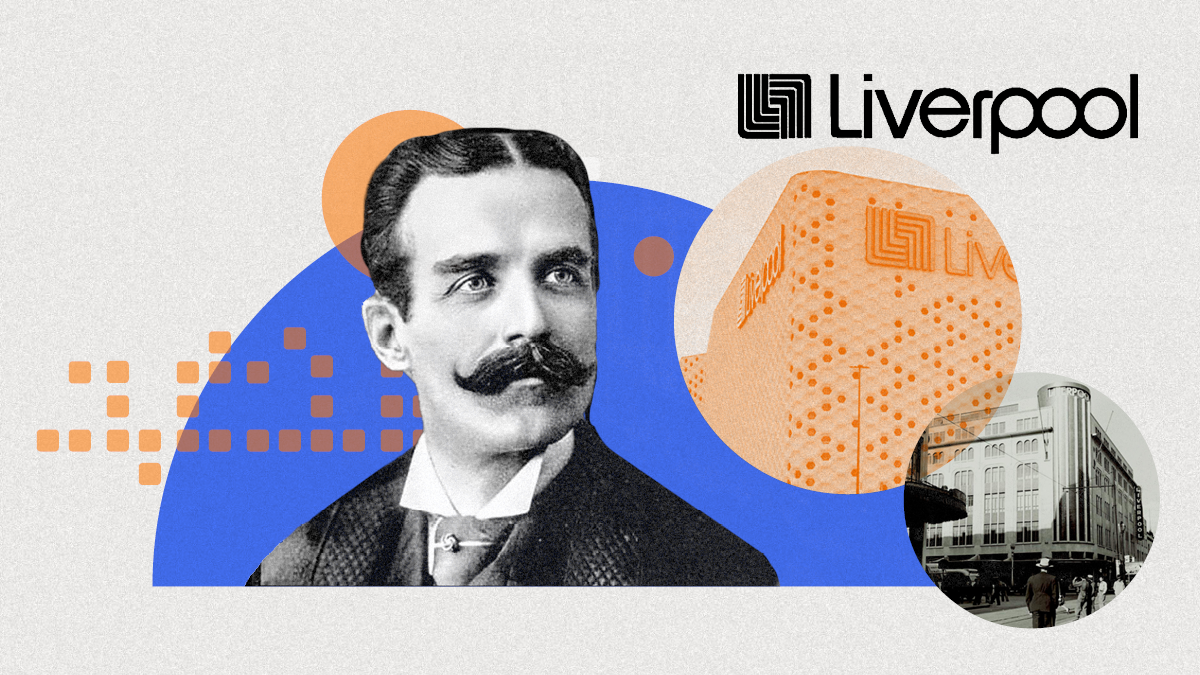
With the cry “buy today, pay when you can”, Jean Baptiste Ebrard, a French immigrant, displayed his crates in downtown Mexico City to sell mainly fabrics. His sales concept not only gave birth to payment in installments, but also planted the seed for one of the largest fashion businesses in Latin America: Liverpool department stores.
Liverpool was launched in 1847 with Jean Baptiste Ebrard at the helm
The company’s origins date back to 1847 with Ebrand, who died at an early age and never saw his company at its peak. A group of French investors then took the reins of Liverpool, transforming that fabric crate into a department store.
From his early years, Ebrard knew how to imprint on his business an audacity that was ahead of its time: the direct import of merchandise from Europe, especially from the docks of Liverpool, in England, from which he takes his name.
This commercial connection with the Old Continent not only gave Liverpool its own identity, but also cemented the reputation for quality and cosmopolitanism that would characterize the brand in the years to come.
Historic developments in Mexico
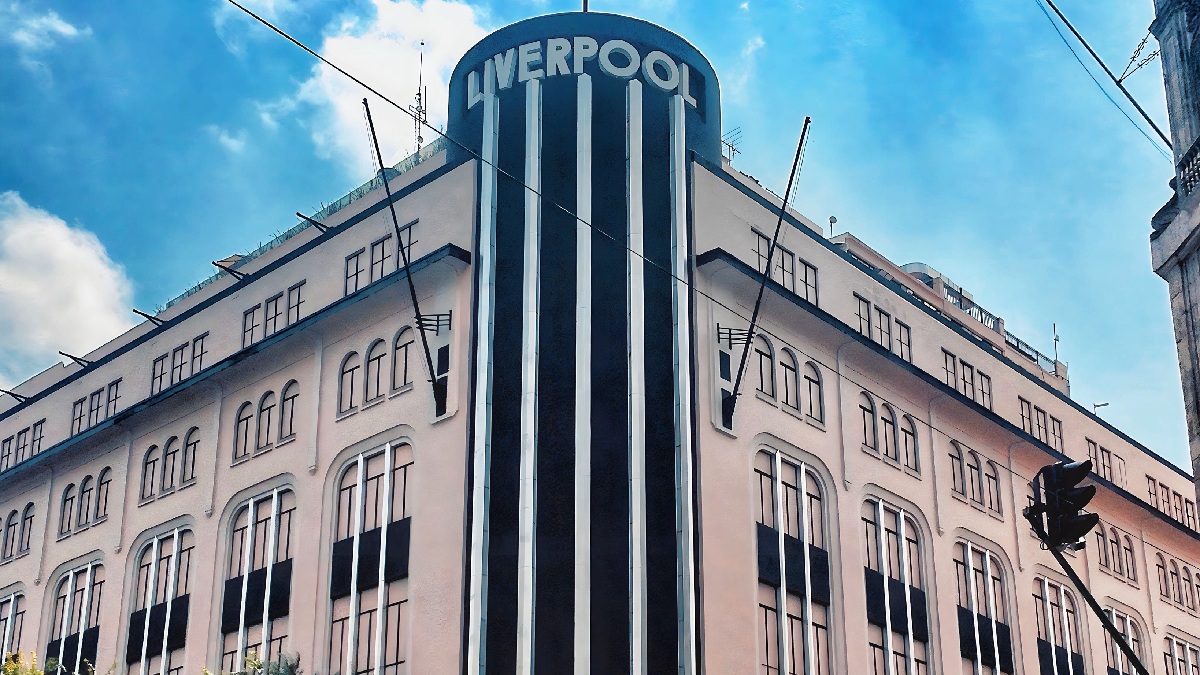
The 1930s marked Liverpool’s first major historical milestone. In 1936, the company inaugurated an emblematic building on 20 de Noviembre Avenue in downtown Mexico City, a commercial palace that symbolized modernity. There, the company installed the first escalators in the Mexican capital, a gesture of progress that captured the imagination of a society eager for new consumer experiences.
The business continued to grow at a rapid pace and positioned itself as a reference in Mexican commerce. By 1944, the company was consolidated as a corporation and in 1962 opened its first branch on Insurgentes Avenue, marking the beginning of a national expansion that has not stopped until today.
Another key event in the history of the Mexican group occurred in 1954, when El Puerto de Liverpool hired Maximino Michel Suberville, who became one of the architects of the company’s listing on the stock exchange. The executive became CEO and president of Liverpool from 1978 to 2004, when his position was taken over by his nephew Max David Michel.
In 1965, under Michel Suberville’s leadership, Liverpool was listed on the Mexican Stock Exchange, strengthening its financing capacity and consolidating its place among the country’s major corporations.
Diversification and international projection
Today, any fashion company that wants to be recognized in the Mexican market knows that it must have a presence in Liverpool department stores. The group not only consolidated its department store business, but over the years transformed itself into a comprehensive commercial enterprise. It developed its own shopping centers under the Galerías brand with emblematic projects such as Perisur and diversified its presence with formats such as Suburbia or Fábricas de Francia, extending its reach to multiple market segments.
Currently, El Puerto de Liverpool has 124 commercial stores and 116 boutiques of brands such as Gap, Banana Republic, Pottery Barn or Toys R Us, being the exclusive distributor of the latter. In addition, Liverpool is a partner of El Corte Inglés, with whom it operates 56 Sfera stores in Mexico.
In its department stores, Liverpool has several departments beyond fashion, such as home, technology, financial services and even automobiles. In addition to the 28 shopping centers, the group has stores, outlets and 186 Suburbia stores, a chain it bought from Walmart in 2017.
Liverpool’s top management is currently made up of Graciano Guichard González as chairman of the board and Madeleine Brémond, a member of the founding family, as vice-chairwoman.
One of Liverpool’s most important recent moves was the purchase of the U.S. department store Nordstrom. Last May, the Mexican company acquired 49.9% of the company, while the remaining share was taken over by Nordstrom’s founding family.
Related content

Liverpool Port Reports 7.5% Growth in Nine Months, Hindered by Retail Sector
22 oct 2025 - 07:26
Mexican Liverpool Sees 47% Drop in Q2 Profits Amid Rising Expenses
29 jul 2025 - 07:51
Nike Divests from Virtual Sneaker Brand Rtfkt a Year After Closure
8 ene 2026 - 08:35
Latest news
Nike Divests from Virtual Sneaker Brand Rtfkt a Year After Closure
8 ene 2026 - 08:35
Primark Revises 2026 First Half Forecasts Amid Sales Decline
8 ene 2026 - 07:21


