

Paris Fashion Faces the ‘Hit’ Frenzy: From Spectacle Economy to Endless Succession
Fashion Week kicks off with a paradox embedded in the system. While the industry chases instant success to appease social media and shareholders, creative directors are demanding the time needed to craft a coherent narrative.
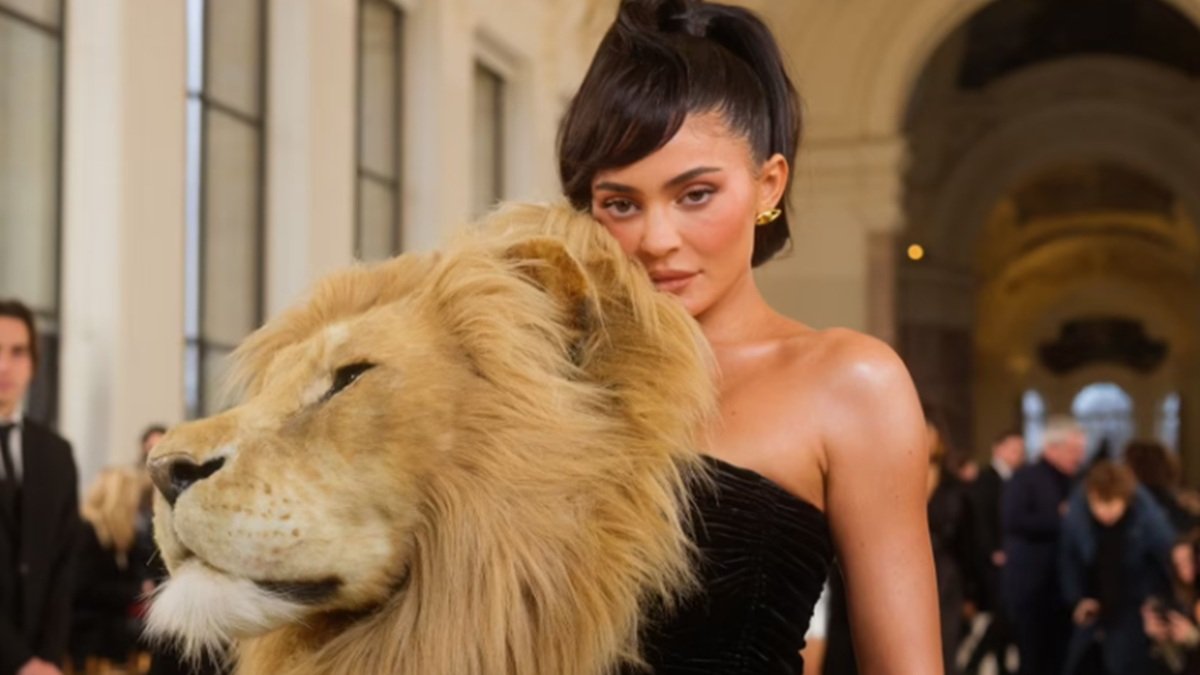


Paris raises the curtain again with an uncomfortable question hovering over the front row: how much real time is given today to a creative language before demanding sales results and a moment that sweeps the networks? From Monday, September 29th to Tuesday, October 7th, the fashion week in the French capital will propose answers, taking over from Milan, which has already done the same with premieres at Versace, Bottega Veneta or Jil Sander.
Belgian designer Glenn Martens, who jumped from Y/Project to Diesel and this week will present his first ready-to-wear collection at the helm of Maison Margiela, summed it up in a recent episode of the Bof podcast. “Today we only consume images and we don’t really have time to dive deep into the clothes... We just need to turn it into success,“ the creative analyzed, putting the acceleration of the industry on the table as one of the main challenges for creative directors today.
In 2025, a designer has to be a socialite, has to be the king of social media,“ he added, “but the beauty of fashion is a process that doesn’t happen in a single show, it needs three, four or five shows. His diagnosis is clear. The industry competes for instant impact while design demands accumulation and time.
After the wave of the post-pandemic boom, luxury has hit the brakes and the margins for patience have narrowed. In this context, groups are looking for quick signals of attention, commercial traction or brand awareness. And fashion shows, once reserved for a professional approach aimed at buyers and specialized press, have become a media KPI measured in terms of reach and coverage value. In fact, companies like Launchmetrics have specialized in quantifying the wave of visibility by channel and region. It is a useful metric, but when absolutized, it runs the risk of confusing virality with sales or real relevance.
Fashion shows are no longer just fashion presentations but also shows
The market for creative directors is moving at the same speed. The takeover at Chanel with the departure of Virginie Viard, Sabato De Sarno’s brief stint at Gucci and the succession of moves at other French houses have reinforced the sense of musical chairs. Bernstein went so far as to formulate a shelf life of about five years to maintain the commercial momentum of a direction. Beyond that, the effect tends to be diluted. The business press has translated it in simpler terms because reaching that frontier is already a privilege.
The spectacle is not new, but its grammar has become ubiquitous. Guy Debord diagnosed in 1967 his particular society of the spectacle, based on a regime of representation where the image not only mediates reality but replaces it. The contemporary catwalk often functions as an event to be seen, designed to circulate in short and immediate video. Debord’s framework remains, to this day, a powerful lens for explaining why visual punches outweigh the leisurely reading of the product or the coherent narrative of several collections within the business strategy of a brand or a luxury conglomerate. The reflection time lasts as long as a TikTok video of a famous character leaving a show.
Sociologist Agnès Rocamora, for her part, accurately described this mediatization. Fashion no longer appears in the media, but is produced for media and platforms, with algorithms reordering hierarchies between press, buyers and creators. Her work in Fashion Theory demonstrates how design and staging are shaped by digital logics.
In parallel, expert Caroline Evans provided the genealogy. In Fashion at the Edge she analyzed how the nineties consolidated the catwalk-show, with examples such as Alexander McQueen or Chalayan, and how fashion incorporated the sinister and technology to perform cultural anxieties. Thus, the extreme show is not an anomaly but a historical continuity that photographs societies. What has changed is its amplification, today immediate and quantifiable.
During the 1990s, the foundations of what we know today as parade-show were laid
Recent cases are illustrative and we need only refer to the success of videos that spread like wildfire. Balenciaga turned its spring 2022 presentation in Paris into an episode of The Simpsons at the Théâtre du Châtelet. Independent label Coperni, in spring a year later, closed with supermodel Bella Hadid dressed live in powdered material that solidified into a minimalist dress. Margiela’s latest theatrical turn under John Galliano, at the January 2024 couture, was embedded in popular culture by the glittering porcelain that makeup artist Pat McGrath applied to the models’ faces. And last weekend, in Milan, Dolce & Gabbana grabbed posts with the presence of Meryl Streep and Stanley Tucci shooting scenes from the sequel to The Devil Wears Prada, overshadowing a collection of which hardly any images have transcended.
The border between fashion and spectacle is not only explained by social networks, but also by the political economy of the sector. In a colder cycle, the opportunity cost of waiting for an aesthetic to wear increases, and the temptation to reset, name, dismiss or pivot becomes structural. Frédéric Godart, sociologist at Insead and author of Sociologie de la mode, analyzed fashion as an organizational-cultural system where success depends on formal and informal networks as much as on individual genius. The result is that creative relay becomes a symptom of an economy that demands immediate signals.
This dynamic can also be understood through the reflections of the South Korean philosopher Byung-Chul Han. The society of fatigue carried out a diagnosis of self-exploitation under multitasking dynamics that fits the role of the creative director: design, narrative, celebrity management, networks, collaborations and drops that accumulate in an equation of infinite productivity with finite time. For her part Teresa Amabile, a Harvard professor, demonstrated that extreme time pressure tends to stifle sustained originality.
Under constant urgency, teams opt for safe, repetitive solutions, which in the long run could jeopardize what we have known until now as genius in the industry. The risk for fashion is clear. The case of Raf Simons at Dior remains, even today, paradigmatic. The abrupt departure of the Belgian creative in 2015 was partly explained by a lack of creative time in the face of an unforgiving calendar. More recently, the dismissal of Sabato De Sarno at Gucci illustrates the fragility of a role where barely two collections are granted to demonstrate financial and aesthetic results. Today, the Georgian Demna is forced to reinvent Gucci to respond to pressure from Kering’s new CEO Luca De Meo.
Paris is now preparing for the new challenges of designers such as Jonathan Anderson and Glenn Martens, at the helm of Dior and Maison Margiela, respectively. The underlying question is how to measure success in this ecosystem. The fashion show competes for attention, but virality is obliged to be read alongside material indicators, from sell-through to ecommerce traffic, passing through wholesale repetition. The fashion capital arrives at its Fashion Week with the paradox in the open. While the system demands spectacle, headlines and sales, creativity needs continuity and time. If the industry manages to balance attention metrics with product metrics, perhaps the next big moment will finally be the persistence of a well simmered idea.
Related content

Armani, Versace and Gucci Redefine Milan’s Scene
23 sep 2025 - 05:00
Aeffe Restructures: 221 Layoffs Announced Ahead of Holiday Season
5 dic 2025 - 17:11

Victoria’s Secret Surges Ahead in Q3: Revenue Up 9%, Losses Down 43%
5 dic 2025 - 13:43
Latest news
Aeffe Restructures: 221 Layoffs Announced Ahead of Holiday Season
5 dic 2025 - 17:11
Victoria’s Secret Surges Ahead in Q3: Revenue Up 9%, Losses Down 43%
5 dic 2025 - 13:43

Estée Lauder Bolsters Portfolio with Fresh Brands Amid Business Overhaul
5 dic 2025 - 13:31


