Global Trade Growth Slows: AI Fails to Counteract New Tariff Impact
World merchandise trade moderates its growth in 2025, according to the latest WTO Barometer. Although AI-linked products keep pace, their effect fails to offset the impact of new tariffs.
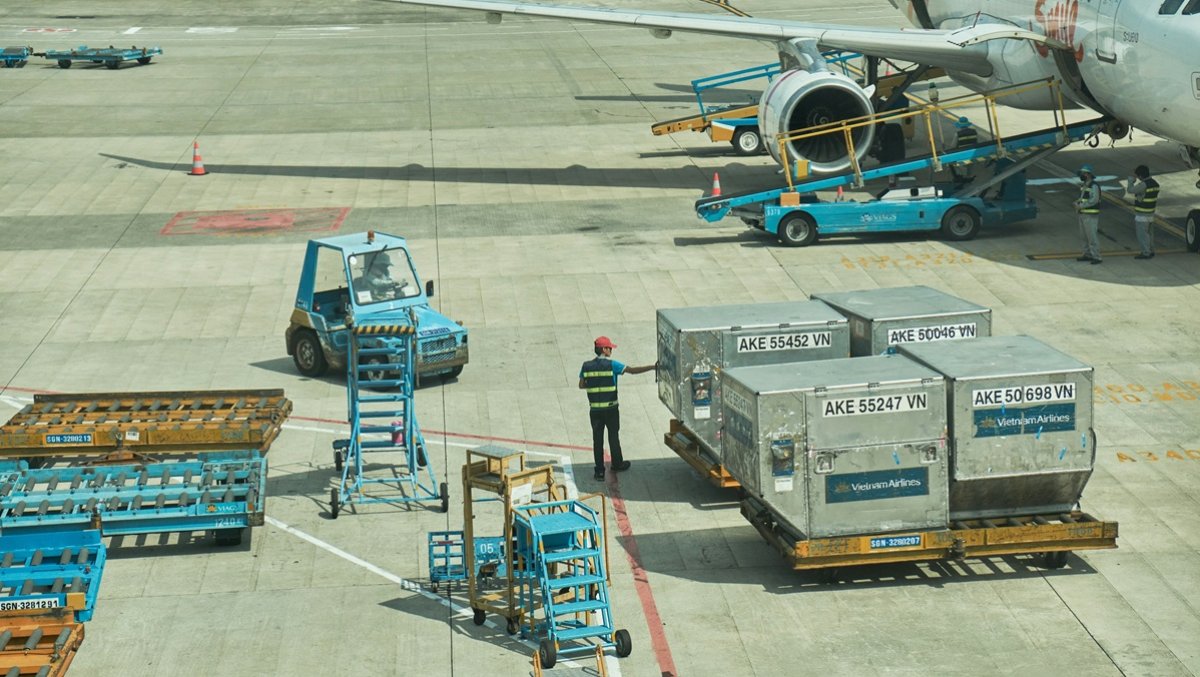


Global merchandise trade will grow slower in the second half of 2025, according to World Trade Organization barometer forecasts. The impact of pre-tariff front-loading is expected to fade in the final months of the year and will not offset the push for Artificial Intelligence (AI).
The push for AI-linked products sustains global trade growth, despite the cooling. So, according to the WTO, third-quarter data will close expansively, albeit moderately, and the same will be true for the fourth quarter.
To establish its forecasts, the WTO looks at the trend in six indicators. Five of them have growth forecasts, except for agricultural raw materials, key for natural fibers and part of the textile chain, in clear contraction. Air transport and electronic components continue to show growth, but more moderately than a few months ago.
The normalization of air and sea transport benefits the fashion industry
Both the automotive products and electronic components indices are well above trend in 2025. Finally, the new export orders index already exceeds that of the second quarter, after the volatility of late 2024 and early 2025.
The fashion industry is benefiting from two of the elements that the barometer records in expansion: the standardization of air and sea transport, which facilitates inventory management and reduces delivery times. However, these indicators are not enough to offset the sector’s absence in the real driver of global growth: technology.
The most recent Global Trade Outlook and Statistics report, published on October 7th, forecasts that merchandise trade will grow by 2.4% in 2025 and 0.5% in 2026, due to the increase in tariffs and the persistence of uncertainty in trade policy in the second half of 2025 and in 2026.
The WTO report confirms that AI-related goods are now the main lever keeping trade in positive territory. Fashion, which has historically relied more on discretionary consumption, spending power and logistics costs, is not capturing any of the structural benefits of the new technology cycle. And based on the near flat growth forecast for 2026, the sector could be one of the most exposed to the changing landscape.
The WTO’s quarterly Goods Trade Barometer is a composite leading indicator of world trade, providing an early signal on the trajectory of merchandise trade ahead of official statistics.
Related content

Global Apparel Trade Rises 7% in First Half of the Year, WTO Reports
7 oct 2025 - 16:49

WTO: World Trade Gains Momentum in Q1 Facing Tariff Challenges
16 jul 2025 - 07:26

Swatch Sees 89% Profit Decline in 2025 Amid Tariff Woes and Sluggish Demand
30 ene 2026 - 04:26

Latest news
Swatch Sees 89% Profit Decline in 2025 Amid Tariff Woes and Sluggish Demand
30 ene 2026 - 04:26

Inditex’s Eduard Casabella on Oysho’s Sport Pivot and Growth Through Identity
29 ene 2026 - 18:40
McKinsey’s Gemma D’Auria on Luxury’s Pullback and Fashion’s Resilience in 2026
29 ene 2026 - 18:35