French Label Balibaris Enters Administration to Restructure Debt
Amidst a challenging retail environment characterized by soft consumer spending and a spike in insolvencies, a mid-market men’s fashion brand has been placed under court protection by the Paris Economic Activities Tribunal.
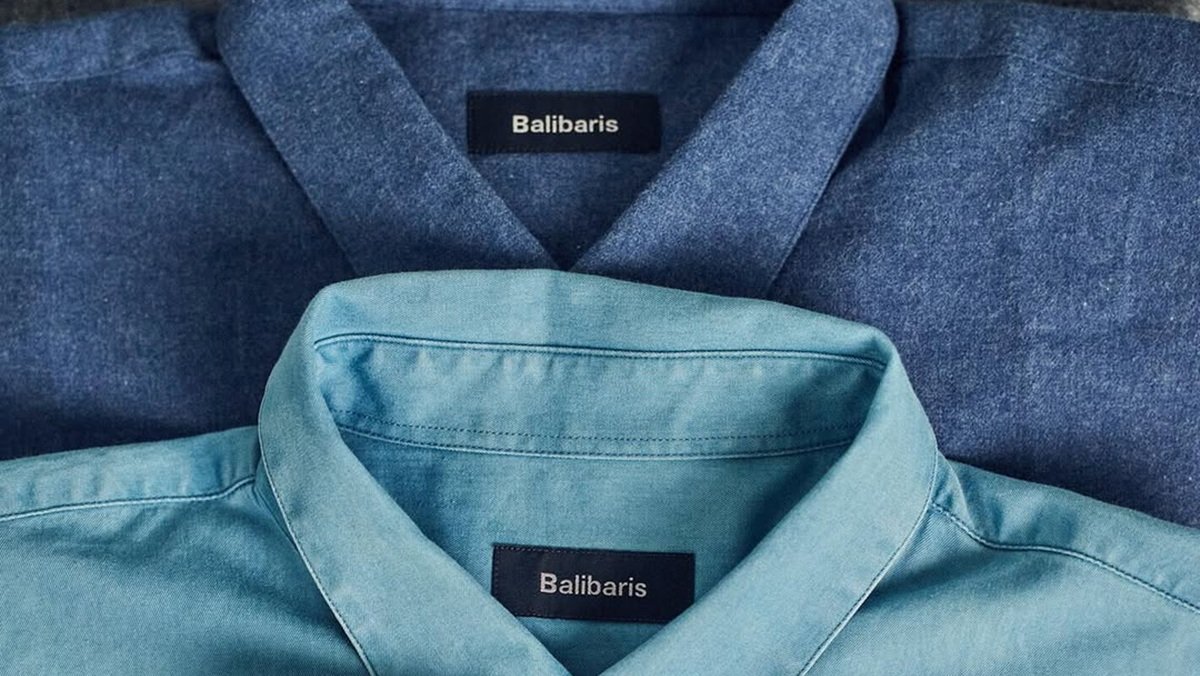

Balibaris enters bankruptcy proceedings in France. The French judiciary has placed the company in redressement judiciaire, according to an annotation deposited in the registry of the court of economic activities of Paris consulted by AFP. The decision sets the date of cessation of payments at December 24th, 2025.
Founded in 2010, Balibaris has positioned itself in the upper-middle segment of the men’s closet, with a discourse based on collections made in Europe and a contemporary tailoring approach. The company concentrates its operations in Paris, where its headquarters are located in the 6th arrondissement.
In terms of distribution, the company operates 57 points of sale in France, including its presence in department stores such as Galeries Lafayette and Printemps, according to data available on its website. Added to this network are its stores in Paris, four boutiques in London, as well as one in Luxembourg and one in Brussels.
The bankruptcy comes after the company explained that it had requested the redressement to restructure a debt that had become too heavy. In its breakdown, Balibaris pointed to the remainder of a loan guaranteed by the French State (PGE) and, above all, to €8 million of bank debt.
Balibaris has a network of 57 points of sale on the French market
In parallel, the brand claimed an average annual growth of 5% and a turnover close to €40 million, with nearly 200 employees, according to Fashion Network. The procedure now opens a period of judicial supervision aimed at renegotiating the liabilities and seeking a way out of continuity.
The redressement judiciaire is a common tool in the French market to try to preserve activity and employment while the company negotiates with its creditors. In practice, viability often depends on an equation that combines simplifying the structure, recovering margins and securing cash without putting the brakes on commercial activity.
Domino effect in the French ready-to-wear sector
The Balibaris case is part of a broader context for French ready-to-wear, which has been struggling for months to survive. In a climate where consumption remains subdued, the market is also facing fierce competition from competitive Chinese operators such as Shein. Many medium-sized chains, especially those with a large physical network, are competing against international groups with promotional capabilities and non-European platforms that are accelerating turnover and pushing up the price war.
At the same time, the business is facing a more demanding cost environment, with high rents in prime locations, more expensive logistics and omnichannel operations that do not always translate into profitability.
In recent months, the sector has accumulated episodes that illustrate this reorganization. Kaporal and Jennyfer ended up in judicial liquidation; Naf Naf went through judicial redressement again; and Ikks was rescued at the last minute. More recently, IDKids group, parent company of Okaïdi, filed for redressement for several of its brands. Pimkie, for its part, has also gone through judicial protection processes and continuity plans. It is not, therefore, a question of a one-off crisis, but of the adjustment of the model.
Related content

Ikks Saved from Bankruptcy as HoldIkks Chief and Veepee Co-Founder Intervene
12 dic 2025 - 13:04

Colombian Fashion Boosts Global Presence with 2.3% Export Surge in 2025
4 feb 2026 - 07:17

Liverpool Forecasts Lower Profit Margins in 2025 Despite Rising Revenue
4 feb 2026 - 07:08

Columbia’s Sales Remain Steady, Profit Takes Another Hit in 2025
4 feb 2026 - 06:59
Latest news
Colombian Fashion Boosts Global Presence with 2.3% Export Surge in 2025
4 feb 2026 - 07:17
Liverpool Forecasts Lower Profit Margins in 2025 Despite Rising Revenue
4 feb 2026 - 07:08
Columbia’s Sales Remain Steady, Profit Takes Another Hit in 2025
4 feb 2026 - 06:59

Economic Mood Swings: Spanish Depression Versus Indian Fashion Euphoria
4 feb 2026 - 05:00