Via Montenapoleone: Luxury Boutiques Reach New Heights on Milan’s Iconic Street
In the heart of Milan, the world’s second most expensive street for retail, an array of luxury boutiques nestled within grand palaces put their creations on display, transforming shopping into an artful experience.
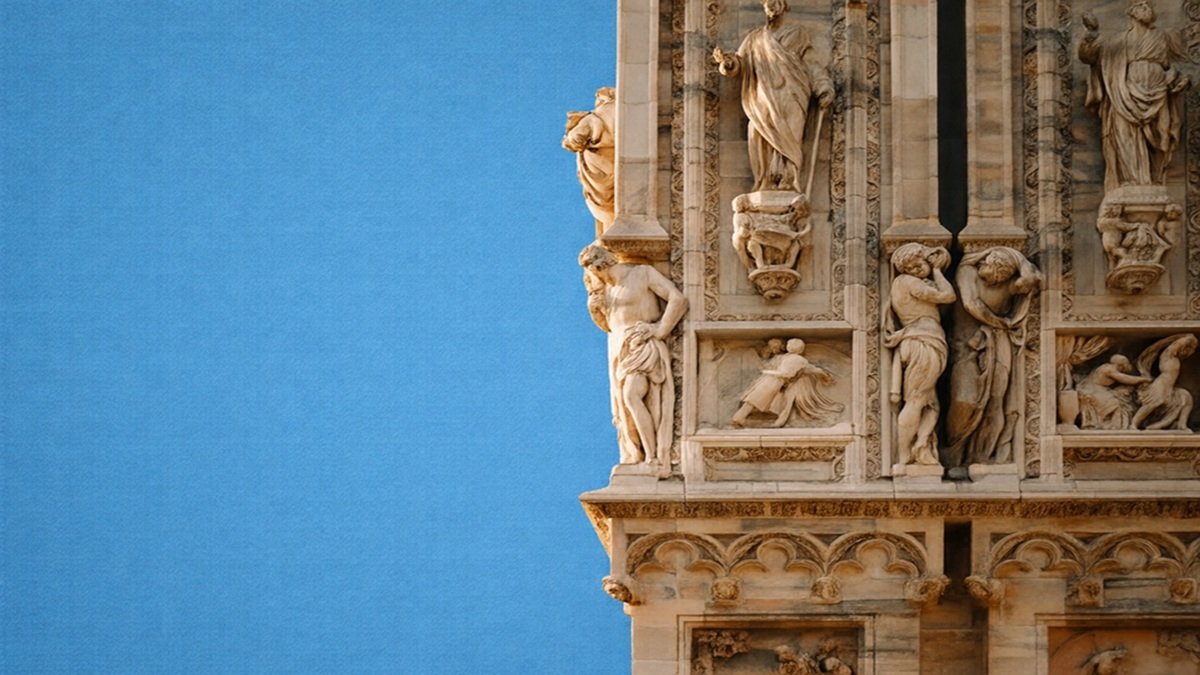


Via Montenapoleone is not just any shopping street: it is proof of the success of Made in Italy products around the world. It is the main street that makes up what is known as Milan’s fashion quadrilateral, the city’s most prestigious luxury district, which also includes Via della Spiga, Via Sant’Andrea and Via Manzoni. There, the exclusivity of the luxury boutiques blends with the historical and stately look of the palaces in front of which it runs.
In just a few meters, the street brings together the main groups of Italian luxury, but also globally. Via Montenapoleone houses flagship stores of Prada, Gucci, Dior, Louis Vuitton, Fendi, Versace, Hermès and Armani, among others. And not only fashion, but luxury jewelry and watch stores are also consolidated in the street. There is Bulgari, Tiffany&Co and Patek Philippe. They all seek the same thing: global projection.
Via Montenapoleone is thus one of the most expensive streets in the world. According to the latest Main Streets Across The World report by the consulting firm Cushman&Wakefield,the average rent on the road amounts to 20,000 euros per square meter per year, a price that has remained constant in relation to 2024, when it was already the most expensive street in the world to install commercial premises. This year it has been overtaken by New Bond Street.
As with all prime retail locations, where availability is low and demand exceeds limits, the major players are not settling for a lease, but are looking to secure their site through purchases. French luxury group Kering did so in 2024, with the purchase of a five-story building on the thoroughfare dating from the 18th century, for €1.3 billion. Blackstone had bought the building in 2021 as part of a portfolio of fourteen properties for which it paid €1.1 billion.
But, beyond purchases, transactions on the street are constant. Luxury operators are taking advantage of the scale of the spaces, often converted palaces, to install huge stores that function as small museums. Yves Saint Laurent reopened its iconic flagship store on the street in December last year after a thorough redesign, incorporating classic and modern elements in a historic building. And Valentino also revamped its street presence in 2025, with a space of more than 1,170 square meters spread over several floors.
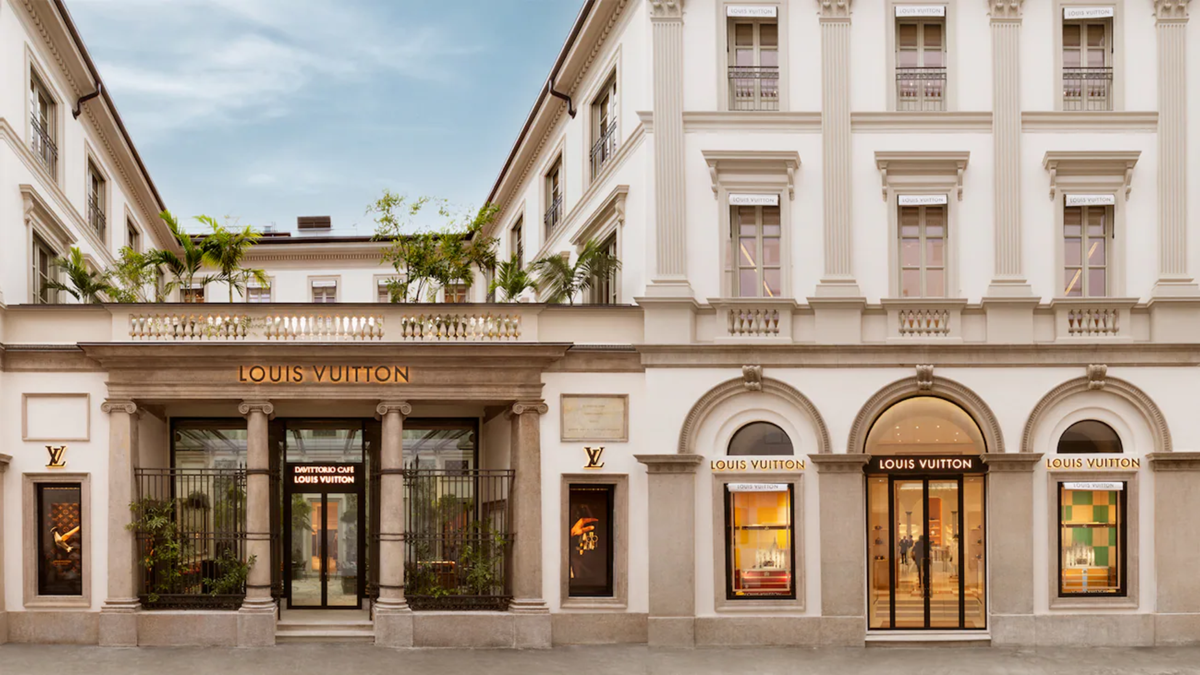
But the most talked-about reopening was undoubtedly that of Louis Vuitton, after three years of restoration work on the Palazzo Taverna. The building was completely renovated and includes, accessible through the store, the Da Vittorio Café Louis Vuitton, opened next to DaV by Da Vittorio Louis Vuitton, the first restaurant concept in Italy for the French maison.
One of the most vivid symbols of the street is the Caffè Cova, which brings together both culture and history of Milan since its founding in 1817, and since 1950 on Via Montenapoleone. The establishment was a meeting point for high society, intellectuals and patriots during the Risorgimento and today, in addition to being a historic coffee shop, it is a symbol of the city’s gastronomic tradition.
Very close to via Montenapoleone are the Vittorio Emanuele II galleries, which connect the Piaza del Duomo with Piazza della Scala. Itis another icon of Milanese luxury, which drinks from the affluence of the street and also nourishes it with more visitors attracted by the boutiques. Built between 1865 and 1877, the gallery is considered one of the world’s first indoor shopping malls and is a symbol of 19th century industrial bourgeois Milan. It houses boutiques such as Prada, Louis Vuitton, Gucci or Borsalino.
Via Montenapoleone is only 350 meters long, so the boutiques grow upwards
Via Montenapoleone is not a grand avenue, but rather a narrow, slightly curved street surrounded by neoclassical architecture that takes center stage. In fact, it is only 350 meters long, so the boutiques are forced to grow upwards, taking advantage of the different floors of the buildings, since the surface area is extremely limited.
But if there is one thing that gives color to Montenapoleone Street, it is the showcases installed in the palaces, accompanied by balconies and fine ornamentation. Each one functions as anart installation, like a small museum with carefully selected lighting, showing passersby iconic pieces from French and Italian houses and limited editions with exorbitant prices. During events such as Milan Fashion Week, moreover, the street becomes a real catwalk: journalists, models and influencers walk along the street, which acts as a real catwalk under the open sky.
The sidewalk maintains the original stone, and in this case the spaces for cars and pedestrians are perfectly differentiated. In this sense, the road is considered a visual paradise for fans of expensive cars, with Ferraris and Porsches rolling along its asphalt and capturing the gaze of impressed tourists. However, vehicle circulation is being put in check in the area. There is a political and social debate revolving around whether or not to pedestrianize the street.
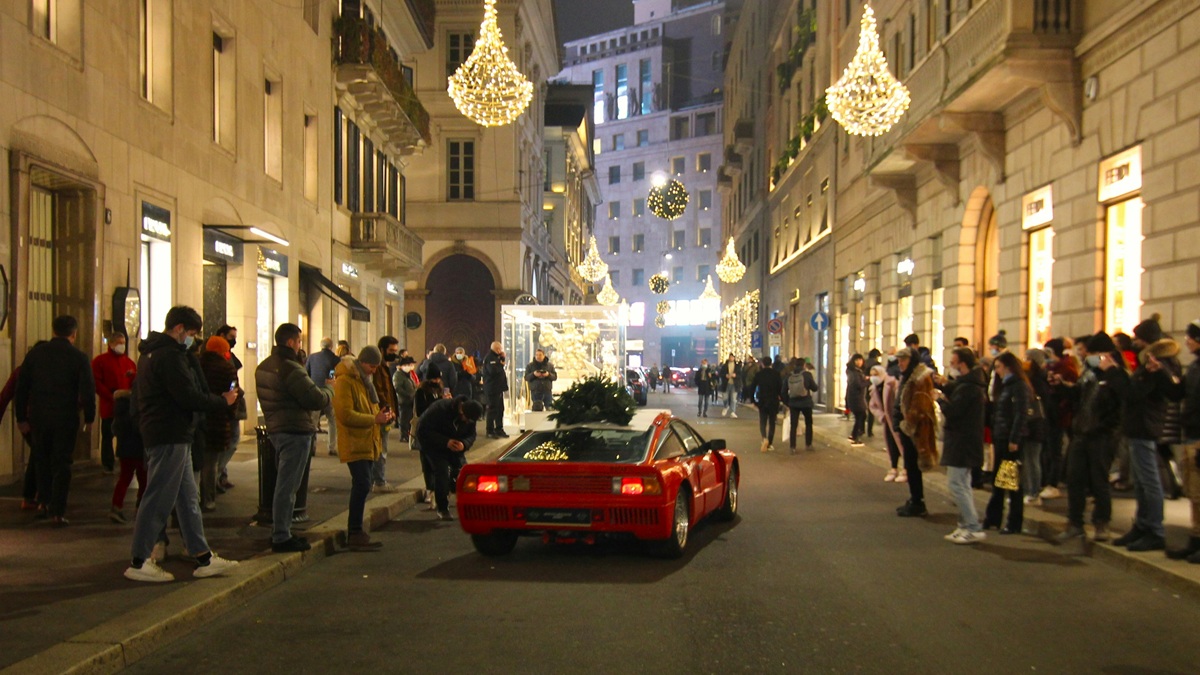
In May last year, the Milan City Council introduced a Limited Traffic Zone in the heart of the Quadrilatero della Moda, with a clear objective: to reduce vehicle congestion, improve accessibility and pedestrian safety. And retailers were quick to speak out, openly opposing a measure that, in their opinion, is detrimental to the luxury customer, traditionally accustomed to moving around by car.
The Quadrilatero de la Moda district receives approximately eleven million visitors a year and, although many are tourists looking to browse through the shop windows, the latest analysis oftax-free shopping shows that the average expenditure per shopper on the street can amount to 2,500 euros per transaction, making it one of the highest in the world.
A bit of history
It is known that the area where the street passes today was already inhabited in Roman times, when the city was called Mediolanum. Originally, its layout was part of the streets that connected palaces and markets of medieval and Renaissance Milan, inhabited by nobles and wealthy merchants. But the key transformation came with the construction of the Palazzo del Monte, seat of the Monte Camerale di Santa Teresa, the institution that managed Milan’s public debt. The street took its final name in the eighteenth century, during the Napoleonic rule, when several aristocratic palaces were already built around it.
The aristocracy consolidated in the street throughout the 19th century, with the construction of more palaces, such as Palazzo Taverna, Palazzo Carcassola Grandi or Palazzo Melzi di Cusano. But it was not until the 20th century, after World War II, that the thoroughfare became the center of fashion and design in Italy. Aristocrats began to rent their palaces to fashion houses and luxury brands and, with the birth of the so-called flagship stores, Milanese boutiques began to be more than stores: they began to represent the brand they hosted on a global level.
Related content

Colombian Fashion Boosts Global Presence with 2.3% Export Surge in 2025
4 feb 2026 - 07:17

French Label Balibaris Enters Administration to Restructure Debt
4 feb 2026 - 07:14
Liverpool Forecasts Lower Profit Margins in 2025 Despite Rising Revenue
4 feb 2026 - 07:08
Latest news
Colombian Fashion Boosts Global Presence with 2.3% Export Surge in 2025
4 feb 2026 - 07:17
French Label Balibaris Enters Administration to Restructure Debt
4 feb 2026 - 07:14
Liverpool Forecasts Lower Profit Margins in 2025 Despite Rising Revenue
4 feb 2026 - 07:08
Columbia’s Sales Remain Steady, Profit Takes Another Hit in 2025
4 feb 2026 - 06:59