S. Díez (Inexmoda) on Colombian Fashion: Competing with Value, Not Prices
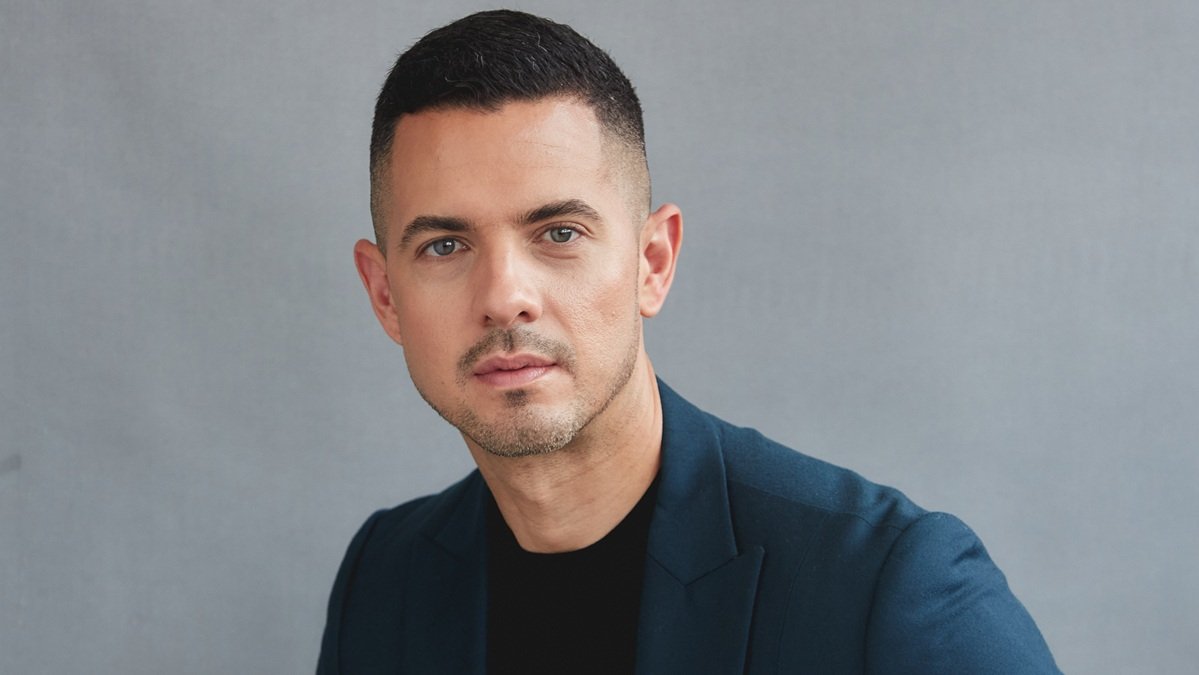
As the first-ever Colombia Fashion Summit approaches, Inexmoda’s top executive, Sebastián Díez, advocates for a strategy centered on design, sustainability, and branding to establish Medellín as a key regional hub targeting the US and Europe.


From Colombia to the world, Latin American fashion aspires to consolidate its global leap with its sights set on the United States and Europe. To accelerate this process, last July, Medellin turned fashion into business with its annual edition of the Colombiamoda fair, which brought together 60,000 attendees from 50 countries and 650 exhibiting brands and had an economic impact of $17.7 million for the city. The attractiveness of the event was on the rise: in its last celebration, the fair attracted 11,000 buyers (9,000 national and 2,000 international), consolidating the capital of Antioquia as a regional pole for shopping, sourcing and fashion shows, with a program of 34 catwalks.
The sector’s agenda in the country continues. On September 25th, the first edition of the professional congress dedicated to the fashion industry will be held in Medellin, Colombia Fashion Summit, a project born as a spin off of Barcelona Fashion Summit with the support of Inexmoda and Modaes. On the eve of the meeting, which will bring together more than 350 executives and companies such as the Colombian Totto and Cueros Vélez or the Spanish Tous and Silbon, Sebastián Díez, executive president of Inexmoda analyzes the past, present and future of the Colombian fashion industry.
Question: What is your picture of the current fashion sector in Colombia and the impact of the Colombiamoda fair?
Answer: Colombiamoda has undergone a very important evolution in recent years, understanding the global fashion context in order to be a lever for Colombian fashion. Now we have our sights set on Latin America. We have seen that fashion weeks and international fashion events, beyond runway purism and commercial focus, have become lifestyle events that transmit and communicate culture, society or new expressions through art and different disciplines. This is exactly what we want to do at Colombiamoda to give visibility to Colombian and Latin American fashion through staging, culture, art and catwalks. We combine this project with the showrooms and the trade show because fashion is an industry that needs to bill and establish profitable business models.
Q: Is turning Medellin into a capital of the fashion map one of the strategic priorities in this work?
A: It is tremendously important. In fashion, Medellin is to Latin America what Paris or Milan are to Europe. Colombiamoda is working on this deployment and city project. Medellin is living a moment of creative hype, art and culture. The city has become very attractive because the effervescence, which is reflected in music, in fashion ventures, in creative studios, is enormous. This has put Medellín on the map as a creative capital and, of course, what better expression of creativity than fashion.
Q: What is the current state of economic relations with other markets and how important are they for Colombian fashion?
A: The United States is the natural market and Colombia’s main trading partner. Thirty-three percent of exports go to that market. A few months ago we conducted a survey among 420 businessmen in the sector. Seventy-five percent of this population responded that internationalization is the number one focus for the sector. Colombia is a country that is not a high exporter, with annual exports of about 900 million dollars a year. There are other relevant trading partners such as Ecuador or Mexico.
Q: Is Latin America a priority region for national fashion?
A: Today I could say that Latin America is an interesting market for Colombian fashion because they are culturally mirror markets and countries that hold Colombian fashion in high esteem. However, they are markets that have challenges. They represent great opportunities, but also great challenges in terms of operation, atomization or the effort to penetrate a market with a relatively low population density. If we go to countries, for example, such as Uruguay, Chile, the annual per capita expenditure is around 400 dollars per capita, while in Colombia it can be close to 180 dollars per capita per year. These are very interesting markets from a per capita spending point of view, but with a very low population density. This is where the United States comes into play as a major importer par excellence. It is a neighboring market where Colombia could compete for fashion, design and the ability to create brands. On the other hand, we will have to see what happens with Venezuela because we have to remember that the country accounted for 50% of Colombia’s global exports, not only in fashion. We have to closely follow the evolution of the market.
“Colombia must stop being a well-kept secret in terms of fashion.“
Q: What are the particularities of entering the U.S. market?
A: It has great challenges in terms of penetration due to its operating costs, in terms of creating a brand in the market and high investments. From Inexmoda’s point of view, the United States is a priority, so we have formally established ourselves there. In fact, we have held Colombiamoda in Miami, opening permanent formats for Colombian fashion and leaving brands installed there.
Q: What opportunities does Colombian fashion identify on the European continent?
A: We have opportunities especially in the highly differentiated market. Brands with very high added value, designers and designer labels that work with sustainable, biodegradable materials, that have a very high component of craftsmanship in their products are very interesting in Europe. We are seeing how designers are opening markets in European fashion weeks and building a presence in those countries. However, as the European Union and the United States are the main importers of fashion, there are great challenges in terms of competition, but there are great opportunities for Colombian fashion. Mainly, around the differentiation of special and handcrafted fabrics. Finally, we can also talk about the Middle East as a relevant market for specialized and high value-added fashion, which is where Colombia can compete. Colombian fashion does not compete with low prices, but with value-added design and branding. Colombia must stop being a well-kept secret in terms of fashion. It has to become a better known country in the world.
Q: What are the challenges for national fashion in terms of structure?
A: Brands have to be better prepared in their business structure, sourcing, commercialization, marketing or communication to properly reach the markets we aspire to conquer. In this strategic line, Inexmoda promotes and strengthens this accompaniment to the companies at national level so that they are ready and prepared. In fact, this is also what inspires the Colombia Fashion Summit. We want to bring global knowledge that helps entrepreneurs and brands to be prepared every time.
Q: How do you work on the positioning and perception of Medellin as a fashion capital abroad?
A: Reports and articles confirm an evolution of workation and business leisure trends. That is, the need to look for a destination not only to do business and work, but also to enjoy the content that the city offers in terms of entertainment, culture, music or gastronomy. This is ultimately what helps these cities to put themselves on the map because it is more natural and it is easier to have a fashion scene in different parts of the city where buyers, journalists, those interested in fashion come and have an enjoyable experience. It generates an economy around business and fashion, something that has evolved a lot since the pandemic changed the remote work scenario. With digital nomads, fun has become linked to work and is an important motivational focus. That is where Medellin is also working, with the will to position itself as an international capital of interest that offers a rich experience around business.
Q: What was the turning point that marked a remarkable change in the city’s situation and, as a consequence, in fashion?
A: Two very important things have happened in Medellin. The first is that there has been a strong textile and fashion vocation, deeply rooted in this territory. In fact, in Antioquia, we found the only native communities that traditionally used to wear clothing. This speaks of a vocation and a textile tradition that goes back almost to before the time of the conquest. When you look at a city like Medellin and its tradition and roots in the fashion industry, which even triggered the creation of Inexmoda, you can see that our history was a game changer. Por otra parte, la creación de las ferias de moda no sólo supuso el lanzamiento de eventos, sino también la creación de un sistema moda extremadamente fuerte, donde los productores de moda tuvieron que aprender, donde las agencias de modelaje se tuvieron que crear, donde los fotóThis is in addition to the creative boom between 2000 and 2010, with a moment of effervescence in other different branches such as music and culture. The fact of having internationally successful referents has helped put Medellín on the fashion map. It is curious how disciplines or arts that come from outside can come to enhance and boost other businesses such as fashion. But I see it as organic synergies that naturally contribute to destination marketing. And it’s something that has also happened with music in Spain or Puerto Rico, for example.
“Medellín is to Latin America what Paris or Milan are to Europe.“
Q: In terms of sustainability, how do you address Colombia’s challenge of preserving tradition and protecting its ancestral techniques while at the same time consolidating them as a business?
A: The fashion industry in Colombia is a pyramid where at the base, at the bottom, are textiles, inputs, machinery, most of which are imported from around the world. Here there are very important commercial partners from Latin America such as Brazil, Peru or Ecuador, which are textile suppliers; as well as other natural global suppliers such as China, India, Pakistan, Bangladesh. All the production units, garment workshops or complete package companies start from this base and, at the next level, the commercial brands with high volumes, high market presence and high coverage. Then there are the brands with very high differentiation, which are commercial brands, but have a higher average ticket and go to a more specialized niche because they do not have the volume of commercial brands. They have a differential DNA that allows them to charge a little more in channels that are a little more exclusive. And at the top of the pyramid are those brands with designer labels or designers that have a very high specialized component, either through design, sustainability or craftsmanship. This is the radiography of the fashion industry in our country, a very broad and diverse industry. This type of designers with very high added value in their craftsmanship and design present unique products in which sustainability is of great importance. It is the new luxury that is not based solely on price, but on exclusivity and the difficulty in finding these products.
Q: How does Colombiamoda find the right balance between all these proposals?
A: We do it by combining commercial brands with avant-garde proposals that already have their own niche. The challenge is to preserve tradition and craftsmanship without cultural appropriation, while integrating them into a sustainable and scalable model. Working with communities and natural fibers requires strengthening a supply chain that is not yet standardized: they are masters of their craft, but often lack a business structure, which limits growth. Latin America has a clear advantage with biodiversity, agriculture and increasingly recognized cultures. And that’s why we attract specialized boutique and niche buyers: these are limited-run collections, but with high average ticket prices.
Q: Why is it difficult for Colombian brands to make the international leap?
A: Because Colombia is a large and fashion-sensitive market, which has driven strategies focused on selling locally. There is a lack of international negotiation culture and clear standards, which generates friction between creator and buyer at trade fairs. Many mass or commercial brands now seek to differentiate themselves, but their natural market is still Colombia, with the risk that this implies when going abroad. To correct this, Inexmoda accompanies around 800 companies a year to strengthen competitiveness and global vision.
“The sector in Colombia is family and artisanal, with a high level of informality in production”.
Q: What are the priorities in circularity and sustainability today in the Colombian fashion sector?
A: To support three levers at the same time: mission with real purpose, competitive advantage that is not a cost overrun but part of the model, and regulatory compliance. There are notorious advances in textile manufacturing and finishing, such as the use of solar energy, cleaner dyeing or printing processes, water recycling, biodegradable chemicals? The great pending issue is the collection and reincorporation of textiles, something in which Spain shows references but Colombia has not yet developed.
Q: What about traceability and regulatory compliance for doing business abroad?
A: Verifiable traceability is needed with technological tools to demonstrate compliance with international bodies, especially European ones. Large companies can move faster; the challenge is for SMEs (around 92% of the sector) to adopt these solutions and scale their use to integrate into global chains. Global volatility has shifted the focus to reconfiguring supply chains, inventory control and consumer reading. According to the Vision 2025 survey, the intention in sustainability is around 10%, reflecting this situation. The sector in Colombia is family and artisanal, with a high level of informality in production; therefore, technological adoption will be gradual and more attainable for large players at first. The challenge is to bring tools to small and medium-sized companies so that they can also comply with traceability.
Q: What is the new Colombia Fashion Summit and why the alliance with Modaes?
A: The Summit was created to bring global knowledge to strengthen brand building and business models. Colombia has a very complete fashion system with agencies, media, production, brands, sustainability... but it needs to learn from external experiences. Spain is a mentor in branding and expansion, and the alliance with Modaes allows us to bring voices and cases to guide local entrepreneurs.
Related content
Colombia Fashion Summit Debuts with Totto, Vélez, Tous, Sita Murt and Silbon
2 sep 2025 - 10:30

From Beats to Adventure: Maluma Expands His Remanence Brand in Colombia
29 jul 2025 - 05:00
Birkenstock projects double-digit growth through 2028 with renewed strategy
29 ene 2026 - 11:16

Levi Strauss Boosts Profitability: Dodges Tariff Impact and Triples Earnings
29 ene 2026 - 11:15
Latest news
Birkenstock projects double-digit growth through 2028 with renewed strategy
29 ene 2026 - 11:16
Levi Strauss Boosts Profitability: Dodges Tariff Impact and Triples Earnings
29 ene 2026 - 11:15
H&M keeps its finger on the pulse and earns 4.6% more at fiscal year-end
29 ene 2026 - 11:10

Gordon Brothers Takes Over LK Bennett, Sets Stage for Global Expansion
28 ene 2026 - 12:33