From Yarn to Garments: Recover Launches New Fabric Line to Boost Eco-Friendly Fashion
Spanish materials company and textile recycler debuts four distinct fabric collections today, alongside a fifth line of finished garments, aiming to boost fiber adoption and fast-track market integration.
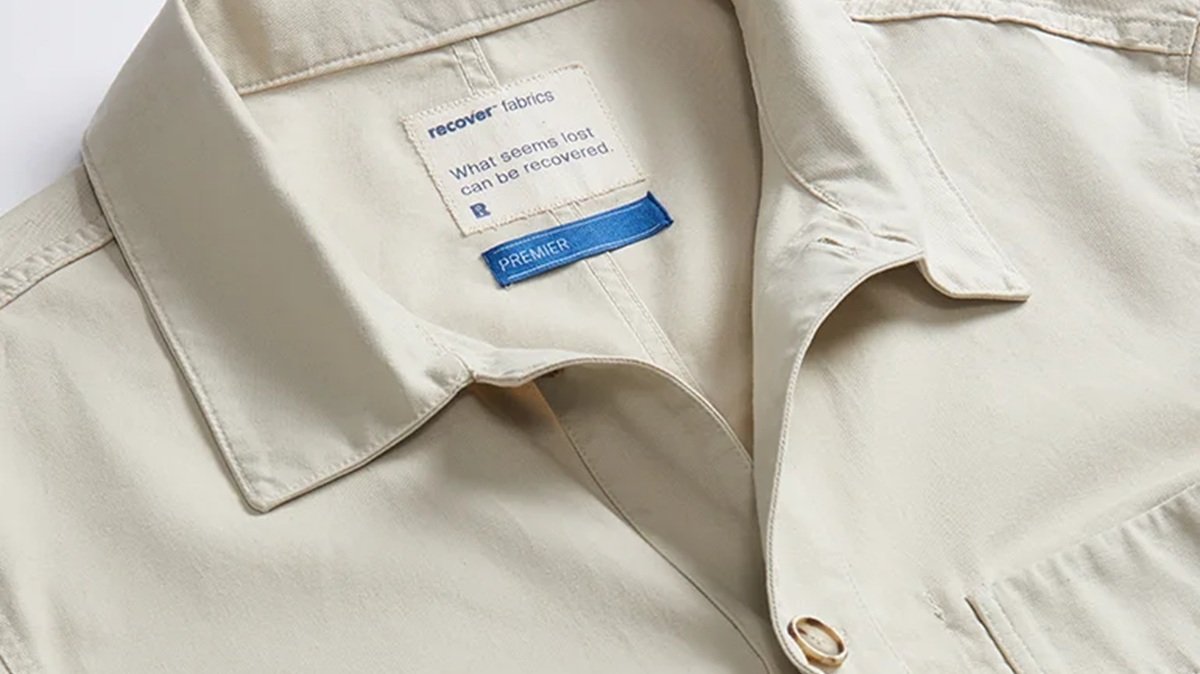

From yarn to fabric. The Spanish cotton fiber recycling giant Recover today launches a new line of business, with which it seeks to diversify its offer beyond traditional yarn and help companies in the sector to introduce fibers with a lower impact on their value chains, and thus accelerate their business. Through Recover Fabrics, and in alliance with producers in Spain, Portugal and Bangladesh, the company will launch fifty different fabrics and a line of final garments to respond to all types of market demand, from large companies to emerging brands.
With this diversification, therefore, the company will also give a further boost to its business. After being born in 1914 as a spin-off of Hilaturas Ferre, Recover has already moved its headquarters to Madrid, and is controlled by the Story3 fund, although it is also owned by Fortress Investment, Eldridge Industries and Goldman Sachs, which entered the company’s capital in 2022. The company does not communicate its turnover figures, although it has not yet reached profitability, as Anders Sjöblom, CEO of Recover, explained to Modaes.
“Recover Fabrics has been developed to help companies accelerate their transition to more sustainable products, without compromising on quality, scalability or speed,“ the company says in a statement accessed by Modaes. With this launch, the giant not only diversifies its business beyond recycling, but goes on to offer companies a complete package directly.
Thus, brands save adding steps to their value chain, first buying the recycled fiber from Recover, then sending it to their suppliers to be introduced into their processes. “Many companies have common sustainability goals, but face challenges in implementing them, they need credible, accessible and listable solutions to scale,“ the company adds.
Recover has developed 50 different fabrics, in addition to a line of pre-engineered basics
To this end, the company has partnered with different industrial companies such as the Portuguese TMG or the Spanish Textil Santanderina, with whom it will produce the fabric, which will include a percentage of Recover’s recycled fiber as well as virgin fiber.
In total, Recover has developed 50 different fabrics, distributed in four collections, each with different qualities. The Elite collection, which will be produced in Portugal by TMG, offers fabrics for outerwear; the Premier collection, developed together with Textil Santanderina in Spain, will specialize in a more versatile fabric for chinos or shirts, and the Premier collection, developed with Textil Santanderina in Spain, will specialize in a more versatile fabric for chinos or shirts.The Core collection, manufactured in Bangladesh, will focus on basic knitwear such as t-shirts and sweatshirts, and Essential Denim, also produced in Bangladesh, will focus on denim.
In addition, the launch also includes a fifth final garment line, named Recover Blanks, a collection of basic garments such as T-shirts, sweaters or sweatshirts that are unbranded, ready-made and pre-designed.
“Recover Fabrics offers a traceable, scalable and low-impact solution (...), addressing key challenges in the sector such as the complexity of the supply chain, obstacles to certification or the wide variety of quality standards in the industry,“ the company says.
Recover, which was born as a spin-off of the Spanish company Hilaturas Ferre but now operates as an independent player with a global presence, will thus be able to help companies meet the future requirements of the European Ecodesign law. The macro regulation was formally approved in 2024 and seeks to improve the circularity, recyclability and durability of European products, including textiles. Fashion, however, is still awaiting the delegated acts that will establish the particularities for the sector, such as a minimum percentage of recycled fiber in garments.
The introduction of sustainable fibers in value chains is one of the main challenges faced by companies, which operate with a large number of suppliers, often located far away and with their own infrastructures. “This (Recover Fabrics) makes it easier for brands, large or small, to integrate circular materials seamlessly into their collections,“ claims Recover.
Related content

Anders Sjöblom of Recover: “Science and Fashion Must Forge a Connection”
14 oct 2025 - 05:00

H&M Commits to Multi-Year Purchase Deal with Recover for Recycled Cotton
29 oct 2025 - 08:04
T2T Alliance Welcomes Recover in Recycling Push Alongside Syre and Circulose
27 oct 2025 - 08:07

Gordon Brothers Takes Over LK Bennett, Sets Stage for Global Expansion
28 ene 2026 - 12:33
Latest news
Gordon Brothers Takes Over LK Bennett, Sets Stage for Global Expansion
28 ene 2026 - 12:33

Galeries Lafayette Finalizes Sale of BHV Building Amid Shein Controversy
28 ene 2026 - 12:30

VF Corp’s Q3 Results Shine with 28% Boost as Business Reorganization Unfolds
28 ene 2026 - 08:23

Claire’s Faces Another Setback in the UK with Second Bankruptcy in Six Months
28 ene 2026 - 08:21