Mercado Libre Prepares for a Transformative Phase in the E-commerce Landscape
As the Latin ecommerce giant approaches the final stretch of a pivotal year, it eagerly anticipates a new era under the leadership of Ariel Szarfsztejn. The company has also promoted its Brazil director to global head of marketplace.
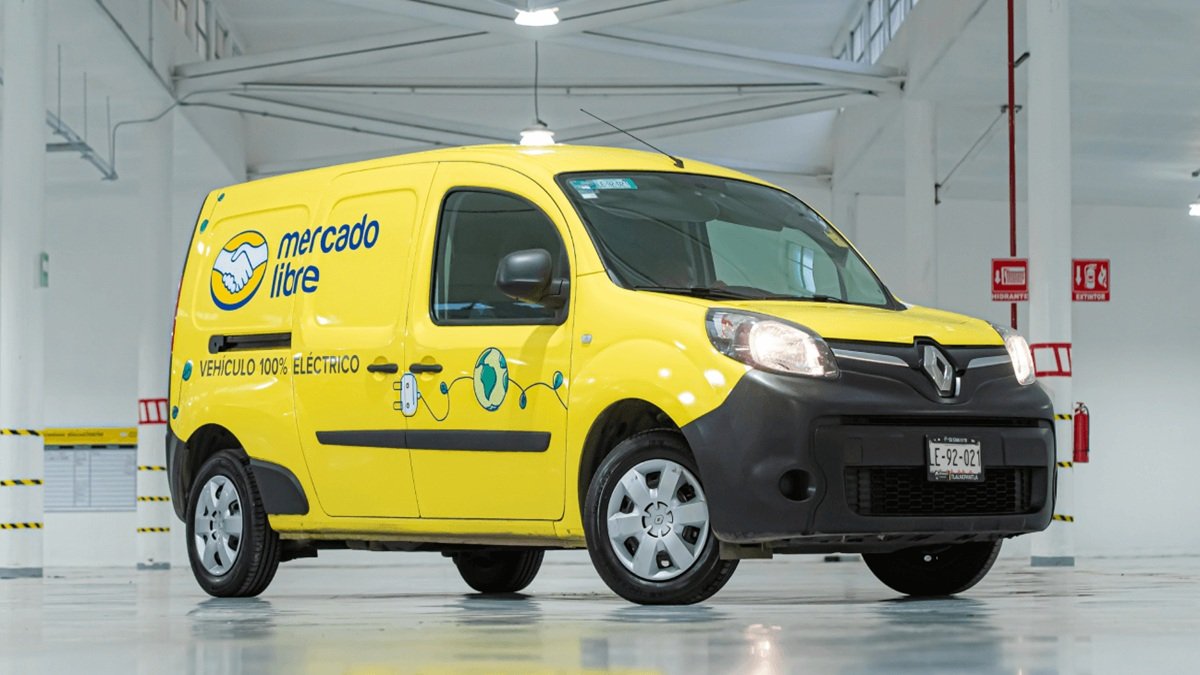


The world of ecommerce and technology was shaken last May with a major announcement: Marco Galperín, CEO of Mercado Libre, will leave the company he created 26 years ago. In the midst of the boom and expansion of the Latin American online commerce and financial services giant, Mercado Libre is facing its last months under the leadership of its founder, who assures that he will remain linked to the company. With a new CEO in place, the group is rearming to begin a new era.
Starting in January, Ariel Szarfsztejn will become the top executive of the largest e-commerce company in Latin America, the first Argentine unicorn and the most valuable Latin American company on the stock market.
A graduate in Economics from the University of Buenos Aires (UBA) and MBA from Stanford University, Szarfsztejn has been with Mercado Libre for almost a decade. The next CEO joined the company in May 2017 as vice president of strategy, corporate development and investor relations.
In these almost nine years, Szarfsztejn held different positions of responsibility in areas such as logistics, shipping and supply chain. Prior to being named Mercado Libre’s next CEO, Szarfsztejn served as executive vice president of ecommerce, a position to which he was promoted in 2022.
Mercado Libre doubled its sales in 2024 to $20.777 billion
Although most of his professional career took place at the ecommerce giant, Szarfsztejn also worked for large corporate groups such as The Boston Consulting Group and Despegar, in addition to a brief stint at Goldman Sachs.
Mercado Libre has called the last few months a “CEO transition period”. Szarfsztejn has already begun to take the reins on some management decisions. His current position will evolve in a two-headed fashion. Fernando Yunes, currently head of Mercado Livre (Brazil), will also assume the position of global marketplace director. He will be joined by Agustín Costa, who will continue as shipping director.
“This structure reflects something we learned by doing: that our ecosystem grows when each part can scale with focus, autonomy and shared vision,“ said Szarfsztejn in a statement. For his part, Marcos Galperín informed in his resignation letter that he will continue to be actively involved in Mercado Libre and will focus on strategy, product development, culture, capital allocation decisions, specific projects, AI implementation, among other tasks. Specifically, Galperín will assume the role of executive chairman.
With a personal fortune of more than $10 billion, Galperín is the richest man in Argentina, although he has been living in Uruguay for several years, where he also moved Mercado Libre’s fiscal headquarters.
The position held by Ariel Szarfsztejn will be replaced jointly by Fernando Yunes and Agustín Costa
The ecommerce and financial services group closed fiscal year 2025 above predictions and with a growth of 101.5%, up to $20,777 million. It was then when Galperín decided to divest 150,000 shares of the company, with a market value at the time of $326.9 million.
Under the new management, Mercado Libre will continue to seek to expand its ecommerce reach in Latin America, where only 15% of retail sales are generated on the web. The company has also realized tremendous growth as a digital financial services company through Mercado Pago.
The group is one of the largest generators of employment in the region, especially in Argentina, where around 14,000 people work, a figure that is increasing every year. Founded in 1999, Mercado Libre operates in 18 markets on the continent. The company was the university project of Galperín, who also studied at Stanford (United States).
New era for the fashion segment
Although its origins are linked to e-commerce, today Mercado Libre has six major areas: Mercado Pago, launched in 2009 to democratize digital financial services; MercadoAds; Mercado Shops; Mercado Envíos; Mercado Crédito; and Mercado Play, a streaming platform and its last major launch in 2023.
Mercado Libre’s fashion category is led by Laura Manzione
This year, Mercado Libre has set itself the goal of becoming the number one fashion and beauty destination in Latin America. The category is headed by Laura Manzione, who has been with Mercado Libre for ten years. Last year, the group promoted Martina Gonelli as fashion leader for Argentina.
Mercado Libre projects that the segment will grow 35% in volume this year, above the group’s overall ecommerce average. To this end, the company has been implementing digital strategies such as the virtual fitting room, interactive product kits, reviews, live shopping and partnerships with influencers. Brands such as Nike, Lacoste, Levi’s, Cheeky and La Martina operate on the platform.
On a global scale, Mercado Libre ended 2024 with a 9.2% increase in profit, up to $1.911 billion. The group closed the year with solid growth in the Mexican market, with revenues of $4,664 million, 51.9% more than the previous year. Brazil, on the other hand, is the market where the company generated its highest sales, with a turnover of $11.406 billion.
Related content
Mercado Libre Surpasses $1 Billion in Profit with 35% Sales Surge in H1
5 ago 2025 - 16:58
Birkenstock projects double-digit growth through 2028 with renewed strategy
29 ene 2026 - 11:16

Levi Strauss Boosts Profitability: Dodges Tariff Impact and Triples Earnings
29 ene 2026 - 11:15
H&M keeps its finger on the pulse and earns 4.6% more at fiscal year-end
29 ene 2026 - 11:10
Latest news
Birkenstock projects double-digit growth through 2028 with renewed strategy
29 ene 2026 - 11:16
Levi Strauss Boosts Profitability: Dodges Tariff Impact and Triples Earnings
29 ene 2026 - 11:15
H&M keeps its finger on the pulse and earns 4.6% more at fiscal year-end
29 ene 2026 - 11:10

Gordon Brothers Takes Over LK Bennett, Sets Stage for Global Expansion
28 ene 2026 - 12:33