Manolo Blahnik Stumbles in 2024: Sales Drop 19%, EBITDA Falls to $8.4M
Closing out fiscal 2024, the British luxury shoe company reports €86.4 million in revenue, attributing the growth to its transition towards a direct-to-consumer sales strategy.
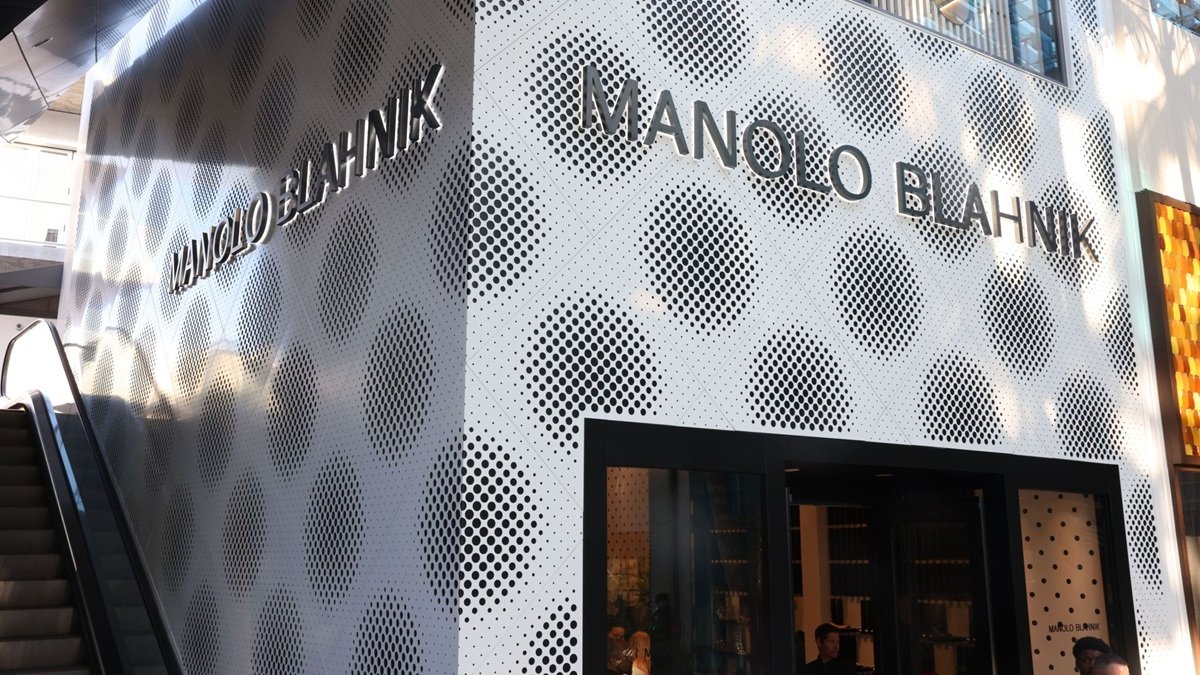


Manolo Blahnik, down along with luxury. The luxury footwear company, immersed in a process of transformation of its business model since 2018, has not been able to avoid a drop in business, weighed down by the crisis in the luxury sector that is affecting the great giants around the world. This, added to the investment that the company is carrying out in retail, have plummeted its business in 2024.
According to the latest year-end results consulted by WWD, Manolo Blahnik closed the fiscal year (ended December 31st) with sales of €86.4 million, 19% less than in the previous year. Despite this decline, however, the company has highlighted that the figure is the third best recorded by the brand, only behind the turnover recorded in 2022 and 2023.
The company’s gross operating profit (ebitda), meanwhile, stood at €8.4 million at year-end, down 61% on the previous year. “This figure is in line with our expectations and is mainly due to significant investments in the store opening program,“ the company said.
Manolo Blahnik opened a store in Shanghai last year
Throughout the year, in fact, investment in stores alone reached €4.3 million. One of these latest openings was carried out by Manolo Blahnik in Shanghai exactly one year ago, for which it created a foreign capital company (Wfoe) in China to ensure the use of its brand in the country.
The high investment in retail, as well as its strategy of opening stores in Asia, but also in the United States and Europe, is part of the company’s transformation and is aimed at strengthening its direct-to-consumer sales. “We have made significant progress in the strategy to evolve the brand towards this model, thus also deepening our relationship with the end customer,“ said Kristina Blahnik, CEO of the company.
Within the Manolo Blahnik business, in fact, retail sales increased by 13% during the year. By the end of 2024, therefore, this model will already account for 32% of the company’s sales, compared to 22% in 2023. By the end of this year, the company expects to have already returned to growth, first moderately, and more intensely in 2026.
Related content

Swatch Sees 89% Profit Decline in 2025 Amid Tariff Woes and Sluggish Demand
30 ene 2026 - 04:26


Inditex’s Eduard Casabella on Oysho’s Sport Pivot and Growth Through Identity
29 ene 2026 - 18:40

McKinsey’s Gemma D’Auria on Luxury’s Pullback and Fashion’s Resilience in 2026
29 ene 2026 - 18:35
Latest news
Swatch Sees 89% Profit Decline in 2025 Amid Tariff Woes and Sluggish Demand
30 ene 2026 - 04:26
Inditex’s Eduard Casabella on Oysho’s Sport Pivot and Growth Through Identity
29 ene 2026 - 18:40
McKinsey’s Gemma D’Auria on Luxury’s Pullback and Fashion’s Resilience in 2026
29 ene 2026 - 18:35