Kaitlin Puccio on ethical fashion and the shift from penalties to incentives
Lawyer, former model and bioethics expert, Kaitlin Puccio runs her law firm to defend a new framework for the modeling industry. Regulation, AI and ethical certificates are, for the expert, the challenges of the future.
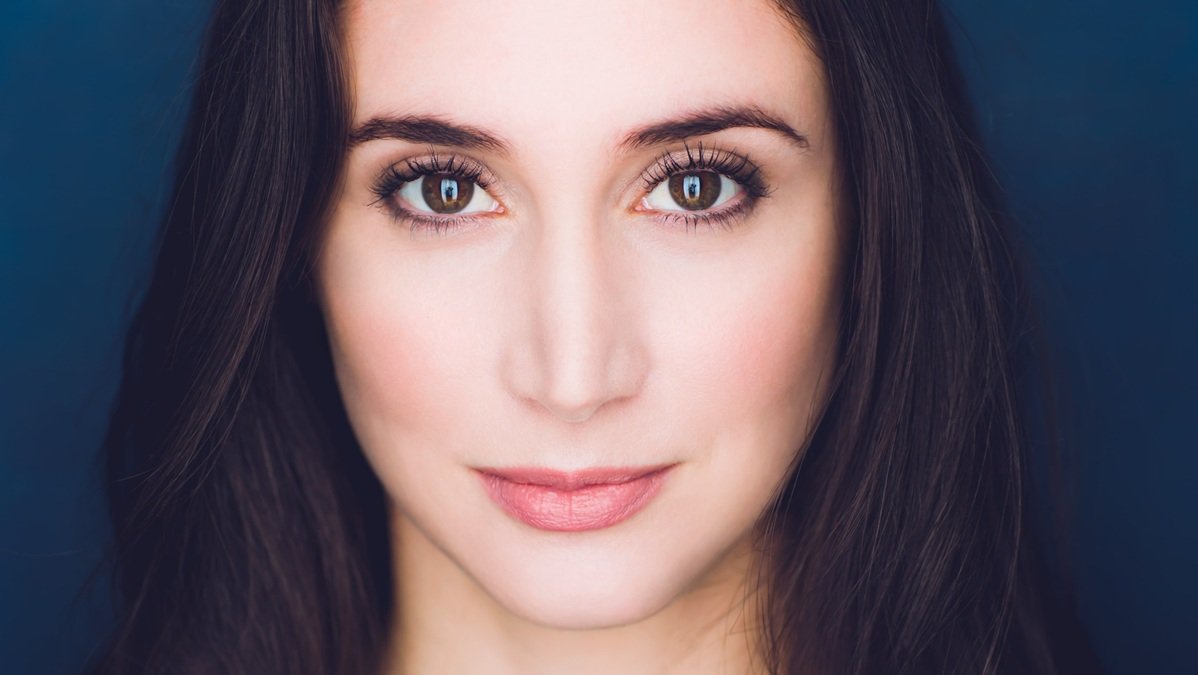


American lawyer and former model Kaitlin Puccio knows the business from both sides of the lens. After refusing to sign contracts she described as “oppressive,“ she earned a law degree from Georgetown, a master’s degree in bioethics from Columbia University and studied philosophy at NYU, with a focus on ethics, linguistics and psychology. With the accumulated knowledge and the will to improve conditions in the industry, she founded Puccio Law PLLC, a law firm specializing in fashion law and entertainment ethics. Today she divides her time between legal practice and teaching at centers such as EIDM and the Coco Rocha Model Camp, in addition to directing the Art and Bioethics Initiative of the UNESCO Chair in Bioethics and Human Rights.
Author of the book Insight: The Business, Law, and Ethics of the Fashion and Modeling Industries, Puccio advocates shielding models from clauses that put them in debt, transforming managers into regulated agents and classifying talent as salaried to open the door to a union. But his prescription goes beyond legislative texts. “Consumers and brands react better to a transparent seal than to a retroactive fine,“ he argues, reflecting on pending regulation and why “rewarding works better than sanctioning” when it comes to driving ethical change in the industry.
QUESTION: Your career path is quite atypical. How do you jump from catwalks to law firm?
Answer: I took my first steps in film production as a model and actress, but later on I focused more on modeling. Then I discovered that the contracts I was offered were very oppressive; there were non-negotiable clauses and I just didn’t sign them. However, when you don’t sign with an agency, it can be very difficult to get work. I didn’t make an active decision to walk away from the industry, my motivation was more to not sign contracts that could get me into a lot of trouble or debt. So I started to move away from working with agencies a little bit, went to the legal side and tried to educate other models about some of these contractual pitfalls. I opened my own firm, focused a lot on the ethics of the modeling industry and contracts. Then I moved away from the practical side and into the educational side, and that’s where I’m still at: I try to spread the word about what models need to know to protect themselves, because I think that’s the best way to help them, rather than negotiating contracts for them or fixing things after the fact. Knowledge is a very powerful tool and, in an industry as unregulated as modeling, I think it’s the best I can do.
Q: How do you juggle law school and modeling?
A: I was modeling and acting while I was in law school, although they seem like far apart, they may not be so far apart. I actually went to law school to protect myself because I had my own production company. I wanted to understand my own contracts and become a bigger brand, so I needed to understand a lot of things.
Q: The next step was to share the knowledge you gained to support other professionals in the same situation?
A: Yes. I started a very short podcast, with one- or two-minute clips of tips and tricks about the modeling and entertainment industry to help people find their own way. Then I turned some of those tips into a longer book because I was getting a lot of questions and I thought, I’m not giving legal advice, but I can explain some aspects of the industry. I have the perspective of working as a talent and the legal perspective, so I can put them together and explain things in a way that I think can be useful. My book talks a lot about ethics, business, personal branding, but also financial traps; there are a lot of models and actors that get caught. It’s a text that I now use as a basis for my college classes.
Q: Are models the big forgotten ones when it comes to demanding improvements or legislation in the fashion industry?
A: In a way, yes. When we think about legislation in the industry, we often talk about companies, trademarks, human rights, garment workers... and models are rarely mentioned. For me, it has been a priority to give them resources.
“Any money the model owes the agency becomes immediate debt.“
Q: What are the main issues models are exposed to in their contracts?
A: I’ll give you an example that I see a lot and that gets a lot of models in trouble. There is a clause that says that the agency can advance money. If a model gets a job in Paris and lives in New York, the agency will say, “We’ll pay for your flight, hotel, Uber, everything.“ What they usually don’t count is that the model has to pay it all back later. It’s not that the agency covers it, it’s actually a loan that the model has to pay back. So, the model may work for 1,000 euros, but the ticket, hotel and food cost more than that, so she doesn’t see a penny until the agency gets its money back. And what happens is, if the contract expires or the agency lets her go, bearing in mind that they can usually break the contract at any time, any money the model owes the agency becomes immediate debt. Also, the agency sometimes doesn’t even detail what they are going to spend the money on, there is no limit or oversight, so it is very easy to get into debt. It is common for the agency to make mistakes, they may charge a model for another model’s plane tickets, for example, but it is very difficult to notice if they don’t deliver a financial statement every two weeks, which they often fail to do.
Q: So models are the ones who take the risks when it comes to work?
A: Yes, and the question goes beyond that. In many contracts, there is a clause that says that if a client doesn’t pay, the agency has the right to pursue the client for payment, either through debt collectors or lawyers. They can do whatever it takes to get the money, but the cost of all that falls entirely on the model. And it says in the contract that they can do it at their sole discretion, which means the model has no say. In essence, the model may end up with a lot of legal fees that she can’t bear.
Q: Are these clauses exclusive to the industry in the U.S.?
A: I’ve generally seen it more in the United States. The difference is that in Europe there is a little more oversight. Nothing is perfect, but modeling agencies are almost unregulated in the United States. They can put those things in contracts and nobody bats an eye.
Q: Model scouting in disadvantaged countries or even refugee camps is also problematic from a debt point of view, but also morally. Does the industry take advantage of vulnerability?
A: I think there are several angles here. The first thing is that any model can be abused by different players in the industry, but there are models who are more vulnerable. The modeling industry is skewed to very young ages; for example, models from Eastern Europe who come to New York at 16 years old and maybe don’t understand English well. So there are a lot of people who take advantage. It’s the same with some African agencies. I’ve seen commissions of up to 45% of the gross. So, yes, the industry can be very problematic and it doesn’t matter your skin color, age or gender. Everyone is at risk because there are so many unscrupulous people.
Q: So where does that leave the commitment to diversity for practical purposes?
A: Right now, diversity is largely performative. You put a plus-size model, a model of African descent, an Asian model and the rest are clones of what we saw ten or fifteen years ago. Nowadays, diversity in the modeling industry seems like a gesture for the gallery. If the real goal is diversity, you can’t do things like using AI to create models that “look” diverse because you’re eliminating work not just for minority models but for all of them. You have to get away from the image and get back to reality.
Q: To protect the most vulnerable workers, what should be the main limits in regulations?
A: We have labor standards that propose a clear framework, at least in the United States and also in Europe. The problem is that they are not always enforced. I don’t think the solution is to pile on more laws, but to ensure that the existing ones are enforced. If you compare actors and models in New York, the actors are much more regulated despite doing very similar work. If we expand to Europe and Africa you have to see if labor standards are respected. When there are minors, they must have education and breaks. This also applies to adults: we hear stories of 12-hour shoots without eating or resting, and that’s not right. Supervising every set is difficult, but we can start talking more and encourage self-regulation. How? Instead of complaining, create a green list of positive feedback: “I worked with such-and-such photographer and producer and they were fabulous.“ Highlighting the good ones makes more people want to work with them and others will want to be on that list. Sometimes the positive approach helps pull the industry out of the mire.
“Currently, diversity in the modeling industry seems like a gesture to the gallery.“
Q: Sustainability in the fashion industry has sought solutions in certification programs. Could this apply to agencies and brands?
A: Yes. That fits with the green list. Positive incentives often work better than fines. If consumers demand transparency and certification, companies will have a reason to adopt it.
Q: What happens when models don’t quit despite abusive conditions, for fear of consequences or losing a good job opportunity with a big name, for example?
A: It’s true and many famous models have said they wouldn’t have gotten where they did if they had reported something fifteen years ago, for example. Sometimes, if you speak out, your career is over before it starts. One solution is to regulate model management companies. In New York, for example, they used to be agencies governed by labor law, with commission limits. They changed their name to management companies to avoid regulation, arguing that they only “manage careers. They are a gray area and that loophole needs to be closed.
Q: Does the fact that they are autonomous mean they are more difficult to implement improved conditions?
A: Absolutely. Classifying models as employees, perhaps of the production company or the client, would open the door to a union and social protection. For the companies it would be just another employee. I don’t understand why it hasn’t been done.
Q: Another challenge of the profession: modeling careers are usually short. What happens when there is no more work?
A: Many models are not just models: they act, produce, work as stylists. My advice is to save, protect your intellectual property and have a plan from the beginning. If you’re going to model five years, plan for the day after.
Q: In parallel, campaigns with artificial intelligence are making headway. What’s going to happen to models who aren’t celebrities or influencers?
A: From a legal standpoint, it’s very difficult. We are writing unprecedented contracts, trying to cover technology that doesn’t even exist yet. We have to protect privacy and image, yes, but also leave room to renegotiate. With AI we may have already seen the last human supermodel, which is sad. And it doesn’t just affect models: it also affects makeup artists, stylists... We need to regulate soon.
Q: Will the gap between supermodels and others grow?
A: The established ambassadors will continue because the public is looking for them, but it will be difficult for the new ones to move up if brands can create digital mannequins.
Q: Ultimately, for a model starting her career now, what is more important: a good agent or a good lawyer?
A: That’s a good question, but it’s not easy to answer. The ideal is an agent with a legal background. If you have one like that, you may not need a lawyer for every contract. But, as a lawyer, I will always say: have one in your pocket. Even before you sign with the agency, review that contract. And beware if the agency says, “Our lawyers will protect you,“ because those lawyers protect the agency, not the model.
Related content

Pharrell, Anderson and Jacquemus lead the way at Paris fashion week
24 jun 2025 - 07:00
U.S. and India Ink Surprise Trade Deal Following EU Accord
3 feb 2026 - 12:16

Capri’s Fresh Start: Turns a Profit and Slashes Debt Following Versace Sale
3 feb 2026 - 12:14
Latest news
U.S. and India Ink Surprise Trade Deal Following EU Accord
3 feb 2026 - 12:16
Capri’s Fresh Start: Turns a Profit and Slashes Debt Following Versace Sale
3 feb 2026 - 12:14

Rituals Closes 2025 with a 15.7% Surge, Reaching €2.43 Billion
3 feb 2026 - 08:05

Puma Shakes Up Operations with Training Division, Taps Former Adidas Leader
3 feb 2026 - 07:53