Zegna: From Alpine Wool to Wall Street, Weaving the Future of Luxury
Born amidst the pine trees of Piedmont, Italy, this men’s tailoring titan now boasts nearly $2 billion in sales, uniting Thom Browne and Tom Ford to craft a global quiet luxury stronghold that dares to challenge the French luxury behemoths.



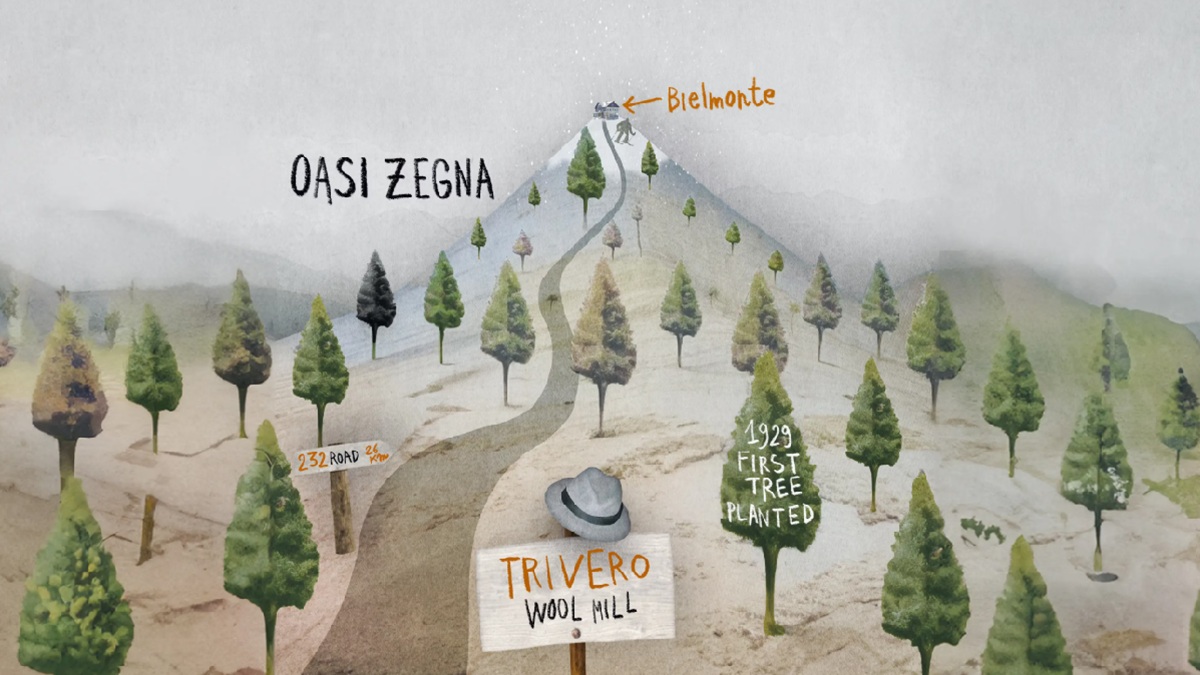
In the small Piedmontese municipality of Valdilana (Italy), amid hillsides that smell of fir trees and meltwater, the muffled sound of the first looms that Ermenegildo Zegna installed in 1910 lives on. The regional industrialist aspired, at that time, to spin the finest wool in the world and, at the same time, to preserve the surrounding landscape. He planted more than half a million trees and laid out Strada 232, a panoramic road that still winds through chestnut trees and meadows. Today that legacy beats in Oasi Zegna, a natural sanctuary of one hundred square kilometers where nature and industry coexist in a balance that has guided four generations.
At the end of the Second World War, the wool industry made the leap from weaving to tailoring. The made-to-measure service, launched in the late 1940s, took Valdilana’s tailoring to the offices of New York and the embassies of Geneva. Since then, a Zegna suit has been recognizable without the need to look at the label, as can be seen in the way the lapel falls, the invisible stitching and the slight rustle of the wool as the customer walks by.
Even today, the company protects this excellence with its own production line. Bonotto, Dondi Jersey and Tessitura Ubertino, companies acquired between 2016 and 2021, feed a textile laboratory that also supplies cloth to big names in luxury such as Dior or Chanel. In New South Wales, Achill Farm raises ten thousand merino sheep on 2,500 hectares to secure the fiber. The company’s credo is summed up by Gildo Zegna, the third generation of the family: “he who controls the fiber controls the history”.

The same conviction drove the company’s IPO. In December 2021, Zegna merged with an Investindustrial investment vehicle and debuted on the New York stock exchange with a capitalization of 2.4 billion dollars, retaining 66% of the family capital. The celebratory parade was not held in Manhattan, but on the snow of Valdilana, a reminder that the echo of the Alps outweighs the spotlights of Times Square.
Ermenegildo Zegna traveled from the valleys of Piedmont to Wall Street
Today, the group has a turnover of more than 1.9 billion euros and nearly three hundred stores in eighty countries, and industry experts describe the company as the world’s largest luxury men’s fashion house in terms of turnover. The direct channel already contributes around 77% of revenues and net debt remains at 188 million euros, just six tenths of Ebitda, a sign of a management that prefers to reinvest cash in workshops, logistics and talent rather than resort to the market.
Vertical integration is the decisive advantage of the family model. Oasi Cashmere and Oasi Lino certify the complete traceability of both fibers and set the goal that every garment produced as of 2026 will include a digital passport with data on origin, processing and subsequent repairs. At the same time, the creative Alessandro Sartori reinterprets tailoring with the soft tailoring concept, shoulderless jackets, drawstring pants and the Triple Stitch sneaker, which already represents 10% of the parent brand’s sales.
This balance between tradition and modernity sustains the group in a demanding context. China, which continues to contribute a quarter of the business, fell by more than 14% in 2024, but the United States and the Middle East grew by double digits. The first quarter of 2025 closed with a turnover of €458.82 million, just 1% below the previous year, thanks to a boost from the direct channel and the first full collections of Tom Ford Fashion under Zegna’s control.
Inorganic expansion has woven a tapestry of complementary styles. In 2018, the Zegna group acquired 85% of U.S.-based Thom Browne for $500 million. The New York tailor, celebrated for his shrunken blazers and gray skirts, opened the door to a new, edgier aesthetic and Generation Z, strengthening the group’s presence in the United States.
Thom Browne and Tom Ford, two key investments in the group’s strategy
Their creative collision, however, with Alpine sobriety has proved fertile. The teams on both sides of the Atlantic share pattern-making, harmonize calendars and have premiered in Novara an experimental line that fuses Italian soft shoulder and millimeter-cut silhouette.
The next big step came in April 2023, when U.S. cosmetics company Estée Lauder closed the global buyout of Tom Ford and granted Zegna the worldwide fashion and accessories license for 20 years, with an automatic extension for another decade. The agreement allows the Piedmontese house to operate Tom Ford Fashion with full creative and commercial autonomy.
The first collections, presented this January in Milan under the direction of Peter Hawkings, have exceeded leather goods forecasts and position the brand to reach 600 million euros in turnover in the medium term. Each square meter of Tom Ford-stamped Italian leather generates gross margins above the group’s average, a key driver for maintaining optimism around a risky investment in a brand that, until then, had never been particularly profitable.
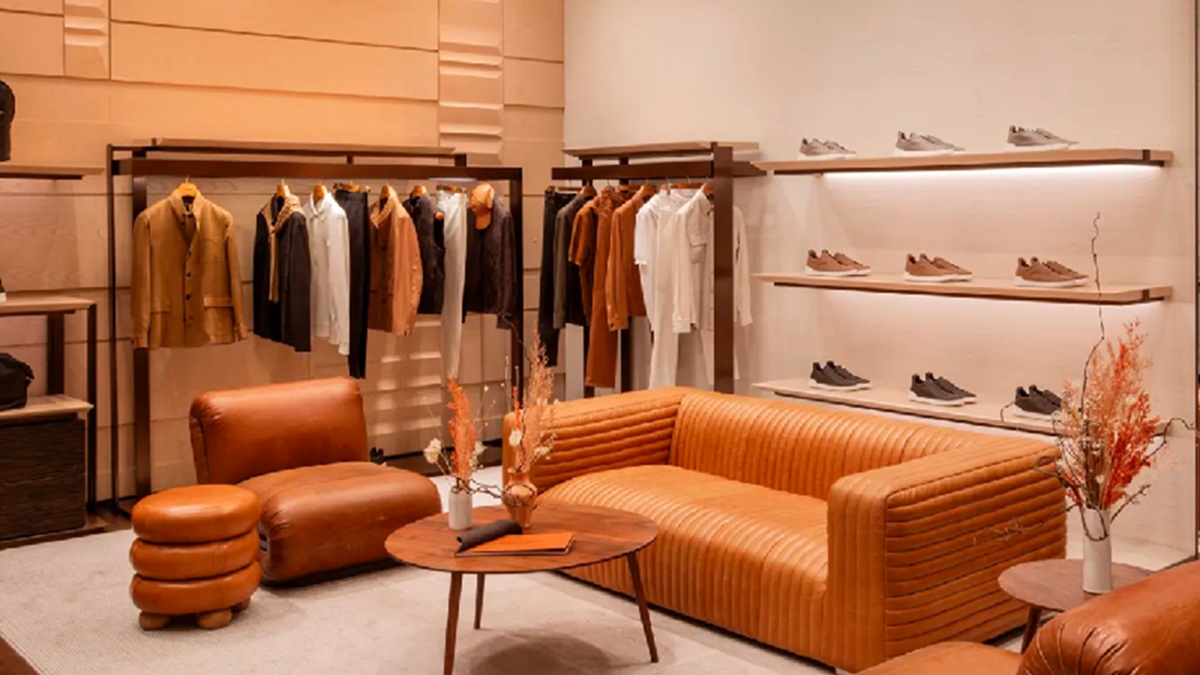
Together with Thom Browne and Tom Ford, Zegna creates a unique triangle. Discreet Valdilana tailoring, minimalist New York architecture and old-fashioned California glamour coexist under the same logistics, the same digital passport and the same commitment to craftsmanship. For analysts, this combination of aesthetic codes and industrial discipline makes the polder a natural buyer for mid-sized brands looking for a long-term partner.
Obstacles and a thread that won’t break
The road, however, has not been without knots. Net profit fell to €90.9 million last year, weighed down by a higher tax burden and investment in talent and store openings. Thom Browne posted a 17% decline in sales due to rationalization of the wholesale channel. China continues to be under pressure and the company recognizes that it needs new narratives for the new Asian customer. The answer lies in light linen capsule collections, tailor-made experiences on the Great Wall and collaborations with local designers.
On the production front, raw material inflation is forcing the company to modernize spinning mills and develop techniques that will reduce water consumption by an additional 15% by 2028. The planned capital investment amounts to €125 million to strengthen the chain and build a new footwear plant in Parma (Italy).
The competition does not rest either. Italy’s Loro Piana and Brunello Cucinelli share the same natural discourse and textile DNA, although they lack Zegna’s multi-brand platform. In Paris, Kering is seeking to revive its men’s segment, and in New York, digital natives are emerging that preach a silent luxury inspired, paradoxically, by the Piedmontese house itself.
In the late afternoon, the looms stop and the valley recovers the murmur of blackbirds. This silence, half forest and half workshop, is the pulse that has been guiding the Zegna family for 115 years. If the plan works, Valdilana will prove that you don’t need Avenue Montaigne to dictate masculine elegance. All it takes is a century-old loom, a road that curves through fir trees and a stubborn faith in the inner workings of a suit. If the strategy stumbles, Wall Street will remind the clan that even silence has its price. For now, the murmur of wool against the cutting table continues to set the pace of Italian luxury and every stitch that comes out of the lanificio confirms that tailoring can look to the future while still listening to the echo of the mountain.
Related content

Zegna Strengthens Its Partnership with Art Basel Through Multiyear Agreement
4 jun 2025 - 05:00

Swatch Sees 89% Profit Decline in 2025 Amid Tariff Woes and Sluggish Demand
30 ene 2026 - 04:26


Inditex’s Eduard Casabella on Oysho’s Sport Pivot and Growth Through Identity
29 ene 2026 - 18:40
Latest news
Swatch Sees 89% Profit Decline in 2025 Amid Tariff Woes and Sluggish Demand
30 ene 2026 - 04:26
Inditex’s Eduard Casabella on Oysho’s Sport Pivot and Growth Through Identity
29 ene 2026 - 18:40
McKinsey’s Gemma D’Auria on Luxury’s Pullback and Fashion’s Resilience in 2026
29 ene 2026 - 18:35